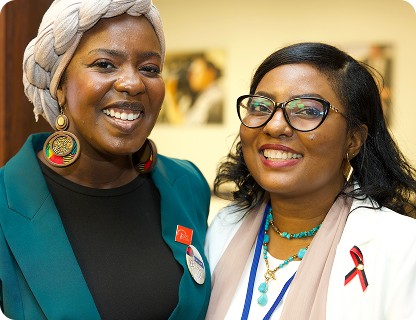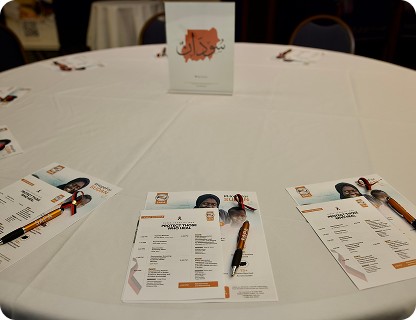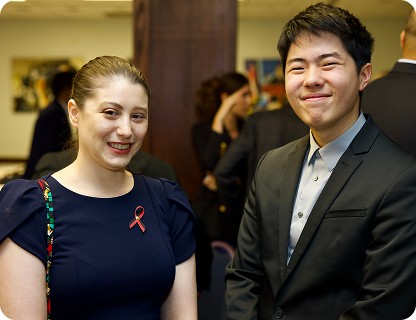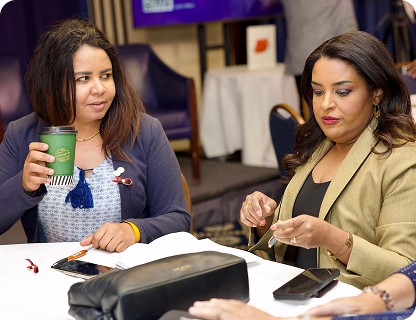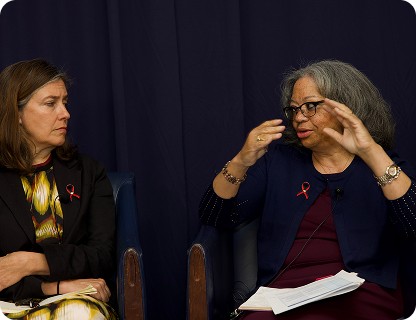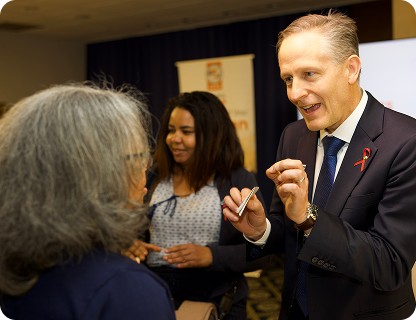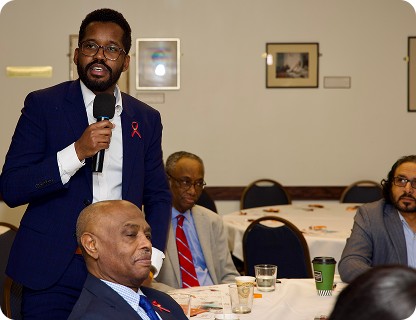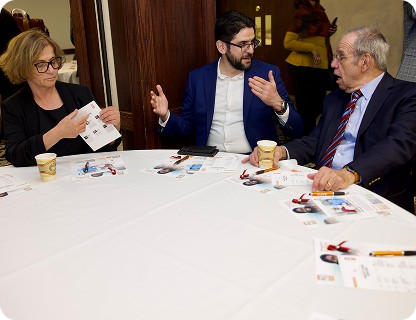
The forum was honored by congressional remarks from Representative Pramila Jayapal, and opened with a keynote address by Ambassador Susan D. Page — former U.S. Ambassador to South Sudan and former Deputy Assistant Secretary of State for African Affairs — who brought both diplomatic insight and moral clarity to a room full of physicians, advocates, policymakers, and community members.
As Sudan enters its fourth year of war, the discussion moved with urgency: from documenting what is happening on the ground, to strengthening the systems that protect those doing the work, to advancing the policy and accountability frameworks the crisis demands.
Rep. Pramila Jayapal
Ambassador Susan D. Page
Three years of war have left Sudan’s healthcare system devastated. 201 attacks on health facilities have been documented. 37% of hospitals are non-functional. More than 20 million people are in need of health assistance. The healthcare workers still standing — in damaged clinics, in makeshift facilities, in communities cut off from the outside world — are holding together what remains.
Their testimony, their service data, and their field experience were at the center of this conversation. Not as statistics. As evidence of what is possible when people refuse to stop caring for one another — and as a call to those with the power to protect them.

Their testimonies, service records, and lived experience are not supplementary — they are essential to understanding the real impact of attacks on healthcare and to building responses that actually work.

Sudan needs better systems to record, verify, and report attacks on health workers, health facilities, ambulances, and patients. What is not documented cannot be acted upon.

Safer access protocols. Duty-of-care systems. Incident reporting. Preparedness training. Stronger institutional policies. Protection cannot remain a statement — it must become a system.

Diplomatic pressure. Legislative engagement. Humanitarian access. Accountability pathways. Sustained support for Sudanese-led health response and recovery. The evidence is there. The obligation to act is clear.
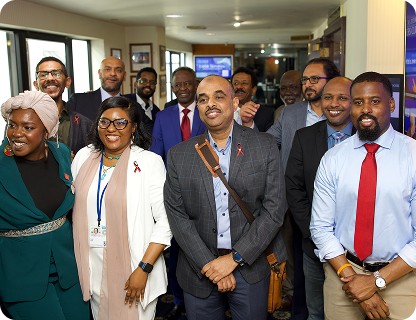
This forum was not a conclusion. It was a step.
We remain committed to protecting those who heal — to preserving lifesaving services in Sudan, to ensuring that Sudanese medical and community voices are heard in the global policy spaces where decisions are made, and to holding the line on what international humanitarian law demands.
Protecting health workers is a humanitarian duty, a legal responsibility, and a moral commitment.
The work continues.
The Sudanese American Physicians Association (SAPA) is a physician-led humanitarian and professional membership organization founded in 2019, with chapters across the United States, Canada, and Sudan.
sapa-usa.org | mamoun.hassan@sapa-usa.org