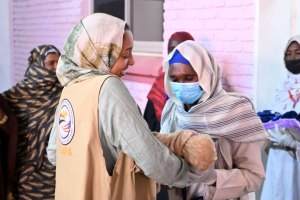

Crisis in Wad Madani: Thousands Flee Amidst Intensifying Conflict
 sapa
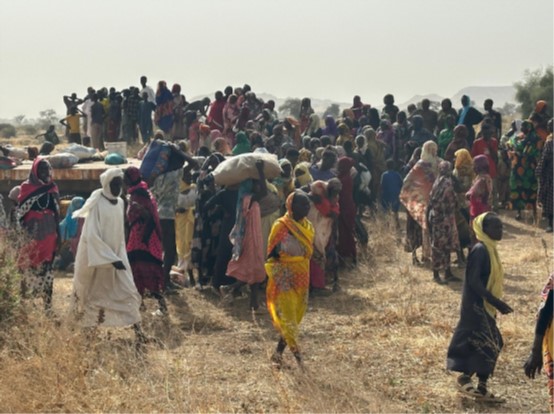
sapaIn recent days, the city of Wad Madani, Sudan’s second-largest city and a once-prominent refuge for those escaping conflict in Khartoum, has become a scene of chaos and desperation. Thousands of people are fleeing their homes, seeking safety from the escalating fighting between the Sudanese army and the paramilitary Rapid Support Forces (RSF). The situation is dire, with reports of looting, damaged infrastructure, and a significant impact on humanitarian efforts.
Wad Madani: Escalation of Violence
Wad Madani had initially served as a safe haven for displaced individuals who sought refuge from the conflict in Khartoum between the Sudanese army and the RSF last April. However, the recent escalation of violence has shattered the illusion of safety for those who had sought solace in this city.
Reports indicate that armed groups and citizens have engaged in looting, damaging banks, and attacking main markets in Madani. The city is experiencing intense street fighting, with residents forced to hide inside their homes. Additionally, heavy artillery and fighter jets have been reported over the city, contributing to a sense of fear and uncertainty.
As the conflict intensifies in Wad Madani, the United Nations has declared a dire situation with 14,000 people already fleeing the city. Disturbingly, a few thousand have sought refuge in other cities.
Wad Madani, currently home to more than 86,000 displaced individuals, faces a critical humanitarian challenge. The UN, recognizing the severity of the situation, has suspended all humanitarian field missions in Gezira state, emphasizing the need for immediate and comprehensive assistance.
Wad Madani Population
Adding to the complexity, over 270,000 residents out of Wad Madani’s total population of 700,000 were dependent on humanitarian aid before the recent escalation. This highlights the vulnerability of a significant portion of the city’s population, emphasizing the pressing need for sustained humanitarian efforts.
Impact on Displaced Population
Wad Madani had become a hub for humanitarian work, providing essential services to those displaced by the conflict in Khartoum. However, with the recent developments, several aid organizations have had to suspend their work in the city, leaving a vulnerable population without crucial support.
The Norwegian Refugee Council’s country director, William Carter, expressed concern over the situation, emphasizing the plight of hundreds of thousands of people facing renewed violence in a place they had hoped would be a sanctuary.
International Response and Ceasefire Attempts
Despite recent commitments to pursue a ceasefire in Djibouti under the Intergovernmental Authority on Development’s facilitation, the conflict persists. Furthermore, the RSF’s deployment and subsequent actions, such as the bombing of Neyala in South Darfur, have further escalated tensions.
Related Post: Is Sudan Safe To Travel?
Current Developments in Wad Madani
As of December 17, 2023, reports suggest that the RSF has withdrawn from Wad Madani after intense clashes with the Sudanese army. Jubilant celebrations erupted in the city, marking a moment of relief for its residents. However, the aftermath reveals a city scarred by violence, with reports of looting, damage to property, and the displacement of residents seeking safety.
The Sudanese military’s spokesperson, Nabil Abdallah, announced that the army successfully repulsed the RSF attack on Wad Madani. Additionally, the city’s resistance committees confirmed that the RSF was confined to the eastern region of Wad Madani, engaging in looting and violence.

Donation and Impact
The crisis in Sudan demands immediate assistance; therefore, your generous donations can make a significant impact on the lives of those affected. Considering the Cost of Living in Sudan, here are suggested donation amounts and their potential impact:
$20 – Emergency Food Supplies
- Provides a family struggling due to the Sudan Food Crisis with essential food items adjusted to the local cost of living.
$45 – Lifesaving Medical Kit
- Offers a medical kit containing vital supplies, considering the adjusted healthcare costs in Sudan.
$90 – Shelter and Warmth
- Assists in providing temporary shelter, blankets, and warm clothing, considering the adjusted costs of living.
$180 – Clean Water and Sanitation
- Supports the establishment of clean water for Sudan and sanitation facilities, considering the local costs.
$400 – Education Support for Children
- Contributes to educational resources, school supplies, and psychosocial support.
$800 – Community Rebuilding
- Aids in the reconstruction of damaged infrastructure, fostering resilience, and promoting long-term recovery, adjusted to the local economic context.
Despite the challenging circumstances in Wad Madani, SAPA is actively accepting Donations for Sudan to provide crucial aid and support for those affected by the crisis. Your contributions can make a meaningful impact in alleviating the suffering of individuals and families grappling with the turmoil.
Conclusion
The Civil War in Sudan had a devastating impact on civilian populations, even in areas initially considered safe havens. As the international community calls for the withdrawal of armed forces and a renewed commitment to peace, the people of Wad Madani remain caught in the crossfire, their lives disrupted and their future uncertain. Additionally, the global response to this crisis will be crucial in building emergency relief funds for those affected.
FAQs
1. What recent events have led to the escalation of violence in Wad Madani, Sudan?
Violence escalated in Wad Madani, previously a refuge from Khartoum’s conflict, due to fighting between the Sudanese army and the paramilitary Rapid Support Forces (RSF), leading to looting, infrastructure damage, and humanitarian disruption, reported by Sudan Tribune.
2. How many people have fled Wad Madani amid the conflict, and what is the scale of displacement?
By the end of 2024, approximately 434,000 people were displaced from Wad Madani to other parts of Sudan, with Aj Jazirah State hosting about 275,000 displaced individuals as of January 2025.
3. What portion of Wad Madani’s population depended on humanitarian aid before the recent violence?
More than 270,000 residents out of a total city population of approximately 700,000 were reliant on humanitarian assistance before the recent escalation, highlighting the city’s vulnerability.
4. How has the conflict affected humanitarian operations in Wad Madani?
With ongoing violence, all humanitarian field missions in Gezira state were suspended as of early 2025. Aid organizations face challenges, including unexploded ordnance contamination and shortages in food, water, and medical services, severely impacting displaced populations’ access to aid.
5. What recent military developments occurred in Wad Madani?
The RSF withdrew from Wad Madani after intense clashes in December 2023, with the Sudanese army recapturing control. Despite this, the city endures widespread looting, significant property damage, and ongoing displacement pressures.
6. What international efforts are ongoing to address the conflict in Sudan?
Efforts to establish ceasefires continue under regional bodies like the Intergovernmental Authority on Development, but fighting persists. The international community is calling for disarmament and increased humanitarian access.
7. How can donations impact the humanitarian crisis in Sudan, especially in Wad Madani?
Donations can provide essential relief, such as $20 for emergency food, $180 for clean water for Sudan, and $800 toward community rebuilding, adjusted according to the Cost of Living in Sudan.
8. How is SAPA supporting those affected by the crisis in Wad Madani?
SAPA actively accepts donations for Sudan to supply necessities like shelter, healthcare, food, water, and education resources to displaced and vulnerable populations amid ongoing conflict.
9. What is the long-term impact of Sudan’s civil war on displaced populations in Wad Madani?
The conflict has caused massive displacement—over 15 million people nationally—destroying infrastructure and healthcare systems, leaving returnees facing unsafe living conditions and dire humanitarian needs.
10. Why is international community involvement critical for Sudan’s humanitarian crisis?
Sustained international support is vital to fund humanitarian aid, rebuild essential services, and support peace efforts in conflict-affected areas like Wad Madani, where millions face displacement, food insecurity, and disrupted livelihoods.