
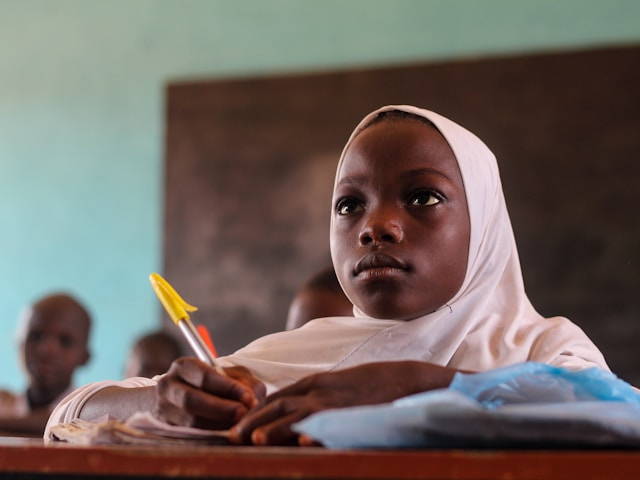
Empowering the Next Generation: Girls Education in Sudan
 Waleed
In Sudan, only about half of girls complete primary education, a staggering statistic that highlights the severe educational disparities girls face in the country.
Education is universally recognized as one of the most powerful tools for personal growth, community development, and economic empowerment. While global efforts to promote education have seen considerable progress, the situation in Sudan presents a unique set of challenges. Education for girls, in particular, has the potential to shape the future of entire communities, unlocking opportunities that extend far beyond the classroom.
The importance of girls’ education in Sudan cannot be overstated. Educating girls is a fundamental human right and a powerful catalyst for social change. When educated, girls are more likely to contribute to the broader development of their country. Focusing on empowering girls through education in Sudan is crucial for the country’s growth, prosperity, and stability for generations to come.
>> Related Post: Sudan: The World’s Largest Displacement Crisis
Why Girls’ Education Matters
- Empowerment: Educating girls is one of the most effective ways to empower them. Girls who access quality education gain the knowledge and skills to make informed life decisions. Education enables girls to pursue careers, start businesses, and actively participate in political and social issues. This empowerment extends beyond the individual level; it benefits entire communities and societies.
- Social and Economic Impact: Educated girls contribute to breaking the cycle of poverty. When girls are educated, they are more likely to have better job opportunities, earn higher incomes, and contribute to economic development. Educating girls also leads to more productive communities and societies, as educated women tend to invest in the health and education of their children, thereby promoting long-term societal growth and prosperity.
- Health and Gender Equality: Educated girls are more likely to have better health outcomes, delay marriage, and raise healthier families. They are also more likely to advocate for gender equality and contribute to reducing gender-based violence. Education provides girls the tools to challenge harmful cultural practices and become community leaders, promoting positive change across Sudan.
The Current State of Girls’ Education in Sudan
- Challenges: In Sudan, numerous barriers prevent girls from accessing education. The most prominent among them are poverty, cultural norms, and the devastating effects of ongoing conflict.
- Poverty and Societal Norms: Early and forced marriages remain one of the most entrenched barriers to girls’ education in South Sudan. Tragically, a woman is more likely to die in childbirth than to complete primary school. In many communities, girls are still treated as assets to be exchanged for dowries, often in the form of cattle, driving families to arrange marriages at a young age and drastically limiting a girl’s chance of staying in school.
- Statistics: As of recent reports, only 27% of students in schools enrolled are girls, and dropout rates remain high. These figures paint a grim picture of educational inequality, where girls are often left behind due to financial, cultural, and institutional barriers.
- Impact of Conflict: The ongoing conflict in Sudan has exacerbated the fragile education system. Armed conflict, displacement, and the destruction of infrastructure have made it increasingly difficult for girls to attend school. In conflict zones, girls face not only educational disruption but also increased risks of gender-based violence, child marriage, and exploitation. The impact of this instability on girls’ education cannot be underestimated, as it denies them the opportunity to build a brighter future.
>> Related Post: How many people and children starve to death every day?
Key Initiatives and Organizations Supporting Girls’ Education in Sudan
Government & Local Efforts:
- The Sudanese government and local institutions are working to improve girls’ access to education by rebuilding schools, recruiting female teachers, and offering financial incentives to families.
- Community-based organizations play a key role in delivering education in remote and conflict-affected areas.
- Progress is visible in enrollment rates, but challenges like political instability, limited resources, and insecurity persist.
International Support:
- Organizations like Sudanese American Physicians Association (SAPA), UNICEF, and Save the Children etc provide critical support through emergency education, school supplies, scholarships, and infrastructure rebuilding.
- SAPA integrates education into its humanitarian mission, ensuring girls can continue learning even in crisis zones.
- These global efforts are crucial in protecting and advancing girls’ education amid conflict.
Partnerships for Change:
- Collaborative efforts between international NGOs, local communities, and the Sudanese government drive sustainable progress.
- SAPA’s partnerships enable a blend of short-term aid and long-term educational support, expanding access and impact for girls across Sudan.
>> Related Post: Top 10 Countries with Highest Poverty Rate in the World in 2026
The Life-Changing Impact of Education
Despite the ongoing challenges, many girls in Sudan have defied the odds to pursue education. For example, Amina, a young girl from Darfur, was able to complete her primary education in a refugee camp with the support of a local NGO. Now a university student, Amina plans to return to her community to become a teacher and mentor for other girls, proving that education can transform lives, even in the most difficult circumstances.
Transformative Outcomes: Education has had a profound impact on girls in Sudan, helping them overcome the barriers of poverty, displacement, and gender inequality. For example, many girls who have received education through initiatives supported by SAPA and other organizations have become leaders in their communities, advocating for women’s rights and breaking cycles of poverty.
Educated girls are not only able to earn better incomes, but they also tend to marry later and have healthier families, creating lasting change for future generations.
SAPA: Empowering Women Through Real Impact
SAPA (Sudanese American Physicians Association) continues to empower Sudanese women by combining healthcare delivery, education, and advocacy especially in the face of Sudan’s humanitarian crisis.
- Highlighting Sudanese Women’s Leadership: SAPA supports women on social media platforms, documenting women’s pivotal roles in Sudanese history, from pioneering professionals to frontline revolutionaries.
- Emergency Relief During War: Since the outbreak of conflict in April 2023, SAPA has been actively delivering emergency medical aid to war-affected regions. In partnership with UK Sudanese Students, SAPA helped raise over $40,000 for trauma kits and critical healthcare supplies.
- Medical Education & Training: SAPA’s programs provide training programs, mentorship, and opportunities for Sudanese physicians, empowering local and diaspora doctors to strengthen healthcare systems back home.
- Healthcare Access for Vulnerable Women: Through its medical missions and donation-supported campaigns, SAPA reaches underserved women, particularly in conflict zones and IDP communities, with reproductive health support and general care.
- Fundraising for Women and Children: SAPA’s initiatives like #HopeForSudan and Ramadan donation drives provide urgent support, food, medical supplies, and dignity kits to displaced women and children in need.
>> Related Post: Top 10 Hungriest Countries in the World 2026
Conclusion
For girls in Sudan, education is more than just learning, it’s a path to safety, dignity, and opportunity. Stories like Ageer’s remind us of the power education has to transform lives, even in the darkest of times. But for every girl who succeeds, many more are held back by conflict, poverty, or forced marriage.
SAPA remains committed to breaking these barriers by supporting grassroots education initiatives, providing supplies and scholarships, and advocating for girls’ right to learn.
FAQs
1. How can I donate to support girls’ education in Sudan?
You can donate to SAPA, which provides educational resources, scholarships, and infrastructure. These donations directly support initiatives that educate girls, especially in rural and conflict-affected areas.
2. How can I verify the transparency of a charity before donating?
Find charities with clear financial records, annual reports, and measurable outcomes. Tools like Charity Navigator, GuideStar, and the BBB Wise Giving Alliance can help evaluate an organization’s accountability and efficiency
3. How do international partnerships support girls’ education in Sudan?
International partnerships between NGOs, governments, and local communities are crucial for improving girls’ education in Sudan. These partnerships often bring together financial resources, technical expertise, and logistical support, helping scale educational programs and reach more needy girls.
4. What types of causes should I prioritize?
This depends on your values and the issues you feel most passionate about. Common areas include healthcare, hunger relief, education, environmental conservation, and disaster response.
5. How can I ensure my donation is used effectively?
Choose organizations with a proven track record of success and well-documented programs. You can also reach out to the charity to ask about their fund allocation and impact metrics.

Comment (1)
Increase Traffic
Good post! We will be linking to this particularly great post on our site. Keep up the great writing