
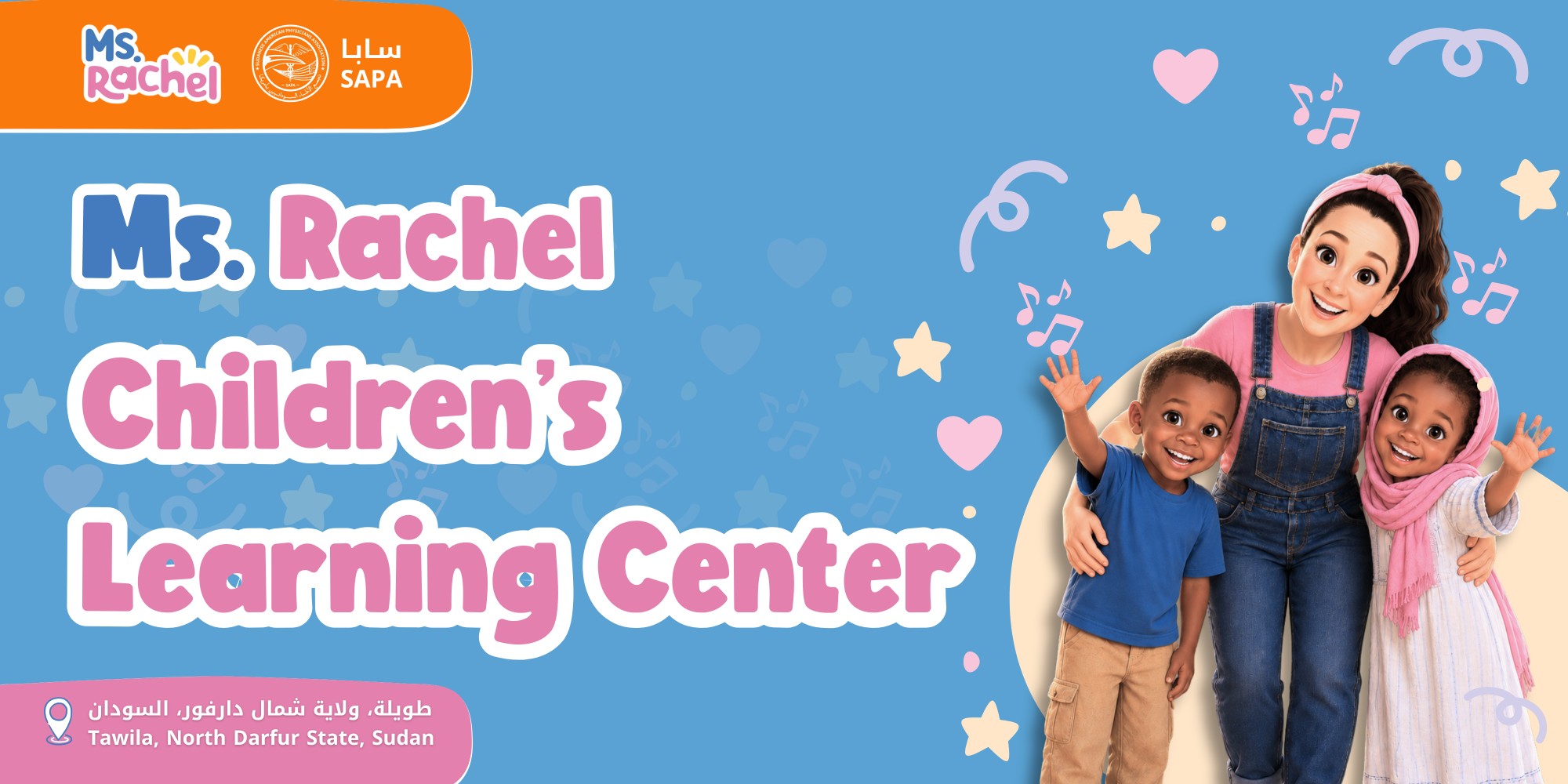
Funded through a generous gift from children’s educator Ms. Rachel, the Oasis brings together global support and Sudanese-led implementation to create a safe, structured environment for displaced children.
The center is built and operated by SAPA using the same child-protection model previously implemented at Hope Oasis in Zamzam Camp.
That program served hundreds of children before conflict forced its closure in 2025.
The model worked. The need only grew larger.
Now, the work continues in Tawila.
Since April 2023, millions of Sudanese families have been displaced by conflict. Children represent the largest share of those affected.
Many have spent more than two years outside formal education. Many have experienced trauma, instability, separation from family members, and the loss of normal childhood routines.
Without safe spaces, children face heightened risks of exploitation, recruitment by armed groups, emotional distress, and long-term psychological harm.
The Oasis exists to interrupt that cycle.
This center gives children structure, learning, movement, expression, and safety again.
Not temporarily. Consistently.
Children served annually
Ages 6–15 through structured daily programming
Purpose-built facility
Classrooms, activity hall, theatre space, office, and protected perimeter
Core developmental programs
Focused on emotional recovery, education, creativity, and recreation
Continuous operations
Year-round structured support for displaced children
Five programs designed to restore structure, confidence, and childhood.
Facilitated child-friendly support sessions led by trained Sudanese staff, helping children process trauma, build resilience, and develop healthy coping mechanisms.
Creative activities including singing, painting, rhythm, and drawing that allow children to express emotions beyond words.
Informal literacy and numeracy classes helping children recover learning loss and prepare for future schooling opportunities.
Structured games and physical activity that encourage teamwork, confidence, emotional release, and healthy social interaction.
Storytelling and performance activities that strengthen communication, confidence, imagination, and emotional recovery.
Over the coming weeks, SAPA will invite supporters around the world to participate in design decisions for the Oasis through interactive social campaigns.
From wall colors to mural themes and theatre designs, supporters will help shape the environment these children will enter.
This is more than fundraising.
It is shared ownership in building a space of safety and dignity for children affected by war.
Which color should we paint the main hall?
The Ms. Rachel Oasis is fully funded.
But thousands of displaced children across Sudan are still waiting for spaces like this.
Children in El Fasher, Nyala, Kassala, and border camps remain without structured child-protection centers, learning environments, or psychosocial support.
The next Oasis depends on what we build together next.