
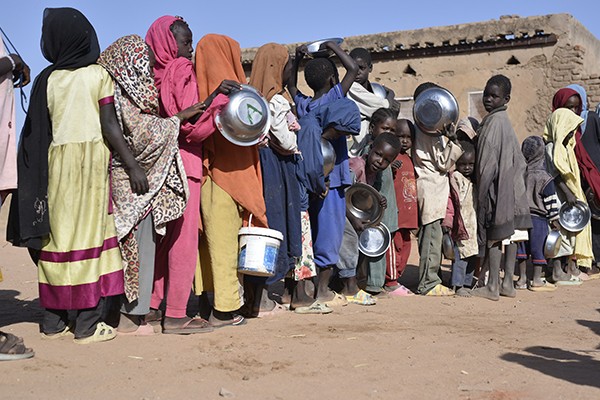
Famine and Funding Shortfall Push Sudan’s Humanitarian Crisis to Breaking Point
-
by
 Waleed
 - 1 Comment on Famine and Funding Shortfall Push Sudan’s Humanitarian Crisis to Breaking Point
 Waleed
Sudan is facing one of the most severe humanitarian crises in the world today. What began as a conflict-driven emergency has escalated into a full-scale catastrophe marked by widespread famine, collapsing health systems, mass displacement, and a dangerous shortage of international aid. As violence continues to disrupt daily life, millions of civilians are struggling to survive without reliable access to food, clean water, or medical care.
Famine conditions are spreading rapidly across multiple regions, while humanitarian agencies are being forced to scale back operations due to critical funding gaps. At the same time, global attention and donor resources are increasingly stretched by overlapping crisis worldwide, leaving Sudan dangerously underfunded at a moment when needs are at their highest.
Famine Spreads as Conflict Disrupts Food Systems
Famine in Sudan is no longer a looming threat. It is a present reality. Armed conflict has devastated agricultural production, cut off supply routes, and forced farmers from their land at critical planting and harvest seasons. Markets that once sustained local communities have either collapsed or become inaccessible due to insecurity and soaring prices.
The United Nations reports that millions of people are now facing acute food insecurity, with some areas reaching famine-level thresholds. Children are among the hardest hit, experiencing alarming rates of malnutrition that weaken immune systems and dramatically increase the risk of death from otherwise treatable illnesses.
Al Jazeera’s crisis tracking further illustrates the scale of the emergency, showing sharp increases in hunger-related indicators across Darfur, Kordofan, and other conflict-affected regions. Families are skipping meals, selling essential belongings, or relying on unsafe coping mechanisms just to survive another day.
>> Related Post: Sudan’s El Fasher Faces Catastrophe as Displacement Fears Escalate
Mass Displacement and the Collapse of Essential Services
As fighting continues, Sudan has become one of the world’s largest displacement crises. Millions of people have been forced to flee their homes, seeking safety in overcrowded camps or informal settlements with little to no infrastructure. Displacement has severely strained already fragile host communities and overwhelmed humanitarian response capacity.
In displacement camps, access to clean water, sanitation, and healthcare is dangerously limited. Preventable diseases such as cholera, malaria, and acute respiratory infections are spreading rapidly, particularly among children and older adults. Health facilities that remain operational often lack basic medicines, trained staff, or electricity, leaving patients without adequate care.
The collapse of essential services is not limited to health alone. Education has been disrupted for millions of children, while women and girls face heightened risks of gender-based violence, early marriage, and exploitation in displacement settings. These conditions deepen long-term social and economic damage, making recovery increasingly difficult even if conflict subsides.
>> Related Post: Malnutrition Rates in Sudan’s Children: Latest Statistics and Urgent Needs
Aid Funding Falls as Needs Reach Historic Highs
Despite the severity of the crisis, Sudan’s humanitarian response remains critically underfunded. International aid appeals have received only a fraction of the resources required, forcing organizations to make devastating choices about which lifesaving programs can continue and which must be reduced or shut down.
The UN Security Council has repeatedly warned that funding shortfalls are undermining humanitarian access and protection efforts across Sudan. Limited resources mean fewer mobile clinics, reduced food distributions, and delayed emergency responses.
Aid workers on the ground report that funding gaps are not just numbers on paper; they translate directly into empty shelves, understaffed clinics, and communities left without support. As donor fatigue grows globally, Sudan risks becoming a forgotten crisis, despite facing one of the most acute emergencies of this decade.
>> Related Post: Impact of Malnutrition on Child Development & Education
What Sudanese American Physicians Association (SAPA) Is Doing to Save Lives
Amid these challenges, SAPA remains committed to delivering lifesaving humanitarian assistance to communities affected by Sudan’s crisis. Drawing on a network of medical professionals and humanitarian partners, SAPA is actively working to address the most urgent needs created by famine, displacement, and health system collapse.
SAPA’s response focuses on providing essential healthcare services through mobile medical clinics, supporting maternal and child health programs, and delivering emergency medical supplies to underserved areas. These efforts are designed to reach populations cut off from formal health facilities due to conflict or displacement.
In addition, SAPA supports nutrition screening and treatment initiatives aimed at identifying and assisting malnourished children before conditions become fatal. Clean water and hygiene interventions are also prioritized to reduce the spread of disease in overcrowded camps and vulnerable communities.
>> Donate Now and Save Sudanese Lives!
FAQs
1. Why is famine spreading so rapidly in Sudan?
Famine is driven by conflict, displacement, disrupted agriculture, and blocked supply routes, combined with limited humanitarian access.
2. How many people are affected by food insecurity?
Millions face acute food insecurity, with some regions reaching famine thresholds.
3. Why is humanitarian funding insufficient?
Global donor fatigue and competing crises have left Sudan’s aid appeals severely underfunded.
4. Who is most vulnerable in this crisis?
Children, pregnant women, the elderly, and displaced populations face the highest risks.
5. How has displacement worsened conditions?
Displacement overwhelms camps, limits access to services, and increases disease risk.
6. What role does the UN Security Council play?
The Security Council monitors the crisis, addresses access constraints, and calls for increased funding.
7. What healthcare challenges exist in Sudan right now?
Health facilities lack staff, medicines, and supplies, limiting care for preventable illnesses.
8. How is SAPA helping on the ground?
SAPA provides mobile clinics, nutrition support, medical supplies, and WASH interventions.
9. Can this crisis still be prevented from worsening?
Yes. Timely funding and humanitarian access can significantly reduce suffering and save lives.
10. How can individuals help Sudan right now?
By supporting trusted humanitarian organizations like SAPA and advocating for sustained aid and attention.


Comment (1)
Ashleigh Sims
There is definately a lot to find out about this subject. I like all the points you made