April 15, 2025
Rapid and tragic developments continue to unfold in Zamzam Camp for the Displaced, near El Fasher, North Darfur. In the days leading up to April 10, 2025, Zamzam Camp was subjected to siege and shelling, resulting in dozens of deaths and triggering waves of displacement.
Beginning April 11, 2025, the camp came under direct and violent assault by the Rapid Support Forces (RSF), leading to catastrophic humanitarian consequences. By April 13, 2025, Zamzam Camp had fallen under RSF control, with reports confirming the death of hundreds of civilians and the killing of ten humanitarian healthcare workers.
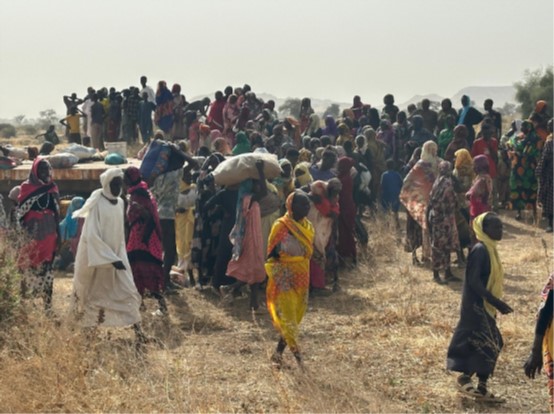
Arrival of displaced people from Zamzam Camp to Tawila locality in the morning of April 12, 2025.
Simultaneously, conditions in El Fasher have continued to deteriorate, particularly in Abu Shouk Camp, where indiscriminate attacks and RSF reinforcements have persisted for several days. As of the morning of April 12, these attacks had resulted in the deaths of over 40 individuals and left hundreds injured, according to verified sources.
By April 13, the situation in Zamzam Camp had become increasingly dire due to ongoing random shelling, generating widespread fear and further displacement. Many families and individuals fled overnight toward El Fasher, with additional waves of displaced persons observed by our team arriving in Tawila.
The lack of functional communication networks and the complete internet blackout have severely hampered coordination, limited the flow of information, and hindered timely responses to the rapidly evolving situation.
Tragically, the renewed and intense assault on Zamzam Camp occurred later on April 13, reportedly killing dozens more. Due to the volatile security conditions and communication disruptions, it remains extremely difficult to verify casualty numbers or assess the full extent of the devastation. The assault ultimately led to the camp falling under the control of the RSF. Efforts to gather accurate information and support ongoing rescue and relief operations continue under extraordinarily challenging circumstances.
Unfortunately, as of April 13, 2025, Mr. Ahmed Mohamed Salih Sayidna, Manager of SAPA’s Hope Oasis Center- a child-friendly space for children in Zamzam- died from injuries sustained during the RSF’s shelling of El Fasher.
Moreover, to make matters even worse, SAPA’s Kitchen in Zamzam Camp, North Darfur, was struck and burned by the RSF as a result of ongoing shelling in the area suspending all SAPA’s operations in the camp, this incident was confirmed by satellite imagery in a report from the Yale Humanitarian Research Lab (Yale HRL) (see image below). Since August 2024, the kitchen has served over 630,000 meals to displaced families and children.

Thermal scarring visible on temporary structures at the Sudanese American Physicians Association (SAPA) Kitchen compound in Zamzam, indicating fire damage between 11 and 14 April 2025. A VIIRS fire detection was recorded at this location on 13 April 2025. Analysis provided by Yale Humanitarian Research Lab (Yale HRL) (see report).
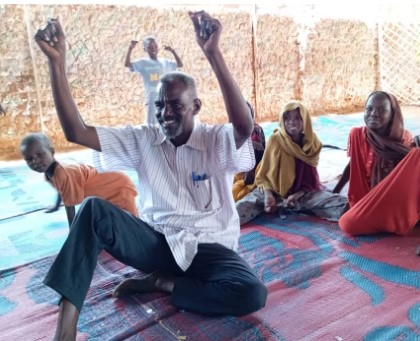
The late Mr. Ahmed Mohamed Salih Sayidna during a child support session at SAPA’s child-friendly space, ‘Hope Oasis,’ in Zamzam Camp.
Humanitarian Crisis Worsens in North Darfur During The Violence and Siege Tighten Around Zamzam Camp (Before April 10, 2025)
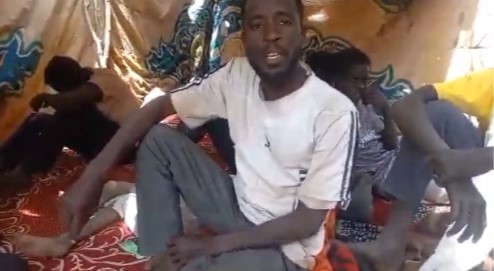
“I’ve been displaced three times because of attacks by the Rapid Support Forces. It’s a tragedy I never imagined living through.”
— Hassan Adam, from the village of Tartoura, North Darfur
Even before April 10, 2025, the situation in North Darfur was rapidly deteriorating, with Zamzam Camp—once considered a relatively safe haven for displaced families—overwhelmed and under siege. Since January 2025, a new wave of displaced people from El Fasher and nearby villages such as Shagra and Saloma has stretched the camp’s already limited resources. Violent attacks by the Rapid Support Forces (RSF) on February 8 and 11 caused panic, casualties, and further displacement. On March 2, more than 52 villages near Zamzam were burned, forcing thousands more into the overcrowded camp.
A crippling blockade had cut off key supply routes, especially from the Khazan Jadeed reservoir. Fuel shortages disabled water pumps, leaving residents to queue for days at the few remaining water stations. Prices skyrocketed. Healthcare collapsed—Zamzam’s only clinic shut down on February 24, and the Al-Saudi Hospital in El Fasher remained the only functioning hospital, despite being under heavy bombardment. Most residents relied on empty pharmacies or traditional remedies.
With the blockade tightening, some families risked dangerous nighttime journeys to Tawila in search of food and safety. Thousands remained trapped in Zamzam, facing hunger, violence, and disease.
Background
In El Fasher, the capital of North Darfur State, and nearby areas, civilians face significant dangers as conflict between the Rapid Support Forces (RSF) and the Sudanese Armed Forces (SAF) escalates. The town of El Fasher and surrounding villages have been at the heart of severe clashes, particularly since April 2024, with a marked increase in violence beginning January 2025. Between April 2024 and January 2025, 95 incidents led to sudden displacement, impacting an estimated 605,257 individuals across North Darfur, with 59% of these incidents concentrated in El Fasher locality. Attacks have affected almost every neighborhood, including Abu Shock IDP camp and key infrastructure like the Saudi Hospital (IOM DTM, 2025).
Adding to this, El Fasher has been under siege by the RSF since May 2024, severely limiting access to essential supplies and leaving thousands trapped. Many residents have been displaced multiple times, and the lack of economic resources and safe passage further compounds their suffering (IOM DTM, 2025).
Zamzam Camp, the largest camp for internally displaced persons (IDPs) in Sudan, sheltered approximately 500,000 displaced individuals fleeing ongoing conflicts. Predominantly women and children, these IDPs have faced severe hardships since April 2023, exacerbated by famine, disease, and insufficient access to basic necessities and services (IOM DTM, 2025).
Between 13 and 14 April 2025, DTM received multiple reports of large-scale displacement from Zamzam IDP camp. Based on initial estimates, DTM field teams reported that between 60,000 and 80,000 households were displaced from Zamzam IDP camp due to heightened insecurity. Most households remain displaced within El Fasher locality, while others were displaced to locations across Tawila and Dar As Salam localities, North Darfur.
These figures represent preliminary estimates only. The situation remains tense and highly fluid, with continuous displacement and evolving dynamics.
Humanitarian Situation (as of 15 April, 2025)

Waves of newly displaced families arriving in Tawila, with the majority being women and children, who have fled from Zamzam Camp to Tawila locality on foot.
Water Access:
The water crisis has grown increasingly dire. Most of the area’s water systems, which depend on fuel-powered pumps, have stopped functioning due to severe shortages of fuel. As a result, residents are forced to wait for days at the few remaining water stations, where supplies fall far short of demand. Water delivery trucks, crucial for transporting water from distant sources, face growing security risks and logistical challenges, further exacerbating the crisis.
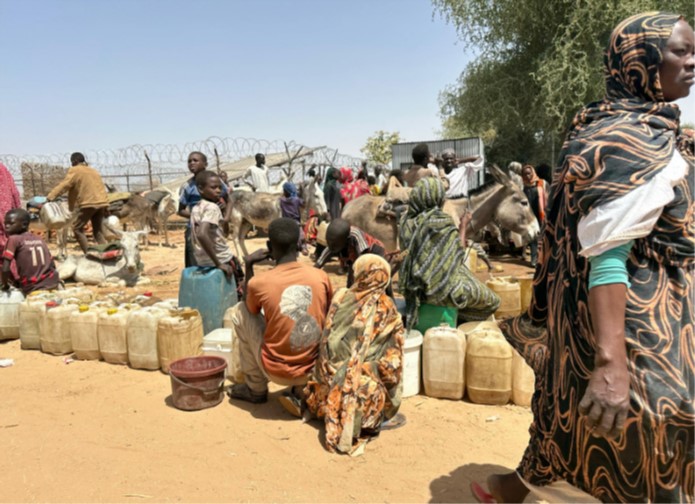
Displaced families wait in long lines for drinking water in Tawila
Healthcare Collapse:
Healthcare services are on the verge of collapse. Al-Saudi hospital in El Fasher—operating under heavy security constraints and constant aerial bombardment—remains the only functional hospital serving both the city and Zamzam camp. On February 24th, the sole health facility in Zamzam was forced to shut down amid escalating violence.
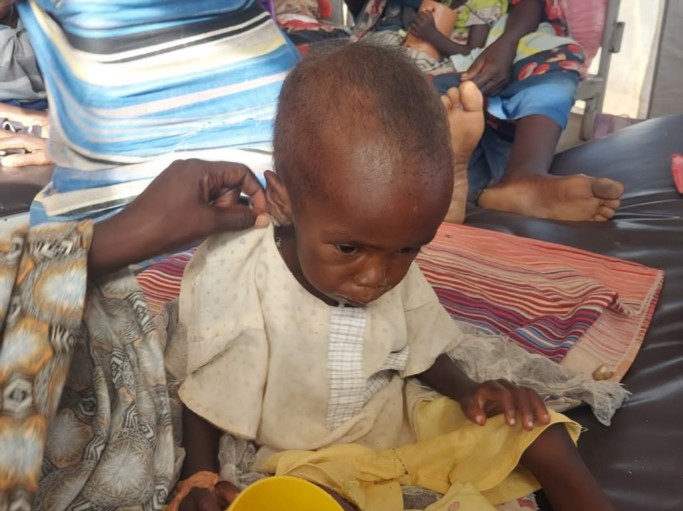
A malnourished child receiving treatment at Zamzam Camp in a makeshift clinic before the invasion of the camp by the RSF.
Several humanitarian organizations providing medical aid have also suspended their life-saving activities due to insecurity. With health infrastructure nearly non-functional, desperate residents now rely on empty pharmacies or resort to traditional medicine to meet their basic health needs
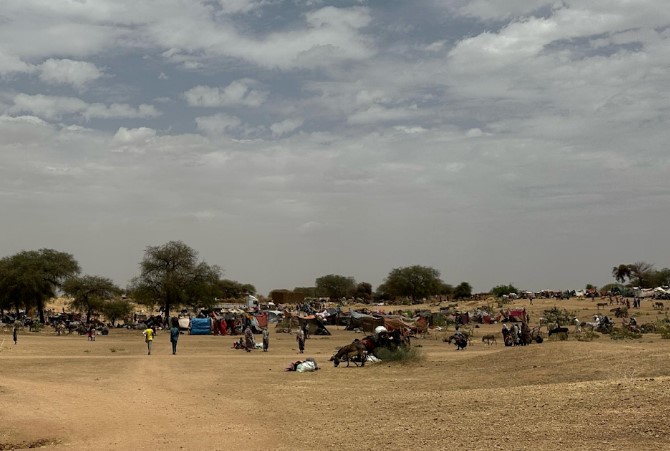
Waves of displaced families from El Fasher and Zamzam Camp arriving at IDP gathering points in Tawila.
Displacement to Tawila Town:
In the past few days, assaults and indiscriminate attacks have intensified, compounded by a week-long blockade that has cut off access to even the most basic necessities. Many families have fled toward Tawila, about 60 km west of Zamzam Camp, though the exact numbers remain unknown. These individuals are escaping life-threatening conditions in Zamzam Camp, where siege, starvation, and relentless violence have left them with no other choice.
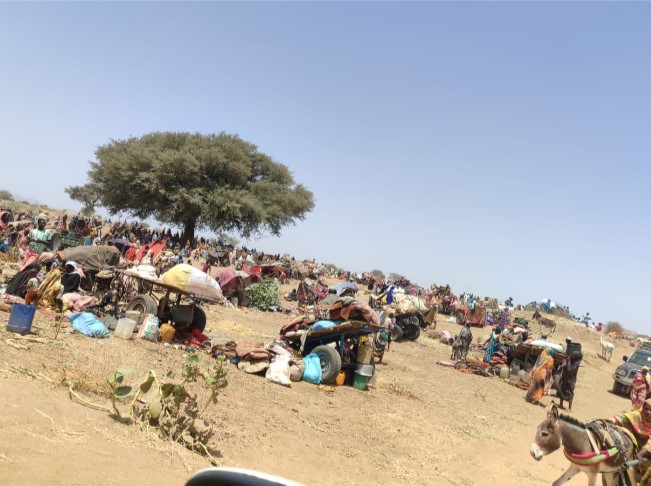
New waves of displaced families are arriving in Tawila from Zamzam Camp with no shelter.
“Tawila Al-Omda” serves as a primary gathering point for individuals displaced from Zamzam Camp and the city of El Fasher. This area, which previously hosted around 800 to 1,000 families, has seen a significant rise in the displaced population. Between January 15 and April 8, thousands of new families arrived in Tawila.
Recently, there has been a sharp increase in the number of displaced individuals reaching Tawila. Large vehicles, including trucks, have been transporting many families—among them women, children, and the elderly. On one morning alone, hundreds of families arrived in the area.
SAPA Response:
SAPA remains at the forefront of delivering critical aid in North Darfur, where growing displacement and dwindling resources have left vulnerable communities with little support. In 2024 and the first quarter of 2025 alone, we provided health services to 35,323 beneficiaries across four Primary Healthcare Centers (PHCs) and distributed over 634,429 meals in Zamzam Camp.
In Zamzam, where most communal kitchens and INGOs had already suspended operations, SAPA stood as the sole provider of essential services. Despite severe supply shortages, the food distribution center was serving over 3,650 meals daily, and the water station remained operational—though frequently disrupted by insecurity and fuel scarcity. Through the Hope Oasis Center, SAPA also provided psychosocial support and safe spaces for children, whose needs continued to grow as displacement surged. Unfortunately, all of these programs have been suspended following the invasion.
Following the suspension of all programs in Zamzam, SAPA is reallocating its remaining resources to Tawila to meet the rapidly escalating needs. In Tawila, where our PHC clinic provided care to over 1,400 patients last month, SAPA is urgently working to expand operations by establishing a new clinic for incoming displaced families, deploying a mobile clinic to reach remote communities, and developing a community kitchen to serve 4,000 daily meals for new arrivals from Zamzam Camp and El Fasher. As displaced populations flee violence and hunger in record numbers, SAPA remains committed to delivering these lifesaving services. However, sustaining and scaling this critical work depends entirely on immediate support.
As of this report, our on-ground teams continue to assess urgent needs at gathering points across Tawila. To address critical humanitarian response gaps, SAPA is exploring the deployment of mobile clinics by reallocating staff and resources. In addition, we are working to provide access to safe drinking water and establish a community kitchen to meet the growing food needs of displaced families. However, this expansion is heavily dependent on securing additional funding—funding that has never been more crucial or urgent than it is now.