
Three Lives, One Struggle: Stories of Survival and Strength from Displaced Sudanese Families
-
by
 Waleed
 - No Comments on Three Lives, One Struggle: Stories of Survival and Strength from Displaced Sudanese Families
 Waleed
War does not announce itself politely. It arrives through the sound of shelling, the collapse of familiar streets, and the sudden knowledge that home is no longer safe. In Sudan, countless families have been forced to leave everything behind, not knowing where they will sleep, how they will eat, or whether their children will survive the journey.
At Al-Affad Camp in Ad-Dabbah, Northern State, these questions are part of daily life. What was never meant to be permanent has become a fragile shelter for families displaced by violence in Darfur. Within this camp live stories of loss, resilience, and quiet courage.
This is the story of three lives, bound by one shared struggle.
Kalthoum: Rebuilding Life with Determination
Kalthoum did not leave El-Fasher because she wanted to. She left because staying meant risking death. Relentless shelling turned everyday life into a constant calculation of danger. When the violence became impossible to survive, she fled north toward Ad-Dabbah, carrying little more than what she could hold and the hope that somewhere, life could begin again.
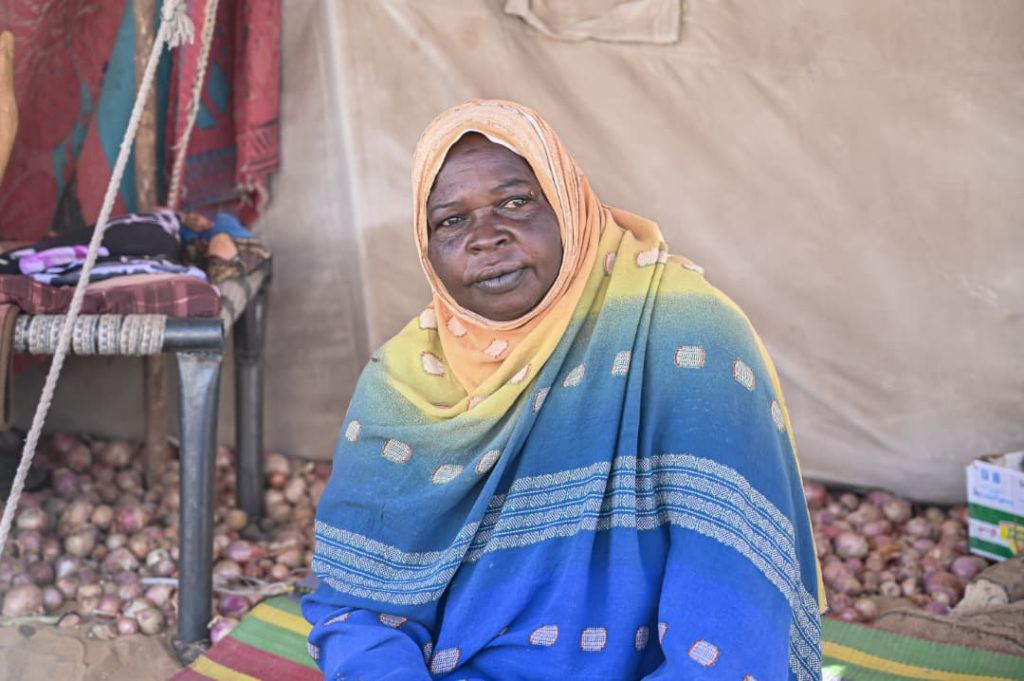
Al-Affad Camp welcomed her with safety, but not comfort. Like many displaced women, Kalthoum found herself starting over in conditions that tested both body and spirit. Food was scarce. Resources were limited. Employment was nearly nonexistent. Yet Kalthoum refused to let displacement define her as helpless.
Inside the camp, she noticed a gap; families needed basic household items and cooking tools, but there was no easy access to them. So she acted. With determination and patience, she began making long, exhausting journeys (nearly 30 kilometers at a time) to Ad-Dabbah town. There, she purchased essential supplies, carried them back, and opened a small shop inside the camp.
>> Help displaced women like Kalthoum rebuild dignity and independence. Support SAPA’s humanitarian programs today
Khadija and Souza: A Mother’s Fight Against the Unthinkable
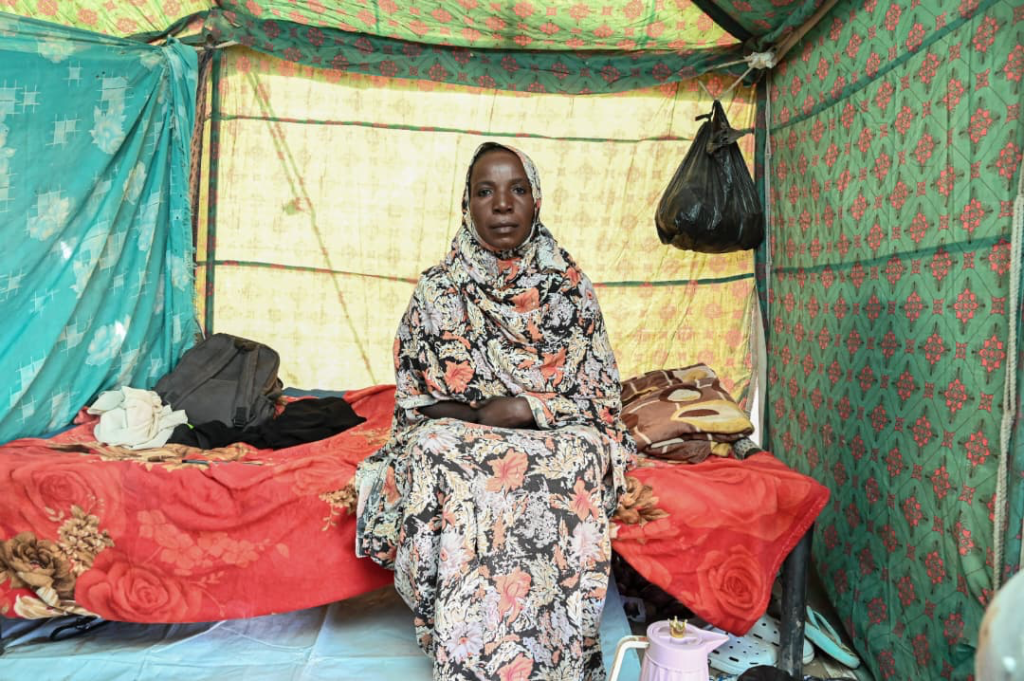
For Khadija, displacement was not a single moment, it was a chain of terrifying decisions. She fled El-Fasher with her children as violence spread through their neighborhood. Their escape led them from Al-Salam to Um Al-Qura, where they found temporary shelter in an unfinished three-story building. The roof was open. The walls offered little protection. Shells fell nearby as they waited, unsure if the next blast would be closer.
When the shelling intensified, other families fled again to Zamzam Camp. Khadija stayed behind. To survive, she sold spices in the livestock market, one of the few ways she could earn money. Then, one day, the market was hit. In the chaos of explosions and flying debris, a shell struck nearby. Several people were injured. Among them was Khadija’s daughter, Souza. In that moment, childhood was stolen. Souza lost her hand.
Souza eventually did receive treatment. She now lives with her mother and siblings in Al-Affad Camp. The wound may have healed, but the trauma remains, etched into the daily life of a child who should have been worrying about school, not survival.
Taj Al-Asfaya: A Child Carrying More Than His Years
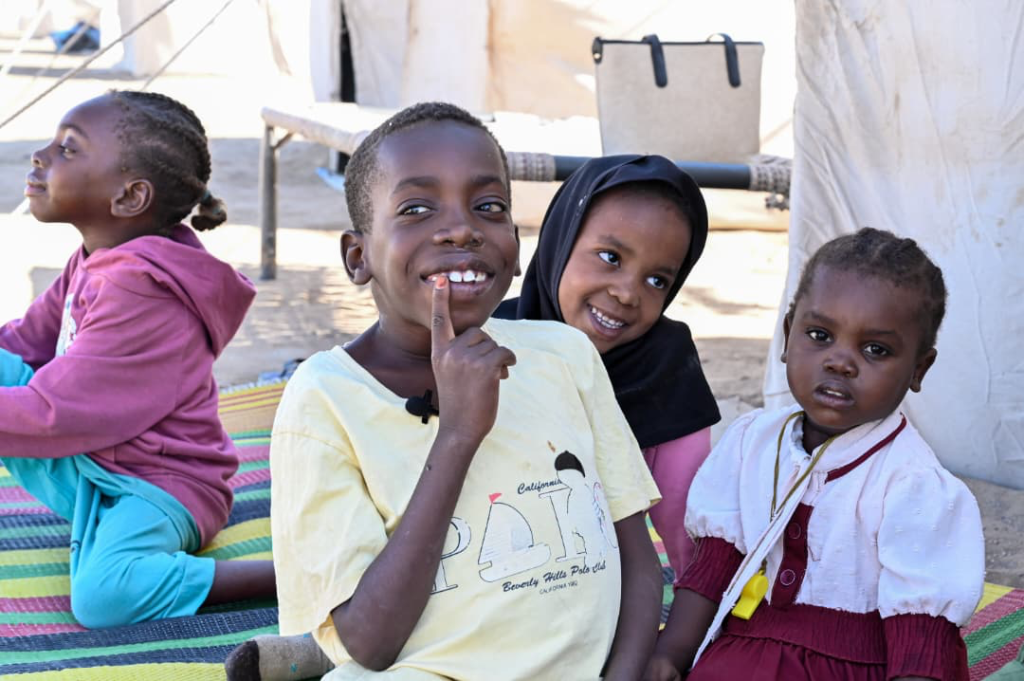
Taj Al-Asfaya is ten years old. He is one of eight siblings. And his childhood ended the day the war reached his doorstep. In Al-Fashir, siege and shelling made life unlivable. Taj’s father faced an impossible choice: stay and risk losing his children, or flee into the unknown. He chose to run. Their journey took 11 days.
They traveled by carriage, enduring exhaustion, fear, and thirst. Each day brought uncertainty. Each night carried the weight of survival. Eventually, they reached Abu Hamad in the Northern State, and later, Al-Affad Camp.
But Taj’s challenges did not end with displacement. He and his sister were both born with a congenital spinal condition, an added burden in a world already stripped of mercy. Access to medical care is limited. Mobility is difficult. Childhood joys are overshadowed by pain and restriction.
Today, Taj lives in a camp that was never meant to be home. Yet within this fragile refuge, he still dreams of school, of health, and of a life where war is no longer the defining chapter. Al-Affad Camp stands as a silent witness, not only to suffering, but to the resilience of children who refuse to let violence erase their hope.
>> Children like Taj need medical support, nutrition, and protection. Stand with SAPA to protect displaced children
How SAPA Is Responding to the Crisis in Al-Affad Camp and How You Can Help
‘Sudan: Health and Service Gap Assessment‘ undertaken by the Sudanese American Physicians Association (SAPA) in December 2025 shows just how dire conditions have become in Al-Affad IDPs Camp in Ad-Dabbah, Northern State. The camp now hosts around 24,000 displaced people (3,375+ families), with 35–40 new families arriving daily as conflict continues to push civilians from Darfur and other regions into precarious displacement.
SAPA is actively responding to these urgent needs:
- Delivering emergency and primary healthcare in camp settings
- Providing medical care and support for trauma, communicable diseases, and chronic conditions
- Supporting maternal and child health services, including vaccination and obstetric care
- Ensuring access to essential medicines, diagnostics, and supplies
- Strengthening community-based health responses through mobile clinics and partnerships with local health facilities
👉 Read the full Health and Service Gap Assessment Report to understand the urgent needs for Al-Affad Camp:
Read the Full Report Here
FAQs
1. Who are internally displaced persons (IDPs)?
IDPs are individuals forced to flee their homes due to conflict or disaster but remain within their country’s borders.
2. Where is Al-Affad Camp located?
Al-Affad Camp is in Ad-Dabbah locality, Northern State, Sudan.
3. Why are families fleeing El-Fasher and Al-Fashir?
Ongoing violence, shelling, and siege conditions have made daily life unsafe and unsustainable.
4. What are the biggest needs in Al-Affad Camp?
Healthcare, clean water, food security, medical supplies, and child protection services.
5. How does SAPA help displaced families?
SAPA provides medical care, supports health facilities, and addresses service gaps in displacement settings.


