

Sudanese Families Eat Weeds to Survive as War Drives Starvation
 Waleed
In displacement camps and war-torn cities, many Sudanese families now boil wild plants in salt water because there is nothing else. The civil war, which erupted in April 2023 between the Sudanese Armed Forces (SAF) and the Rapid Support Forces (RSF), has created one of the world’s most catastrophic hunger crises.
Today, over 24 million people, more than half the population, are acutely food insecure, according to the Integrated Food Security Phase Classification (IPC). For many, survival means going without meals for days or relying on millet porridge, leaves, or even peanut shells used for animal feed.
“We’ve also received reports of people eating grass, people eating leaves,” said Leni Kinzli, the World Food Programme’s spokesperson for Sudan.
>> Related Post: How Many People and Children Starve to Death Every Day?
The Crisis Behind the Hunger
What was once one of Africa’s most fertile regions is now collapsing under the weight of conflict. Key agricultural lands lie abandoned, markets are decimated by hyperinflation, and food supply chains are choked by active fighting. In some areas, a bar of soap now costs $17, and a pound of sugar sells for $33—a price that is unaffordable for most Sudanese families.
Regions like Darfur, Kordofan, and Gezira are experiencing the worst of the famine-like conditions. Humanitarian groups warn that at least 17 areas, including Zamzam camp, Jebel Aulia, and large swathes of Khartoum, are at imminent risk of famine.
In these regions, traditional farming has become dangerous or impossible. In South Darfur, once-reliable farmlands are now shrinking due to violence and the loss of farming tools and seeds. Camps like El Serif are overwhelmed by new arrivals, with tens of thousands displaced and new waves of famine-related deaths reported by aid workers.
>> Related Post: Top 10 Countries with the Highest Poverty Rate in the World in 2026
SAPA’s Emergency Response: Fighting Hunger and Disease
The Sudanese American Physicians Association (SAPA) is a not-for-profit, non-partisan organization founded in 2019. Led by medical professionals in the Sudanese diaspora, SAPA provides humanitarian aid, medical care, and health education to vulnerable communities across Sudan and beyond.
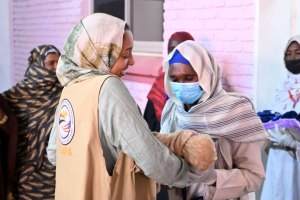
While many humanitarian organizations struggle to access high-risk zones, the Sudanese American Physicians Association (SAPA) continues to provide life-saving support through local networks, mobile clinics, and emergency aid delivery.
SAPA’s hunger and health relief efforts include:
- Distributing food parcels to families in inaccessible and conflict-affected zones.
- Deploying mobile clinics that bring healthcare to areas without functioning hospitals.
- Providing clean water kits and cholera treatment to prevent deadly outbreaks fueled by starvation and poor sanitation.
- Supporting and training local doctors and health workers, ensuring that communities are not left without care.
In 2024 alone, SAPA provided over 1.15 million meals, screened more than 22,000 children for malnutrition, and trained hundreds of healthcare professionals to serve their communities despite extreme conditions.
>> Related Post: Top 501(C)(3) Nonprofit Organizations to Donate to in 2026
How You Can Help
Sudan’s people are resilient, but they cannot survive on strength alone. The hunger crisis is worsening. Immediate, sustained action is needed.
You can help SAPA continue its mission to:
- Deliver emergency food aid to families on the brink of starvation
- Provide lifesaving healthcare through mobile medical teams
- Help train and protect Sudan’s remaining healthcare workforce
- Advocate for health equity and humanitarian access
>> Related Post: Best Food Insecurity/Hunger Charities to Donate to in 2026
FAQs
1. Which regions of Sudan are most affected by famine right now?
Areas most at risk include parts of Darfur, Kordofan, Gezira, and Khartoum, especially Zamzam Camp, El Fasher, and Jebel Aulia, where conflict has made humanitarian access extremely limited.
2. Is famine officially declared in Sudan?
While the Sudanese government has not officially declared famine, humanitarian agencies warn that multiple regions meet critical hunger thresholds, with over 24 million people facing acute food insecurity and famine-like conditions already present in some areas.
3. What role does SAPA play in responding to hunger in Sudan?
SAPA delivers emergency food aid, operates mobile medical clinics, distributes clean water kits, and supports local healthcare providers working in high-risk zones. Their efforts target both hunger and the health consequences of malnutrition and disease.
4. How does war affect food access in Sudan?
War disrupts food production by forcing farmers to flee, destroying irrigation and storage systems, and driving up prices in local markets. In conflict zones, even basic food items become unaffordable or unavailable entirely.
5. Can international aid reach famine-affected areas?
In many regions, especially those controlled by armed groups, access is extremely limited. SAPA overcomes some of these barriers by collaborating with local doctors and volunteers, enabling more flexible and secure aid delivery.


Comment (1)
GenIPTV Team
Watch Everything With Us!