
4,000 Daily Meals for Tawila Families Reflect SAPA’s Commitment to Relief
 Waleed
In the heart of Sudan’s humanitarian catastrophe, the Sudanese American Physicians Association (SAPA) has become a lifeline for thousands of displaced families. Nowhere is this more evident than in Tawila, North Darfur, where SAPA has been delivering 4,000 daily meals to families forcibly displaced from Zamzam Camp. As war, displacement, and hunger converge, SAPA’s hunger relief program reflects more than just emergency aid; it reflects a long-term commitment to survival, dignity, and recovery.
>> Related Post: Sudanese Families Eat Weeds to Survive as War Drives Starvation
The Crisis in Tawila: Displacement, Hunger, and Humanitarian Need
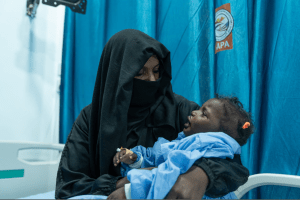
Since the escalation of violence in Sudan, families across North Darfur have been forced to flee their homes. In Tawila locality’s Al-Omda area, displaced families from the war-stricken Zamzam Camp now face dire food shortages and unimaginable hardship. Hunger has become a daily reality. With no access to stable food sources, families, especially children, women, and the elderly, suffer the consequences of malnutrition and deprivation.
Sudan’s food crisis is now one of the worst in the world. The UN has warned that famine is looming. In areas like Tawila, the situation is not just about food scarcity but about life and death. Hunger here stunts growth, weakens immunity, and leaves people, especially children, more vulnerable to disease and trauma.
>> Related Post: How Many People and Children Starve to Death Every Day
SAPA’s Hunger Relief Program: 4,000 Meals a Day and Hope for Thousands
In response to this urgent need, SAPA established a community kitchen in Al-Omda, Tawila. Since the intervention began, the kitchen has prepared and distributed over 4,000 hot meals every day. These meals are specifically designed to be nutritious and filling, ensuring that displaced families receive the nourishment they desperately need to survive.
What makes this initiative remarkable is its focus on dignity and local empowerment. Rather than relying solely on outside volunteers, SAPA’s community kitchen trains and employs displaced mothers and local women. These women prepare meals for their communities, creating a model of compassion, solidarity, and shared purpose.
The Long-Term Impact of Nutritional Aid
While feeding 4,000 people daily is a massive logistical undertaking, SAPA’s work in Tawila goes beyond food delivery. It addresses the root causes and long-term consequences of malnutrition. Chronic hunger, especially in children, leads to stunting, impaired development, and learning difficulties. When SAPA provides regular meals, it is not just filling stomachs; it is shaping futures.
Children who eat nutritious meals are better able to focus, grow, and engage with the world. Families that no longer have to worry about where their next meal will come from can begin to heal. SAPA’s program reduces stress, lowers the risk of health complications, and fosters community resilience.
>> Related Post: Empowering the Next Generation: Girls’ Education in Sudan
Empowering Local Caregivers to Detect and Manage Malnutrition
One of the most effective elements of SAPA’s approach is its integration of nutritional education and community empowerment. In Tawila, mothers and caregivers are trained to detect signs of malnutrition early on, before it escalates into a medical emergency. This community-based approach ensures early intervention, timely care, and long-term improvement in health outcomes.
These trained caregivers become first responders in their families and neighborhoods. They recognize the symptoms of undernutrition, administer basic care, and refer severe cases to SAPA’s mobile medical teams. This system of local detection is vital in conflict zones where hospitals are distant or inaccessible.
>> Related Post: SAPA’s July 2025 Plan: Scaling Healthcare for Sudan’s Displaced
Building Resilience: Laying the Groundwork for Sustainability
Emergency food aid is critical, but SAPA’s vision goes further. The program in Tawila is designed to build resilience and reduce long-term dependence. By combining food distribution, mobile medical care, and caregiver training, SAPA is laying the foundation for a sustainable, locally driven health and nutrition support system.
This integrated approach ensures that families are not just fed today but are better prepared to meet tomorrow’s challenges. Nutrition support becomes a pathway to stability. As communities rebuild, they do so with stronger foundations and more tools to care for their own.
This long-term impact is crucial in conflict zones like Tawila, where displaced populations may remain for months or even years. SAPA’s work ensures that a generation of Sudanese children is not lost to hunger.
How You Can Help: Support SAPA’s Lifesaving Work
SAPA’s hunger relief program in Tawila is possible only because of donors and supporters who believe in the power of compassion. Right now, there is an urgent need to sustain and expand this program.
Every donation, no matter how small, has the power to save lives. Whether it’s one meal, one clinic visit, or one training session, your generosity becomes part of a larger movement to restore hope in Sudan. Donate Now!
FAQs
1. How can I volunteer to support SAPA’s kitchen or mobile clinic programs?
While in-person volunteering is limited due to the active conflict in Sudan, supporters can help remotely through fundraising, awareness campaigns, and organizing virtual events to support SAPA’s hunger relief programs.
2. What is the cost of providing a single meal through SAPA’s kitchen in Tawila?
On average, it costs just $1.50 to provide a nutritious hot meal to a displaced person. Larger donations can help feed entire families for a week or more.
3. How does SAPA ensure the meals meet nutritional requirements?
SAPA works with nutritionists and medical professionals to design meal plans that provide essential nutrients and calories. Meals typically include grains, legumes, and vegetables to ensure a balanced diet.
4. Are SAPA’s kitchens permanent installations?
Most community kitchens are designed to be semi-permanent, adaptable to the shifting locations of displaced populations. They are built with local input to be sustainable and scalable.
5. How does SAPA monitor the impact of its programs in areas like Tawila?
SAPA tracks program impact through health screenings, caregiver reports, and mobile clinic data. They monitor child growth rates, malnutrition cases, and food distribution efficiency to continuously improve operations.