
Who is Eligible for Sadaqah/charity in Islam
 Waleed
Charity, or Sadaqah, holds a central place in Islam. It is more than a financial act; it is a form of worship, a means of purifying wealth, and a way to strengthen communities. The Prophet Muhammad ﷺ said:
“Charity does not decrease wealth.” (Muslim – 2588)
But an important question arises for Muslims striving to give responsibly: Who is eligible for Sadaqah in Islam?
The Qur’an and Hadith provide clear guidelines on who can receive charity, ensuring that Sadaqah reaches those who need it most. Explore the categories of people eligible for Sadaqah, the difference between Zakat and Sadaqah, and how nonprofit organizations are putting the donations into action by helping vulnerable families in need.
>> Related Post: How Does Sadaqah Remove Difficulties?
Difference Between Zakat and Sadaqah
Before diving into eligibility, it’s important to distinguish between Zakat and Sadaqah:
- Zakat is an obligatory form of charity (one of the Five Pillars of Islam) given annually when wealth reaches the Nisab threshold.
- Sadaqah is a voluntary act of charity, given at any time and in any amount, purely for the sake of Allah.
Both are powerful acts of worship, but Sadaqah is broader and it can include money, food, kind words, or even a smile.
>> Related Post: How Much Should I Give in Sadaqah/Charity?
Who is Eligible for Sadaqah in Islam?
The Qur’an (Surah At-Tawbah 9:60) lays out categories for Zakat, and many scholars extend these to voluntary Sadaqah as well. Below are the main groups eligible for Sadaqah:
1. The Poor (Al-Fuqara’)
These are individuals who have little to no means of livelihood and struggle to meet basic needs like food, shelter, and clothing.
Example: A widow unable to feed her children. Giving Sadaqah to them relieves immediate suffering and restores dignity.
2. The Needy (Al-Masakin)
Unlike the poor, the needy may have some income but still fall short of covering essential expenses.
Example: A family living paycheck-to-paycheck but unable to afford medical care. Sadaqah will help bridge their financial gaps.
3. Those in Debt (Al-Gharimeen)
Islam recognizes the burden of debt. People drowning in debt, especially through no fault of their own, are eligible for Sadaqah.
Example: Someone who borrowed money for medical treatment or education and cannot repay. Helping them is seen as an act of mercy and solidarity.
4. Travelers in Need (Ibn al-Sabil)
Stranded travelers far from home without resources are also eligible.
Example: A person abroad whose funds ran out due to unforeseen circumstances. Islam encourages helping them return safely or sustain themselves until relief arrives.
5. New Muslims or Those Reconciled to Islam (Mu’allafah al-Qulub)
This includes individuals who have newly embraced Islam and require support to strengthen their faith or integrate into the Muslim community. Giving Sadaqah to them fosters inclusion and encouragement.
6. Orphans and Vulnerable Children
Although not explicitly mentioned in the verse, orphans are highlighted in multiple Hadith as deserving of care.
The Prophet ﷺ said:
“The one who cares for an orphan and me will be together in Paradise like this,” and he held his two fingers together. (Bukhari)
Providing food, education, and shelter for orphans through Sadaqah is among the most beloved acts in Islam.
7. Those Struggling for the Cause of Allah (Fi Sabeelillah)
This includes people working for the betterment of the Muslim community, whether in education, healthcare, or humanitarian service.
Example: Doctors volunteering in conflict zones, or organizations providing relief in war-affected areas.
8. Anyone in Genuine Hardship
Beyond defined groups, Islam encourages generosity toward anyone facing hardship. Even non-Muslims in need may be recipients of voluntary Sadaqah.
The Prophet ﷺ emphasized kindness to all creation, including neighbors and the vulnerable, regardless of faith.
>> Related Post: Best Charities to Donate Sadaqah to in 2026 | Sadqah NGOs
Modern Applications: Sadaqah in Today’s World
In our interconnected world, the categories above extend to:
- Refugees displaced by war.
- Families affected by natural disasters.
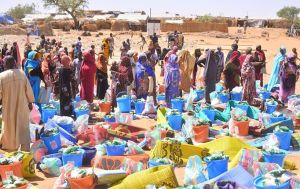
- Communities in regions with food and healthcare insecurity, such as Sudan.
>> Related Post: 8 Important Hadith on Charity and Sadaqah
Fastest & Securest Way to Pay SADAQAH ONLINE👇
How SAPA Uses Sadaqah Donations
The Sudanese American Physicians Association (SAPA) is a leading charity providing:
- Mobile healthcare clinics for families cut off from hospitals.
- Food assistance to displaced families and children facing malnutrition.
- Educational support for orphans and underserved students.
- Emergency relief in times of outbreaks like cholera and conflict.
When you give your Sadaqah through SAPA, you are ensuring that the poor, needy, sick, and displaced in Sudan receive life-saving care.
Your sadaqah will support the work of SAPA, where physicians and volunteers dedicate time and resources to help families in Sudan with medical care, food aid, and education.
FAQs: Who is Eligible for Sadaqah in Islam
1. Can Sadaqah be given to non-Muslims?
Yes, voluntary Sadaqah can be given to non-Muslims in need. Islam encourages kindness to all people, regardless of faith.
2. Can Sadaqah be given to family members?
Yes, giving Sadaqah to family members in need is highly encouraged, as it combines charity with maintaining family ties. However, it cannot replace obligatory financial responsibilities like providing for dependents.
3. Can Sadaqah be given online?
Yes. Many trusted organizations, including SAPA, accept online donations, ensuring your charity reaches those in urgent need.
4. Is there a minimum amount for Sadaqah?
No, Sadaqah has no fixed amount. Even a smile or kind word counts as Sadaqah, though financial and material support are especially impactful for the needy.
5. Can Sadaqah be given on behalf of someone else (like deceased parents)?
Yes. It is permissible and highly virtuous to give Sadaqah on behalf of deceased loved ones. This ongoing charity (Sadaqah Jariyah) continues to benefit them in the hereafter.
6. Is Sadaqah only for the poor?
While the poor and needy are the primary recipients, Sadaqah can also be used to support community welfare projects, medical aid, disaster relief, or even initiatives like training healthcare workers in crisis zones (as SAPA does in Sudan).
7. Can Sadaqah be given to build hospitals, schools, or wells?
Yes. These fall under Sadaqah Jariyah (ongoing charity) and are among the best forms of Sadaqah, as they provide continuous benefit even after the donor passes away.