
Causes, Impacts, and Solutions to the Water Scarcity Crisis in Africa
 Waleed
Water scarcity in Africa is one of the continent’s most pressing challenges, affecting over 400 million people and threatening livelihoods, health, and economic growth. As the world’s second-largest continent, Africa holds vast water resources, yet uneven distribution, climate change, and human factors create severe shortages. This crisis is not just about dry taps; it’s a barrier to development, fueling conflicts and poverty.
>> Related Post: Top 10 Poorest African Nations in 2026
Causes of Water Scarcity in Africa
Water scarcity in Africa stems from a mix of natural, environmental, and human-induced factors. While the continent receives significant rainfall in some regions, others face chronic dryness, exacerbated by global trends. Here are the primary causes:
1. Climate Change and Variability
Africa is highly vulnerable to climate change, with rising temperatures and erratic rainfall patterns intensifying droughts. According to the Intergovernmental Panel on Climate Change (IPCC), sub-Saharan Africa could see a 10-20% reduction in rainfall by 2050, affecting river flows and groundwater recharge. In regions like the Sahel, prolonged dry seasons lead to desertification, reducing available water for agriculture and drinking.
2. Population Growth and Urbanization
Africa’s population is projected to reach 2.5 billion by 2050 (United Nations), increasing water demand for domestic, industrial, and agricultural use. Rapid urbanization in cities like Lagos and Cairo strains infrastructure, with informal settlements often lacking access to safe water. Over 60% of sub-Saharan Africans live in slums without piped water.
3. Poor Water Management and Infrastructure
Inefficient water governance, aging infrastructure, and pollution contribute significantly. Many African countries lose 30-50% of water through leaks in distribution systems. Agricultural practices, which consume 70% of Africa’s water, are often inefficient, with limited irrigation technology leading to waste.
4. Conflict and Political Instability
Wars and disputes over water resources, such as those in the Nile Basin, disrupt supply chains and damage infrastructure. In conflict zones like South Sudan, millions of people face acute water shortages due to destroyed wells and pipelines.
5. Environmental Degradation
Deforestation, soil erosion, and overgrazing reduce water retention in ecosystems. The Congo Basin, Africa’s largest rainforest, is losing trees at a rapid rate, impacting river systems (FAO). Pollution from mining and agriculture further contaminates sources, making water unsafe.
>> Related Post: 5 Ways to Reduce Hunger/Poverty in Africa
Impacts of Water Scarcity in Africa
The water scarcity crisis in Africa has profound effects on health, economy, environment, and society. Over 300 million Africans lack access to safe drinking water (WHO), leading to cascading consequences:
1. Health Consequences
Waterborne diseases like cholera and diarrhea kill thousands annually, with children under 5 most at risk. In 2024, East Africa saw over 300,000 cholera cases. Malnutrition worsens as water shortages limit crop production, affecting millions of undernourished people in sub-Saharan Africa.
2. Economic Effects
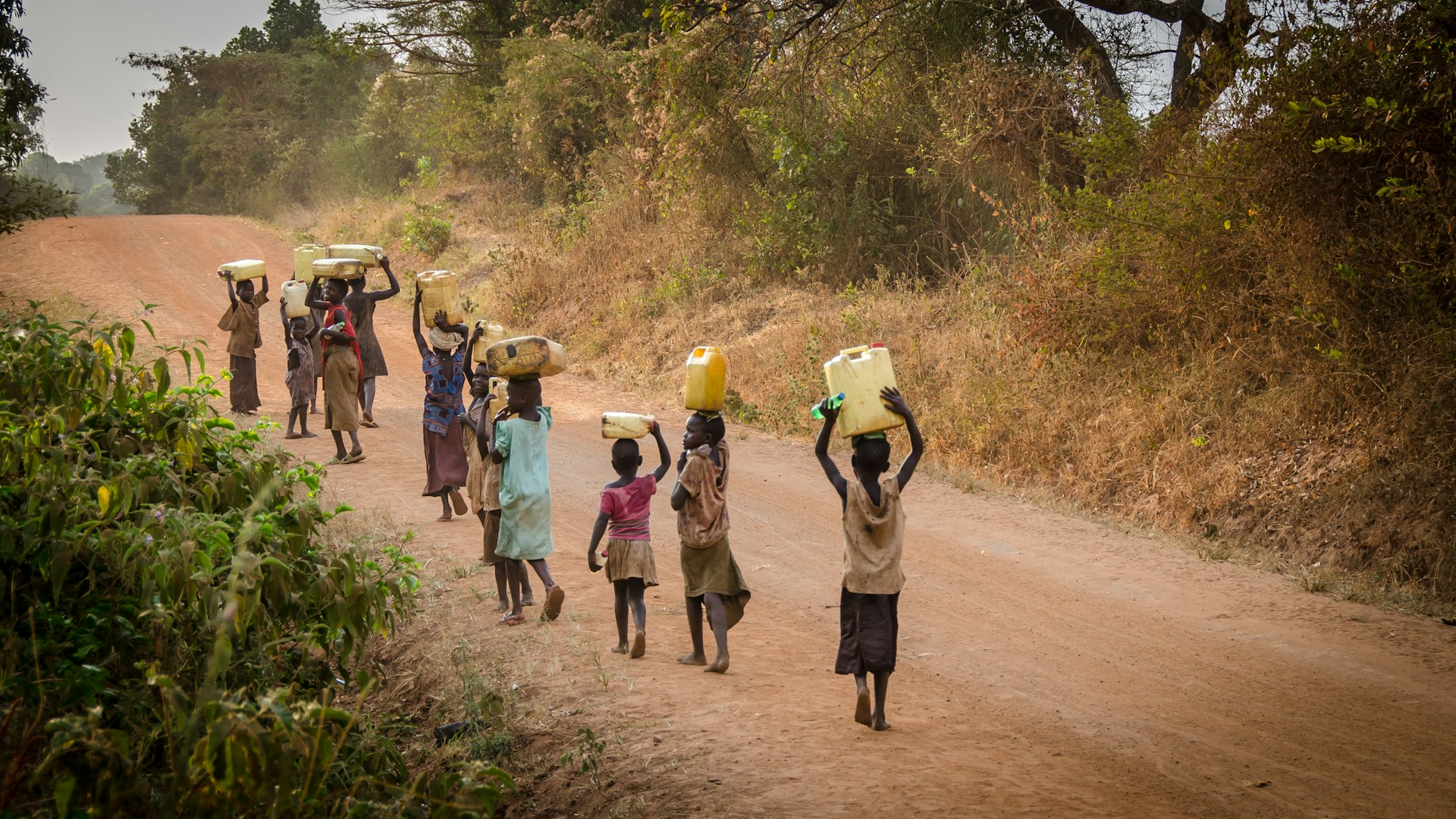
Agriculture, employing 60% of Africans, suffers from reduced yields, costing $30-60 billion yearly in lost GDP. Industries like mining and manufacturing face shutdowns, while women and girls spend 40 billion hours annually fetching water, reducing education and income opportunities.
3. Environmental Degradation
Scarcity leads to overexploitation of rivers and aquifers, causing biodiversity loss. Lake Chad has shrunk 90% since 1960, affecting 40 million people. Soil salinization from poor irrigation further degrades farmland.
4. Social and Political Instability
Water shortages fuel conflicts, such as pastoralist-farmer clashes in the Sahel. Migration surges as people flee drought-prone areas, straining urban resources. Gender inequality deepens, with women bearing the burden of water collection.
5. Long-Term Development Barriers
Scarcity hinders progress toward UN Sustainable Development Goal 6 (clean water for all). By 2030, Africa could face a 50% water deficit, stalling economic growth and exacerbating poverty.
>> Related Post: Mobile Health Clinics, Charities Services in Africa
Solutions to Water Scarcity in Africa
Addressing water scarcity in Africa requires innovative, sustainable strategies. Governments, NGOs, and communities are implementing solutions to build resilience in 2026 and beyond:
1. Improved Water Management and Infrastructure
Investing in efficient systems, like rainwater harvesting and drip irrigation, can reduce waste. The African Union’s Agenda 2063 promotes integrated water resource management. Projects like Ethiopia’s Grand Renaissance Dam aim to boost supply, though they require regional cooperation.
2. Climate-Resilient Agriculture
Adopting drought-resistant crops and agroforestry enhances food security. Initiatives like the Great Green Wall, planting trees across the Sahel, combat desertification, benefiting 250 million people.
3. Technological Innovations
Solar-powered pumps and desalination plants provide clean water in arid areas. In Kenya, mobile apps like mWater monitor sources, improving access for 10 million users.
4. Policy and Governance Reforms
Stronger regulations on water use and pollution are essential. Transboundary agreements, like the Nile Basin Initiative, foster cooperation among 11 countries.
5. Community-Led and International Aid
Grassroots efforts, supported by NGOs, empower locals with education and tools. International funding, such as the World Bank’s $1.5 billion for African water projects, accelerates progress.
>> Related Post: What Is the Cost of Drilling a Water Well in Africa?
How SAPA Contributes to Water Solutions in Africa
The Sudanese American Physicians Association (SAPA), a 501(c)(3) nonprofit (EIN: 83-3464851), addresses water scarcity through its Water, Sanitation, and Hygiene (WASH) program in Sudan, a hotspot for Africa’s water crisis. SAPA delivers clean water, sanitation facilities, and hygiene education to underserved communities, preventing diseases like cholera. In 2024, SAPA’s efforts supported 424,000 patients with integrated healthcare and WASH services, including hygiene kits and water tablets. By training local volunteers and restoring infrastructure, SAPA builds resilience against scarcity.
Conclusion
Water scarcity in Africa, driven by climate change, population growth, and poor management, has devastating health, economic, and social impacts. Yet, solutions like SAPA’s Wash program, improved infrastructure, resilient agriculture, and international aid offer hope for 2026. By understanding this crisis, we can advocate for change and support initiatives that ensure equitable access. Together, we can turn the tide on Africa’s water crisis.
FAQs
1. What are the main causes of water scarcity in sub-Saharan Africa, and how do they interact?
Water scarcity in sub-Saharan Africa results from climate change (reducing rainfall by 10-20% by 2050, per IPCC), population growth (demanding more water for 1.3 billion people), and poor infrastructure. These factors interact: droughts from climate change worsen agricultural demand, while urbanization strains limited systems, creating a cycle of shortage.
2. How does the water scarcity crisis in Africa impact children’s health and education?
In Africa, water scarcity leads to 1.8 million child deaths annually from diarrhea (WHO), as contaminated water spreads diseases. Girls spend hours fetching water, missing school, and reducing female education rates in affected areas.
3. How is water scarcity in East Africa contributing to conflicts and migration patterns in 2026?
In East Africa, scarcity fuels pastoralist-farmer conflicts over resources, displacing 2 million people in the Horn of Africa. Droughts drive migration to urban centers, straining cities like Nairobi. Solutions include peacebuilding through water-sharing pacts and sustainable farming via the Great Green Wall.
4. How does water scarcity in West Africa affect agricultural productivity and food security?
West Africa’s scarcity reduces crop yields by 20-30% (FAO), with droughts in the Sahel affecting 80% of rain-fed agriculture. This threatens food security for 300 million people, increasing malnutrition.
5. How can individuals contribute to solving the water scarcity crisis in Africa through everyday actions and donations?
Individuals can reduce waste by conserving water, supporting sustainable products, and donating to nonprofits like SAPA. Donations to organizations addressing scarcity provide clean water wells or education programs.


Comments (6)
Understanding Scarcity, Choices, and Opportunity Cost in A-Level Economics – 3auk – Study Smart
[…] SAPA-USA: sapa-usa.org/water-scarcity-in-africa […]
2030 Water, Sanitation and Climate resilience goals: 5 critical things African Ministers can do now - Uasin Gishu News
[…] September 2025 publication by the Sudanese American Physicians Association (SAPA) underlined the direct link between climate […]
2030 Water, Sanitation and Climate resilience goals: 5 critical things African Ministers can do now - Abuja Online
[…] September 2025 publication by the Sudanese American Physicians Association (SAPA) underlined the direct link between climate […]
2030 Water, Sanitation and Climate resilience goals: 5 critical things African Ministers can do now - Nairobi Online
[…] September 2025 publication by the Sudanese American Physicians Association (SAPA) underlined the direct link between climate […]
2030 Water, Sanitation and Climate resilience goals: 5 critical things African Ministers can do now | Africa News Circle
[…] September 2025 publication by the Sudanese American Physicians Association (SAPA) underlined the direct link between climate […]
2030 Water, Sanitation And Climate Resilience Goals: 5 Critical Things African Ministers Can Do Now - REGTECH AFRICA
[…] September 2025 publication by the Sudanese American Physicians Association (SAPA) underlined the direct link between climate […]