
600 Children, One Safe Space: SAPA’s Ms. Rachel’s Kids Community Centre in North Darfur
-
by
 Waleed
 - No Comments on 600 Children, One Safe Space: SAPA’s Ms. Rachel’s Kids Community Centre in North Darfur
 Waleed
In Tawila, North Darfur, hundreds of thousands of displaced Sudanese families have sought refuge from one of the worst humanitarian crises in the world. Among them, children make up the largest share, many separated from one or both parents, most having spent more than two years outside any classroom, any structure, or any safe place to simply be a child.
Since the conflict in Sudan broke out in April 2023, the daily reality for displaced children in North Darfur has been defined not just by hunger and physical danger, but by an invisible crisis: the loss of childhood itself. No school. No teachers. No friends. No routine. Just displacement, uncertainty, and trauma that no child should ever carry.
In June 2026, SAPA is opening the doors to something Tawila has never had before: a dedicated, purpose-built safe space designed entirely around the needs of displaced children. It is called the Ms. Rachel’s Kids Community Centre, and it will serve 600 children ages 6 to 15 with psychosocial support, informal education, music, art, sports, and theatre for twelve uninterrupted months.
This is not a temporary fix. It is a deliberate, proven intervention built on a model that SAPA has already tested, refined, and seen work firsthand. And it is made possible by a single extraordinary act of generosity from children’s educator Ms. Rachel, whose commitment to the world’s most vulnerable children has now reached the heart of North Darfur.
What is Ms. Rachel’s Kids Community Centre?
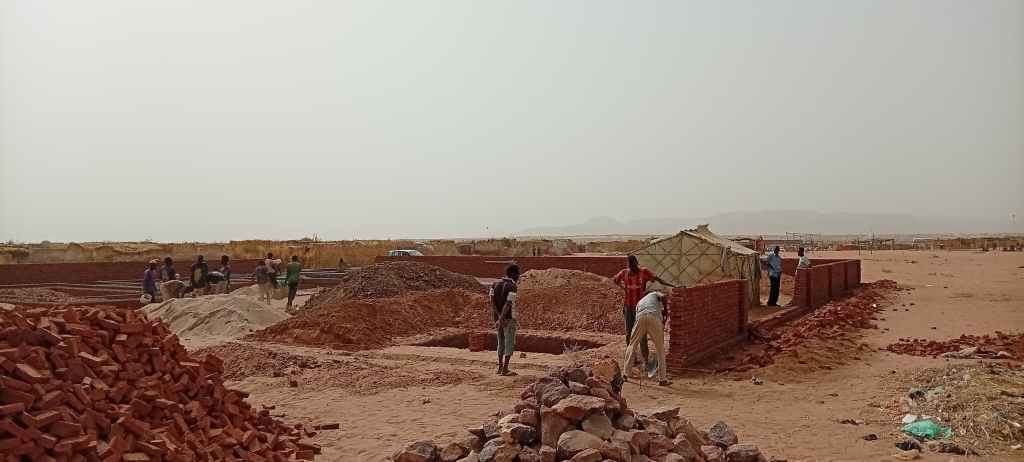
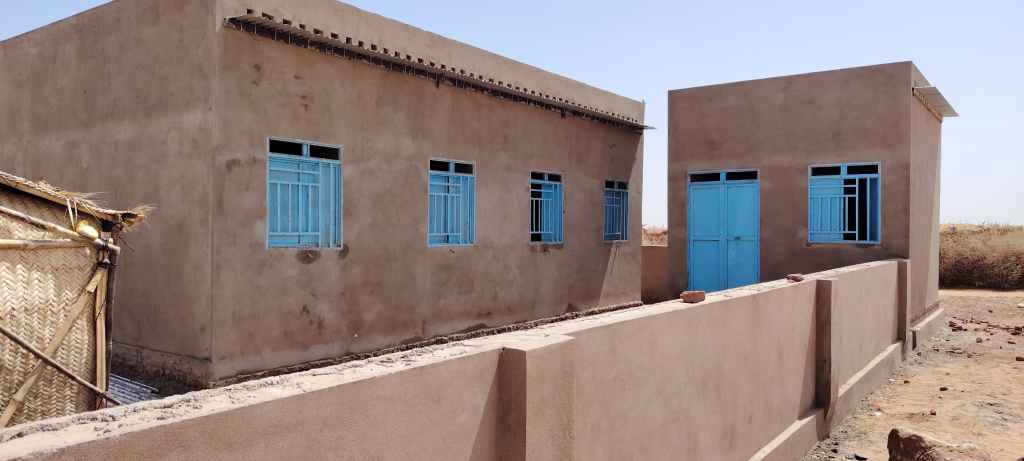
Ms. Rachel’s Kids Community Centre is a 1,000-square-meter purpose-built child-friendly space located in Tawila, North Darfur, and it is the only dedicated facility of its kind in the area.
Built and operated by SAPA, the center is named jointly after Ms. Rachel (Ahmed Sayedna) in recognition of both the partnership and the community it serves. The facility includes two classrooms, a multi-activity hall, an open-air theatre, an office, and a security fence, all designed to give displaced children a safe, structured, and welcoming environment every single day.
Phase One is fully funded and underway. The doors open in Tawila in June 2026.
Why Tawila? Why Now?
Tawila sits on a plateau in North Darfur that has absorbed wave after wave of displaced families. It is a community stretched far beyond its capacity, overwhelmed by the sheer number of people who have arrived with nothing, looking for safety.
For the children among them, the situation is particularly urgent. Displaced children without safe spaces or structured activity face dramatically elevated risks of psychological trauma, exploitation, and in the worst cases, recruitment by armed groups. The international evidence on child protection is unambiguous, and the gap in Tawila before the Ms. Rachel’s Kids Community Centre was equally clear.
Inside Ms. Rachel’s Kids Community Centre: Five Programs, One Purpose
Every program inside Ms. Rachel’s Kids Community Centre is built around a single principle: when children are given structure, expression, and protection, they do the rest themselves.
1. Psychosocial Support (PSS)
At the heart of Ms. Rachel’s Kids Community Centre is a structured psychosocial support program delivered by trained Sudanese facilitators. Using validated child-friendly methodologies, these sessions help displaced children process trauma, build resilience, and develop healthy coping mechanisms in a safe group setting. For children who have witnessed violence, lost family members, or lived in uncertainty for years, this is often the first structured emotional support they have ever received.
2. Music and Art
Singing, rhythm games, painting, and drawing give children non-verbal pathways to express what they have lived through. Drawing on Ms. Rachel’s own pedagogical approach, the music and art program creates space for children to communicate feelings that words alone cannot always reach, and to discover joy in the process.
3. Basic Alphabet and Literacy
Most of the children arriving at Ms. Rachel’s Kids Community Centre have been out of formal schooling for over two years. The informal literacy and numeracy classes are not designed to replace school; they are designed to bridge the gap, recovering lost foundational learning and preparing children to return to formal education when conditions in Sudan allow.
4. Sports and Recreation
Organized football, volleyball, and team games address physical health while teaching teamwork, conflict resolution, and discipline. For a generation of children carrying more than their share of the world’s weight, the chance to run, play, and compete on equal terms is both a physical outlet and a psychological lifeline.
5. Theatre and Role-Play
Ms. Rachel’s Kids Community Centre includes a small open-air theatre, a space for storytelling, performance, and role-play that serves as both an ancient teaching tool and a clinically recognized instrument for psychosocial recovery. Children use the theatre to narrate, reimagine, and process their experiences through the safe distance of story and character.
The Hope Oasis: The Model That Proved It Works
Before Tawila, there was Zamzam. SAPA’s Hope Oasis in Zamzam Camp served 260 displaced children from November 2024 to May 2025, running the same core programs in a smaller space with a smaller team. The results were measurable: children’s psychological screenings improved, attendance was consistent, and the community rallied around the center as an anchor point in the displacement camp.
When Zamzam Camp’s population was forced to flee in May 2025 and the Hope Oasis closed, SAPA did not treat it as a failure. It was proof of concept, a model that worked under the hardest possible conditions, and one worth rebuilding on a larger scale the moment the opportunity and resources aligned.
Ms. Rachel’s Kids Community Centre in Tawila is a rebuild serving more than twice as many children in a purpose-built permanent facility, with twelve months of guaranteed programming from day one.
Build It With Us
Ms. Rachel’s Kids Community Centre is not yet finished, and SAPA is inviting you to be part of building it.
In the weeks leading up to the June 2026 opening, SAPA will be releasing a series of short reels featuring Ms. Rachel and Sudanese-American children of SAPA volunteers, asking audiences to vote on the design choices that will shape the space, the colour of the main hall walls, the themes of the murals, and the colour of the theatre curtain.
Every vote is a small act of connection to the children who will walk through those doors. The polls run on SAPA’s Instagram and Facebook pages. The next reel reveals what was chosen, and the one after that shows it being built.
By the time the doors open in Tawila, the space inside will have been shaped, in part, by the people watching from thousands of miles away.
Support the next Oasis → Donate to SAPA
FAQs
1. What is the Ms. Rachel’s Kids Community Centre?
The Ms. Rachel’s Kids Community Centre is a purpose-built child-friendly space in Tawila, North Darfur, Sudan, built and operated by SAPA. It serves 600 displaced children ages 6 to 15 with psychosocial support, informal education, music, art, sports, and theatre programming across twelve months of operations. It is the only dedicated facility of its kind in Tawila.
2. Who is funding Ms. Rachel’s Kids Community Centre?
Phase One of Ms. Rachel’s kids’ Community Centre is funded entirely by a single generous gift from children’s educator Ms. Rachel. The center carries her name alongside a Sudanese honour name, Ahmed Sayedna in recognition of both the partnership and the community it serves.
3. Who does Ms. Rachel’s Kids Community Centre serve?
The Ms. Rachel’s Kids Community Centre serves 600 displaced children between the ages of 6 and 15 in Tawila, North Darfur. Many of the children are separated from one or both parents and the majority have been outside formal schooling for more than two years since the Sudan war began in April 2023.
4. What programs does Ms. Rachel’s Kids Community Centre offer?
The Kids Community Centre runs five core programs: Psychosocial Support (PSS) delivered by trained Sudanese facilitators; Music and Art; Basic Alphabet and literacy classes; Sports and Recreation; and Theatre and Role-Play in a small open-air theatre. All five programs are designed to provide structure, expression, and protection to displaced children.
5. When does the Ms. Rachel Kids Community Centre open?
Phase One is currently underway and the doors open in Tawila in June 2026. Construction milestones and design decisions are being shared with SAPA’s audience in the weeks leading up to the opening.
6. Has SAPA done this before?
Yes. SAPA operated the Hope Oasis in Zamzam Camp from November 2024 to May 2025, serving 260 displaced children with the same program model. Children’s psychological screenings improved measurably during that period. The Hope Oasis closed when Zamzam Camp fell to RSF advance in May 2025. The Ms. Rachel Kids Community Centre in Tawila is a direct successor, the same model rebuilt at larger scale.
7. Why are safe spaces so important for displaced children?
Displaced children without safe spaces or structured activity face significantly elevated risks of psychological trauma, exploitation, and recruitment by armed groups. Access to structured programming psychosocial support, education, recreation is a recognized child-protection intervention that measurably reduces these risks and supports long-term recovery.
8. Can I donate to the Ms. Rachel Kids Community Centre directly?
Phase One of the Ms. Rachel Kids Community Centre is already funded in full. SAPA’s current ask is for donations toward the next Kids Community Centre, extending the same model to displaced children in other locations across Sudan including El Fasher, Nyala, Kassala, and the eastern border camps. You can donate at sapa-usa.org.