A Father’s Relief After His Child’s Cleft Lip Surgery
 Waleed
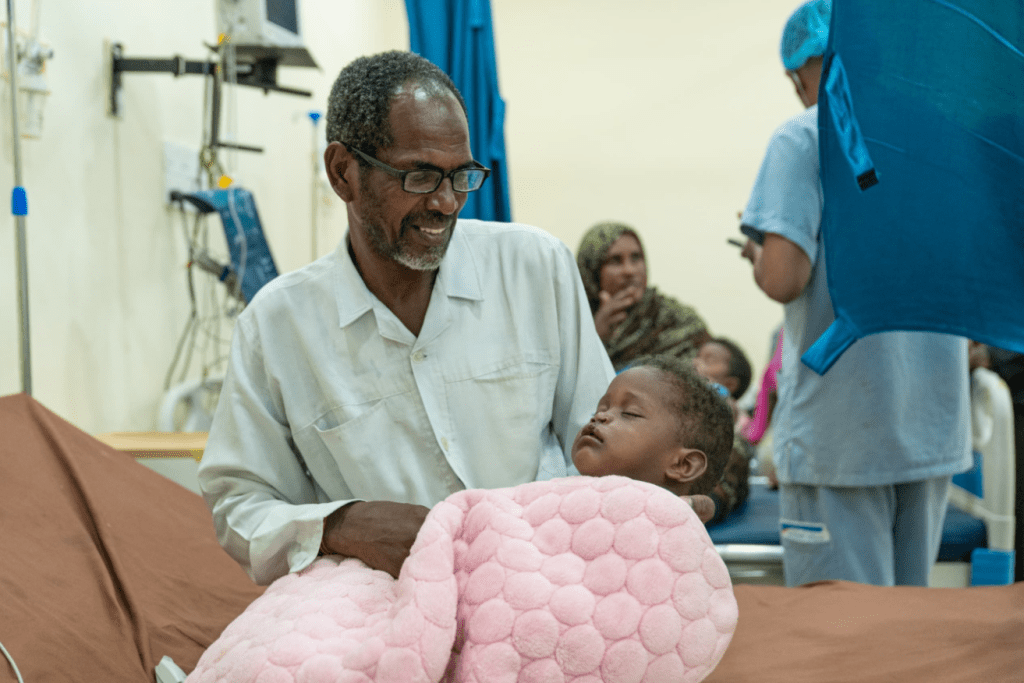
There are moments in humanitarian medicine that resist easy documentation. They do not show up in surgical tallies or consultation counts. They live instead in the expression of a father watching bandages come off his child’s face for the first time, in the precise instant when fear becomes relief.
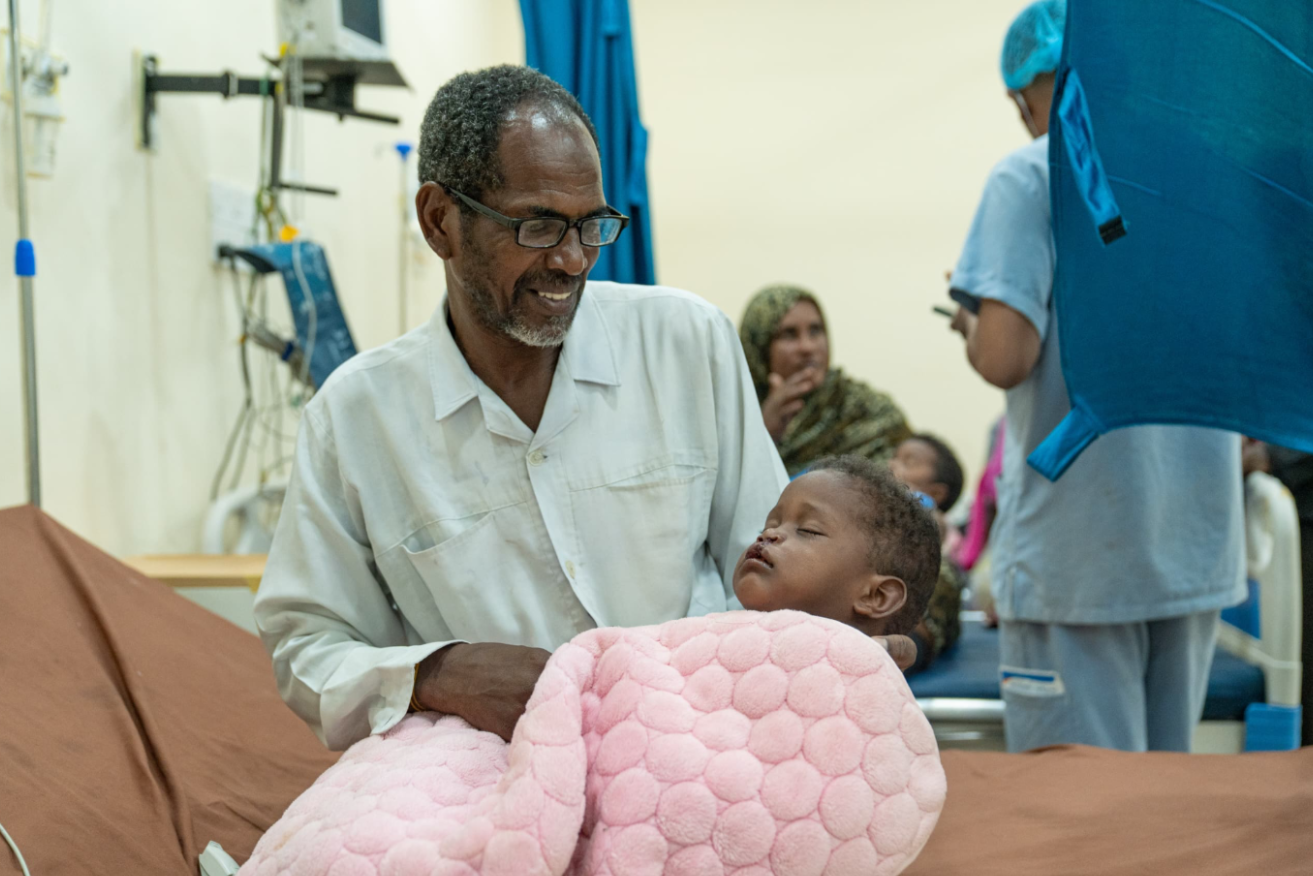
That moment happened in April 2026 at Bahri Teaching Hospital in Khartoum. A two-year-old boy named Mohamed Ahmed, born with a cleft lip under conflict conditions in Gezira State, had just undergone successful surgical repair. His father, Ahmed, had traveled from Gezira to give his son a chance he could not have accessed at home. As Mohamed’s repaired face came into view, his father’s expression shifted from hesitation to gratitude.
This is the story of that moment. But it is also a story about what it takes to make such moments possible in a country still at war, about the organizations working in the spaces that conflict has hollowed out, and about why a single surgery can carry the weight of an entire childhood’s future.
Sudan’s Ongoing Crisis: A Healthcare System Still on the Edge
Sudan’s war, which erupted in April 2023 between the Sudanese Armed Forces and the Rapid Support Forces, has now entered its third year with no clear resolution in sight. The humanitarian toll continues to mount. More than 11 million people remain internally displaced. Hospitals across conflict-affected states have been damaged, looted, or shuttered entirely. Tens of thousands of healthcare workers have fled the country or been displaced internally.
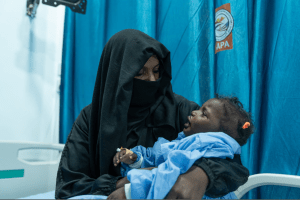
According to SAPA’s leadership, who have visited Sudan multiple times since the war began, the most prevalent disease in Sudan today is hunger, with malnutrition in pediatric hospitals reaching levels where multiple children share a single hospital bed.
For families navigating this reality, access to any form of specialized healthcare has become nearly impossible. Trauma surgery absorbs whatever capacity remains. Congenital conditions fall outside the reach of most families entirely. Cleft lip, a condition that can be repaired in a single surgical procedure and that dramatically changes a child’s life when treated early, is one of those conditions. Ahmed’s family knew this. They understood what Mohamed needed. What they lacked was any realistic path to getting it, until GODA and SAPA created one.
GODA’s Second Mission in Sudan: Sixty Children, One Hospital, and a Fragile Opening
In mid-April 2026, Bahri Teaching Hospital in Khartoum became the setting for GODA’s second medical mission to Sudan. Sixty children born with cleft lip conditions received surgical care delivered by GODA’s medical team, with support from SAPA and Islamic Relief USA, operating within restored hospital facilities.
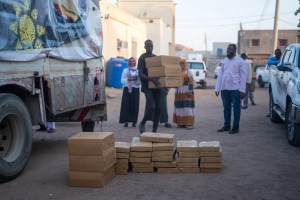
This was not a small logistical undertaking. In a country where hospital infrastructure has been systematically damaged, where supply chains are unreliable, and where the security situation demands constant assessment, deploying a surgical team capable of performing sixty cleft lip repairs requires months of coordination, significant resources, and deep trust between international and local partners.
GODA’s first mission, conducted in April 2025, had focused on orthopedic care at SAPA’s Hospital for Internally Displaced Persons in Gezira State. That mission (which produced 690 consultations and 29 major surgeries) was one of the first WHO-approved surgical missions to Sudan since the war began. It established the operational foundations and relationships that made the 2026 cleft lip mission possible.
Together, these two deployments reflect something important: this is not emergency medicine parachuted in and departed. This is the beginning of a sustained, structured effort to rebuild surgical access in a country that has lost most of its own capacity to provide it.
Mohamed’s Story: A Father’s Fear, a Surgeon’s Skill, and a Child’s Future
Mohamed Ahmed was born at home in Gezira State during an active conflict. Home births under those conditions carry their own risks; Mohamed’s arrival also came with a cleft lip (a visible, treatable condition) that his family recognized immediately but could not address.
His father Ahmed, understood from the beginning that surgery was what his son needed. He also understood, with the particular clarity of a man managing survival under war, that surgery was not something he could provide. The economic strain of displacement had narrowed every option. Specialized care in Khartoum, even in peacetime, required money, transportation, and connections that most families in Gezira do not have. In wartime, those barriers multiplied.
When Ahmed heard about the GODA medical mission, he made the decision quickly. He traveled from Gezira to Khartoum with Mohamed, registered at the hospital, and waited. In his own words:
“My son, Mohamed, was born with a cleft lip under difficult circumstances. I knew his condition required surgical intervention, but the means were not available. When I heard about the GODA medical mission, I decided to try. I traveled from Gezira, hoping he would get a chance for treatment.”
Mohamed was assessed, accepted, and operated on. The surgery was successful. In the recovery room, as the procedure’s results became visible, Ahmed’s long-held fears began to lift.
“I feel relieved now that what I wished for my son has become reality.”
What Is Cleft Lip and Why Does Timing Matter?
A cleft lip is among the most common congenital craniofacial anomalies in the world, accounting for approximately 13% of all congenital anomalies. It occurs when the upper lip does not fully form during early pregnancy, leaving a visible separation that can affect one or both sides and sometimes extends into the nose or palate.
The medical consequences are significant. A cleft lip can interfere with feeding from birth, complicate speech development, and affect dental health, particularly in settings where follow-up care is limited. Sudan lacks the resources and expertise to surgically repair orofacial clefts, creating a significant need for international support and organizational collaboration.
But the social consequences can be equally severe. Children with untreated cleft lip frequently face stigma, avoidance, and bullying from peers. Even the subtle reactions of adults can shape how a child understands their place in the world and how confidently they engage with school, friendships, and community life.
For Ahmed, these were not abstract concerns. Living through conflict and economic hardship, he carried the worry not just of his son’s health but of his son’s future – of how Mohamed would be seen, treated, and ultimately limited or liberated by a condition that surgery could address in a matter of hours.
FAQs
1. Who is GODA, and what was their role in this mission?
GODA (Gift of Disability Alleviation) is a US-based nonprofit deploying WHO-coordinated surgical teams to conflict-affected regions. In April 2026, GODA’s medical team performed sixty cleft lip surgeries at Bahri Teaching Hospital in Khartoum, supported by SAPA and Islamic Relief USA. This was GODA’s second mission in Sudan, following their landmark 2025 orthopedic mission.
2. What happened during GODA’s first mission in Sudan in 2025?
GODA’s first mission in April 2025 focused on orthopedic surgical care at SAPA’s Hospital for Internally Displaced Persons in Gezira State. The team conducted 690 consultations and performed 29 major surgeries, believed to be among the first WHO-approved orthopedic surgical procedures in Sudan since the war began.
3. What is a cleft lip, and when should it ideally be treated?
A cleft lip is a congenital condition in which the upper lip fails to fuse fully during early fetal development. It affects feeding, speech development, and social integration. Surgical repair is recommended ideally within the first year of life, as early intervention produces the best developmental outcomes. In conflict-affected Sudan, however, many children are reaching surgery later due to a lack of access.
4. How did Mohamed’s family find out about the GODA mission?
Ahmed, Mohamed’s father, learned about the GODA medical mission and traveled from Gezira State to Khartoum specifically to give his son access to surgery. Social media has become a critical channel for disseminating information about medical missions in Sudan, reaching families who would otherwise have no knowledge of available care.
5. Is there a cost to families for these surgeries?
No. The cleft lip surgeries performed through the GODA mission are provided free of charge to patients and their families. Funding comes through organizational resources and donations, ensuring that cost is not a barrier to families who are already managing extreme economic hardship under wartime conditions.
6. What role does SAPA play in making these surgical missions work?
SAPA provides the on-the-ground infrastructure that makes international surgical missions operationally possible including hospital facilities, patient intake systems, physician support, triage coordination, and language interpretation. Without SAPA’s local network, the logistical and clinical complexity of deploying surgical teams into conflict-affected Sudan would be significantly greater.
7. What other healthcare programs does SAPA run in Sudan?
Beyond surgical mission support, SAPA operates mobile clinics for displaced persons, a hospital for IDPs in Gezira State, WASH programs, nutrition and hunger relief initiatives, maternal and child health services, and continuing medical education programs for Sudanese physicians across multiple states.
8. Why is cleft lip surgery particularly important during a humanitarian crisis?
During conflict, congenital conditions like cleft lip are deprioritized as health systems focus on trauma care. But an untreated cleft lip has compounding developmental consequences affecting nutrition, speech, and psychosocial wellbeing that worsen the longer treatment is delayed. Targeted surgical missions address a gap that general emergency response typically misses.
9. How can I support this work?
You can donate directly to SAPA to fund ongoing missions, mobile clinics, and healthcare programs across Sudan. Sharing this story also matters because Sudan’s humanitarian crisis remains significantly undercovered, and visibility drives both donations and political attention.
10. Will there be more missions like this?
Yes. Both GODA and SAPA are committed to continued and expanding engagement in Sudan. Each mission builds on the last, strengthening local infrastructure, refining operational models, and reaching more families. The 2026 cleft lip mission at Bahri Teaching Hospital is a step forward in a long-term effort, not a one-time intervention.