
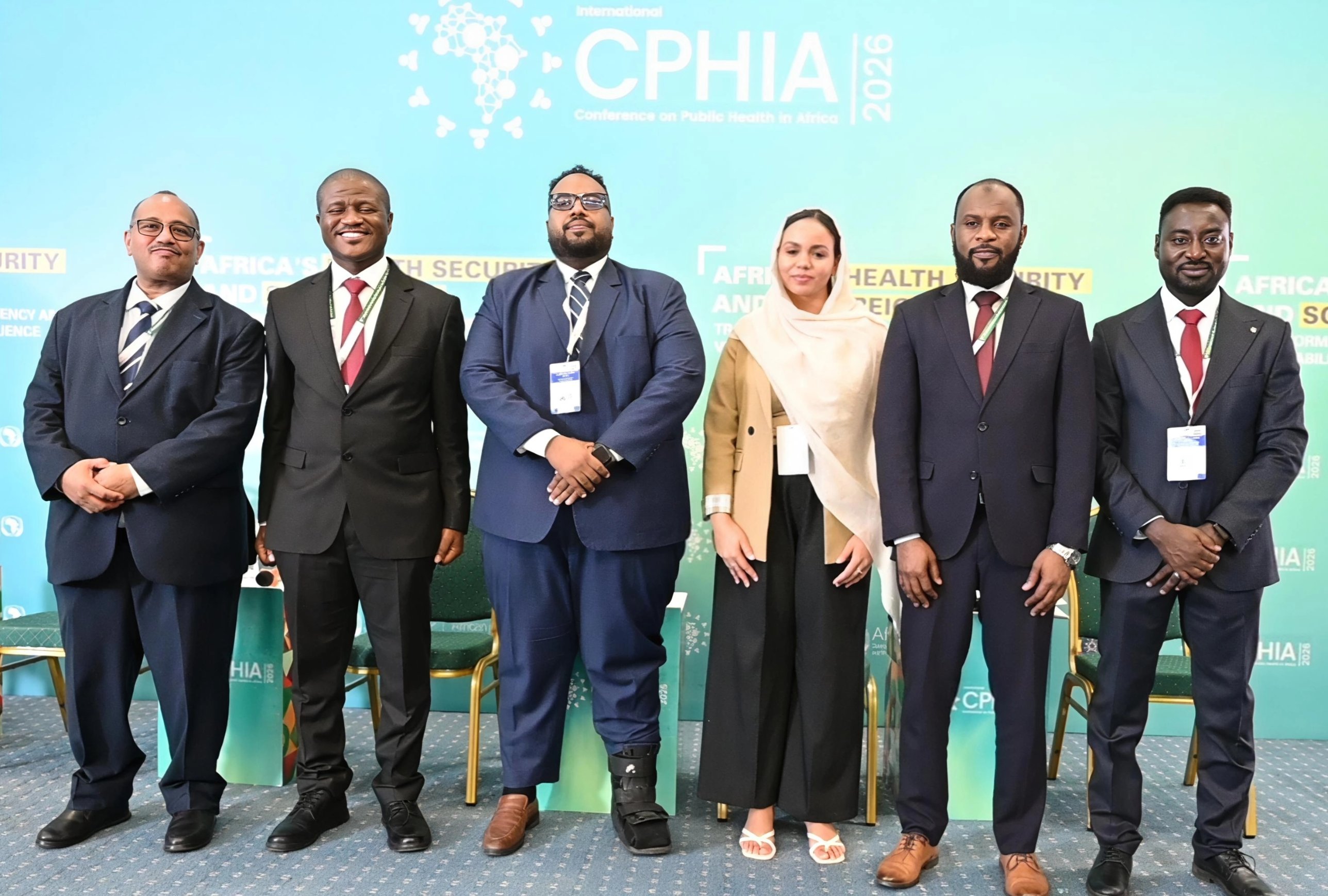
Make Every Frontline Clinic Part of the Early-Warning System, Health Leaders Urge at CPHIA 2026
 SAPA Global Communications
FOR IMMEDIATE RELEASE
25 November 2026
SAPA, Sudan’s Federal Ministry of Health and Save the Children host official side event on outbreak detection in conflict-affected settings
ADDIS ABABA, Ethiopia, 24 November 2026 – In conflict-affected settings, the first sign of an outbreak is rarely picked up by a laboratory. It is observed by community health workers and by nurses at clinics that stay open when everything around them has closed. That was the message of “From Clinic to Early Warning,” an official side event at the Fifth International Conference on Public Health in Africa (CPHIA 2026), hosted by SAPA with Sudan’s Federal Ministry of Health and Save the Children.
Speakers from Africa CDC, government and civil society worked through a fictional case, “Site 7”: a community health worker caught a deadly respiratory cluster within hours, but the alert went to an NGO head office instead of the state surveillance system. The state heard on day five; by day seven there were 61 cases and three deaths.
“Every SAPA-supported facility is a Ministry of Health facility,” said Dr. Mohamed Abumanga, SAPA’s Africa Regional Director. “We do not build a SAPA system; we strengthen and support the Ministry of Health system.” In Khartoum’s 2025 cholera outbreak, SAPA supported 121 sentinel sites and nine rapid response teams, all within the Ministry’s plan.
“It should be about from community to early warning,” said Dr. Landry Dongmo Tsague, Director of the Center for Primary Health Care at Africa CDC. Dr. Muntasir Mohammed Osman Elhassan of Sudan’s Federal Ministry of Health added: “If we say the health system is the body, the surveillance is the eye of the body.”
The panel set out six priorities:
- Register every NGO- and civil-society-supported clinic as a reporting unit in the state surveillance system from day one.
- Report unusual clusters to the state within 24 hours, not to headquarters.
- Make surveillance reporting a funded budget line in every humanitarian health project.
- Formally recognize, equip and protect community health workers.
- Give every frontline clinic a minimum protection package, with resupply within 48 to 72 hours where access permits.
- Keep one government-led system, with partners aligned behind national plans.
“Our request is simple,” said Dr. Khadiga Hassan Mohammed Sidahmed, Monitoring and Evaluation Officer at SAPA. “Make every frontline PHC facility safe enough to respond and resilient enough to remain open.”
###
About SAPA
SAPA is a physician-led humanitarian and professional membership organization founded in 2019. SAPA works under formal agreements with Sudan’s Federal and State Ministries of Health to keep hospitals and primary health care facilities running. In 2025, SAPA delivered more than 750,000 patient encounters and supported 13 hospitals and 92 primary health care facilities. It also supports Sudanese refugees and host communities through offices in Chad and Uganda. Learn more at sapa-usa.org.
Media contact
SAPA Global Communications
communications@sapa-usa.org