Eastern Chad Refugee Crisis: SAPA’s Plan to Address Critical Humanitarian Gaps
-
by
 Mahnoor
- No Comments on Eastern Chad Refugee Crisis: SAPA’s Plan to Address Critical Humanitarian Gaps
 Mahnoor
In Abéché, the main referral hospital for eastern Chad has a CT scanner. It doesn’t work.
The hospital also has no general surgeon, and its unit for sick newborns has very limited space. This is the facility where the most serious cases from the refugee camps along the Sudanese border are meant to end up: the injured, the critically ill, the mothers in difficult labour.
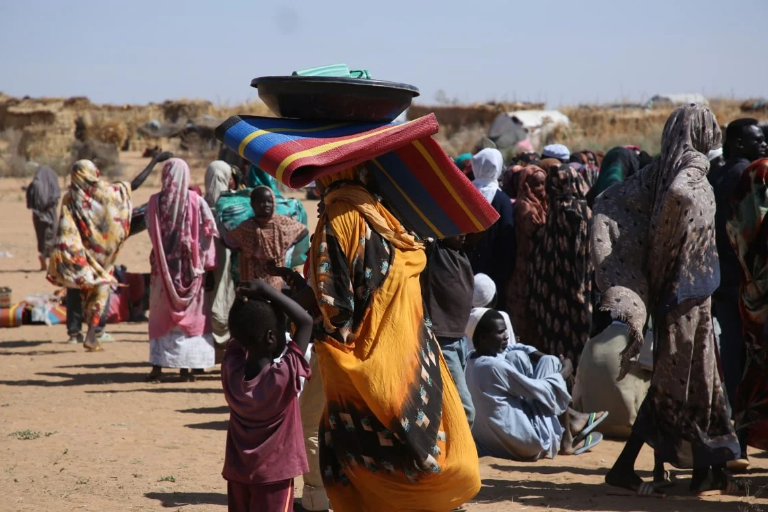
It is easy to picture a refugee crisis as tents and food queues. But in eastern Chad, the gaps run deeper, from an idle scanner to a missing surgeon to a camp with no working clinic at all.
Over about ten days this summer, a team from SAPA set out to map those gaps one by one. What follows is what they found in Chad’s Ouaddaï province, and the plan SAPA has built to close them.
The Eastern Chad Refugee Crisis Keeps Arriving
More than three years after Sudan’s war began, people are still crossing into Chad. By mid-October 2026, more than 980,000 Sudanese refugees had arrived since April 2023, alongside some 404,000 Chadians returning home, the UN’s humanitarian office (OCHA) said in November. It called the situation in the east alarming.
In late September, daily arrivals jumped twentyfold in a single week. Newly arrived women and girls described kidnappings and sexual violence along the escape routes, Sudan Tribune reported.
Most of them come through Adré, a border town that has become the crisis’s front door. SAPA’s assessment found that Adré alone holds about 62% of the population it surveyed, with new arrivals still rated “very high”.
What drives them out is getting worse, not better. In October, the UN-backed hunger monitor warned that war and an El Niño drought are pushing parts of Darfur towards famine, the region directly across the border.
>> Related Post: What Can a $50 Donation Do to Help Someone in Sudan?
What SAPA’s Assessment Found
Between 29 June and 9 July 2026, SAPA carried out a multi-sector needs assessment across four sites in Ouaddaï: Farchana camp extension, Hagar Hadid, Abu Tange and the Adré settlement. Together they hold 383,038 Sudanese refugees in 79,098 households.
The team spoke with UN agencies, local health authorities and hospital staff in Abéché and Adré. The picture they came back with was one of overlapping needs that no single organisation, or the government, could meet on its own.
A few numbers stand out:
- 58% of the people assessed are children, and 51% are women.
- About 27% of households are headed by women.
- Around 11,900 pregnant and breastfeeding women need ongoing maternal care.
- 2,380 children in Adré are living without a parent or guardian.
- Roughly 8% of people live with a disability.
These are not people who can wait out a gap in services. They are the people the gaps hit hardest.
>> Related Post: SAPA and ECHO Support Maternal Care in Khartoum
Five Gaps, Five Answers:
SAPA’s response is built directly on what the assessment found. It is organised around five gaps, each with a clear target.
1. Clinics that don’t exist yet
Health is the largest gap of all. Three of the four sites have little or no working primary health care, and Farchana has none.
SAPA plans to set up or strengthen two primary health centres, in Farchana and Adré. They will offer outpatient care, maternal and child health, vaccinations, nutrition screening, lab tests and essential medicines. The aim is to reach 50,000 refugees and host-community members and support 40 health workers.
2. Hospitals that can’t take the serious cases
When a refugee needs surgery or a premature baby needs an incubator, the referral system often breaks down. Adré Hospital receives large numbers of war-related injuries but lacks surgical capacity, and Abéché is missing the specialists and equipment it needs.
SAPA plans to:
- rehabilitate and expand the newborn intensive care unit, with incubators, power and clean water
- bring the CT scanner back into service
- deploy three specialist doctors, including surgeons and obstetricians.
That could mean better care for 5,000 to 8,000 patients a year, including about 1,000 newborns and complicated births.
3. Water below the line
The international minimum for emergencies is 15 litres of water per person per day. Not one of the four sites reaches it: supply ranges from 11.8 litres in Adré to just over 13 in Farchana. The assessment also counted a shortfall of more than 56,000 household latrines.
SAPA will rehabilitate three water systems and build 50 communal latrines in Farchana, alongside hygiene and waste campaigns. Better water could reach 15,000 to 20,000 refugees.
4. Meals people can count on
Food security was rated poor at every site, and malnutrition risk high. SAPA’s answer is a community kitchen in Farchana serving up to 2,400 meals a day, with priority for widows, orphans, older people, pregnant women and the war-wounded. It follows the model of SAPA’s hunger relief programme inside Sudan.
5. Nowhere safe for women and girls
None of the four sites has a one-stop centre where survivors of gender-based violence can get medical care, counselling and legal help in one place. Women’s safe spaces are limited in Adré and absent elsewhere.
That gap is widening across Chad. In September, UNHCR warned that 200,000 women and girls in Chad could lose access to safe spaces because of funding cuts. SAPA plans a GBV one-stop centre and women’s safe space in Farchana, plus women’s and youth development centres, mental health support and 1,800 dignity and family hygiene kits.
>> Related Post: How SAPA is Supporting Clean Water Access for El-Geneina
What The Plan Costs
The full response is budgeted at just over US$1 million:

Set against the scale of the crisis, it is a modest sum. But it lands at a moment when much larger budgets are shrinking. In November, the International Organization for Migration said it had decided to serve only one in ten displaced Sudanese in need of shelter because its stocks were running dry.
How SAPA Is Responding to the Eastern Chad Refugee Crisis
SAPA was founded in 2019 by Sudanese American doctors who wanted to strengthen health care for Sudanese communities everywhere. It is a non-partisan, 501(c)(3) humanitarian organisation based in Dallas, Texas.
Because it is led by physicians, SAPA starts from the clinic outward. In 2025, the organisation reports, it delivered medical care to more than 700,000 patients and supported 95 health facilities through its healthcare and emergency services. Inside Sudan, its teams run community kitchens, emergency medical teams and water projects in areas where few others can reach.
None of it is fixed for one season. The assessment found that arrivals through Adré are continuing, so needs will keep shifting. SAPA’s plan is designed to grow with them.
That brings us back to the scanner in Abéché. For a refugee with a head injury, a working CT scan can decide what happens next. Restoring it is one line in a budget table. For the 3,000 to 5,000 patients a year who could use it, it is much more than that.
Support SAPA’s humanitarian work for displaced Sudanese families, including healthcare, food assistance, clean water and protection services.
→ Donate to SAPA’s Humanitarian Response
FAQs
1. What is causing the Eastern Chad refugee crisis?
The war in Sudan between the army and the Rapid Support Forces, which began in April 2023, has driven people across the border. Drought and hunger in Darfur are now adding to it, with the UN warning of rising famine risk.
2. How many refugees have arrived in eastern Chad?
More than 980,000 Sudanese refugees arrived in Chad between April 2023 and mid-October 2026, according to OCHA. More than 404,000 Chadian returnees also came back over the same period.
3. Where is Ouaddaï province?
Ouaddaï is in eastern Chad, on the border with Sudan’s Darfur region. It includes Adré, the main entry point for new arrivals, and the camps around Farchana.
4. What is SAPA’s needs assessment?
It is a multi-sector needs assessment that SAPA carried out from 29 June to 9 July 2026. It covered four sites with 383,038 refugees and looked at health, food, water, protection, shelter and other needs.
5. What is the biggest humanitarian gap in eastern Chad?
Health care. Farchana has no working primary health care, and the province had no functioning general surgical capacity at the time of the assessment, despite a steady flow of war injuries.
6. How much will SAPA’s plan cost?
The proposed budget is US$1,056,930, split across health, specialist care, water and sanitation, food security and protection.
7. How will SAPA help mothers and newborns?
By expanding the newborn intensive care unit in Abéché, deploying obstetricians and strengthening maternal care in new primary health centres. About 11,900 pregnant and breastfeeding women in the assessed sites need regular care.
8. Why is water such a big concern in the camps?
All four sites fall below the emergency minimum of 15 litres per person per day. OCHA has also flagged precarious access to water and health care across eastern Chad.
9. What will SAPA do to protect women and girls?
It plans a gender-based violence one-stop centre and safe space in Farchana, women’s and youth centres, mental health support and dignity kits. These matter more as UN-funded safe spaces face cuts.
10. How can I support refugees in eastern Chad?
You can donate through SAPA’s Donation page. SAPA is a 501(c)(3) nonprofit, so US donations are tax-deductible to the extent allowed by law.