How Your 2026 Year-End Donations Can Change Lives in Sudan
 Waleed
As 2026 draws to a close, Sudan is entering its fourth year of war. Millions of people are facing hunger, displacement, disease, and disrupted access to essential services. For families who have lost their homes or livelihoods, the end of the year offers little relief from the challenges of daily survival.
The scale of need is immense, but the response remains constrained by limited funding and difficult humanitarian access. According to UNICEF’s mid-year 2026 report, 33.7 million people in Sudan, including 17.3 million children, need humanitarian assistance.
Year-end donations can help sustain the organizations working to meet these needs. From food assistance and medical care to clean water and maternal health services, humanitarian support can help families access essentials that are increasingly difficult to obtain.
Here’s why support matters, how SAPA’s programs address urgent needs, and how your year-end gift can contribute to its ongoing work in Sudan.
Why Sudan Needs Humanitarian Support as 2026 Ends
The conflict in Sudan has disrupted nearly every part of daily life. Fighting and displacement have damaged infrastructure, interrupted livelihoods, restricted access to healthcare, and made it harder for families to obtain food and clean water.
The crisis affects communities across the country, although the intensity of need and the availability of assistance vary by location. Many families have been displaced from their homes, while others are struggling to survive in communities where essential services no longer function reliably.
The latest available humanitarian assessments highlight three major challenges.
Hunger and Malnutrition
Food insecurity remains one of Sudan’s most urgent humanitarian concerns. A joint report from the Food and Agriculture Organization, the World Food Programme, and UNICEF estimated in May 2026 that nearly 19.5 million people faced crisis-level acute food insecurity or worse.
Conflict, disrupted markets, displacement, and limited humanitarian access make it difficult for families to obtain enough food. Children, pregnant women, and breastfeeding mothers face particular risks when inadequate diets contribute to malnutrition.
Food assistance and nutrition programs can help address immediate needs while families face uncertainty about their homes, income, and access to local markets.
Limited Access to Healthcare
Healthcare services have been severely affected by conflict, damage to facilities, shortages of medical supplies, and insecurity.
The World Health Organization’s October 2026 assessment reported that 37% of Sudan’s health facilities had stopped functioning. It also highlighted the effects of attacks on healthcare, displacement, and chronic funding shortages.
For families, these disruptions can mean longer journeys to reach a clinic, delays in receiving treatment, or difficulty accessing essential medicines. Pregnant women, newborns, and children suffering from malnutrition or infections may be especially vulnerable when medical care is unavailable.
Displacement and Disrupted Essential Services
Millions of people have been forced from their homes. Displacement can separate families from their livelihoods, schools, healthcare providers, and support networks.
The consequences often overlap. A household that has lost its income may struggle to afford food. A family living in temporary accommodation may have limited access to safe water and sanitation. Someone who becomes ill may have difficulty reaching a functioning health facility.
These interconnected needs make sustained humanitarian assistance important. Addressing food insecurity, healthcare, nutrition, and water access together can help organizations respond to the different challenges families face.
>> Related Post: Year-End Donations in 2026: Practical Tips and Key Benefits
What Your Year-End Donation Can Help Address:
A donation to humanitarian relief can support several types of assistance, depending on the organization, its programs, and the needs identified on the ground.
1. Food Assistance for Families Facing Hunger
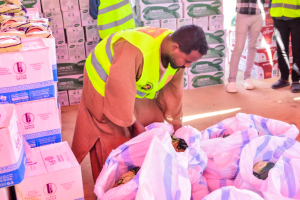
Food assistance helps families obtain meals when conflict and displacement disrupt their ability to earn an income, grow food, or access markets.
Community kitchens and meal programs can provide immediate support to people who have few other options. Nutrition services can also help identify and treat malnutrition among vulnerable children and mothers.
SAPA’s Sudan hunger relief program supports food assistance for communities affected by the crisis. Its community kitchen in Tawila serves more than 4,000 hot meals daily, according to SAPA’s program information.
2. Healthcare and Emergency Medical Services
Medical assistance can help people obtain treatment for illness and injury when regular health services are disrupted.
Emergency healthcare, mobile medical services, support for health facilities, and access to essential supplies can all play a role in responding to humanitarian needs.
Through its healthcare and emergency services, SAPA supports medical services for communities affected by the crisis. Its work addresses urgent healthcare needs while contributing to the wider effort to maintain access to essential treatment.
3. Maternal and Newborn Care
Pregnancy, childbirth, and the first days of a baby’s life require timely medical attention, appropriate supplies, and trained healthcare professionals.
When health facilities close or become difficult to reach, mothers and newborns can face additional risks. Maternal care, neonatal support, and trained birth attendants are therefore important parts of a humanitarian response.
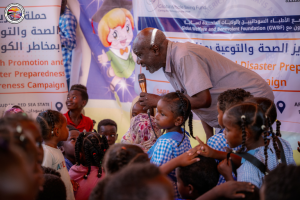
SAPA’s Save a Life in Sudan program supports maternal and newborn care. Donations can help sustain this work, with specific outcomes depending on program needs and how funds are allocated.
4. Clean Water, Hygiene, and Disease Prevention
Access to safe water is essential for drinking, cooking, personal hygiene, and reducing the risk of waterborne disease.
Conflict can damage water infrastructure and disrupt maintenance, treatment, and distribution. When families lack clean water and adequate sanitation, the risk of illness can increase, placing further pressure on already strained healthcare services.
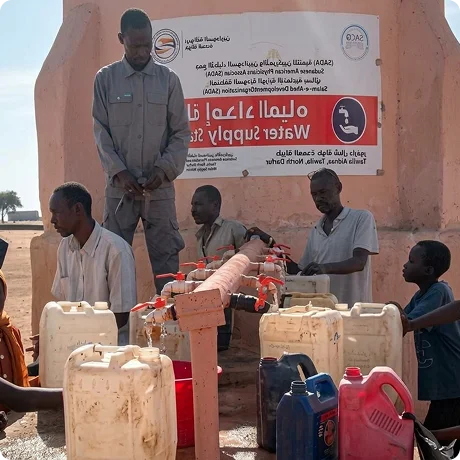
SAPA’s clean water program supports efforts to improve access to safe water and sanitation. Its work includes water-related initiatives intended to help communities address essential needs.
>> Related Post: Year-End Giving Guide 2026: Support Causes That Truly Matter
Give Year-End Donations (Fastest & Secure) 👇
How SAPA Supports Families Across Sudan
SAPA is a U.S.-based nonprofit founded by Sudanese American physicians. Its humanitarian programs address several of the urgent needs facing communities affected by conflict and displacement.
Rather than focusing on a single type of assistance, SAPA’s work spans food relief, healthcare, clean water, and maternal and newborn care. These areas are closely connected: families need access to food to maintain their health, medical services to treat illness, safe water to reduce health risks, and appropriate care during pregnancy and infancy.
SAPA’s ongoing programs include:
- Hunger relief: Community meal services and food assistance for families facing food insecurity.
- Healthcare and emergency services: Medical support for communities affected by the conflict and disruptions to healthcare.
- Maternal and newborn care: Services intended to support mothers, babies, and essential care around childbirth.
- Clean water: Initiatives that support access to safer water and sanitation.
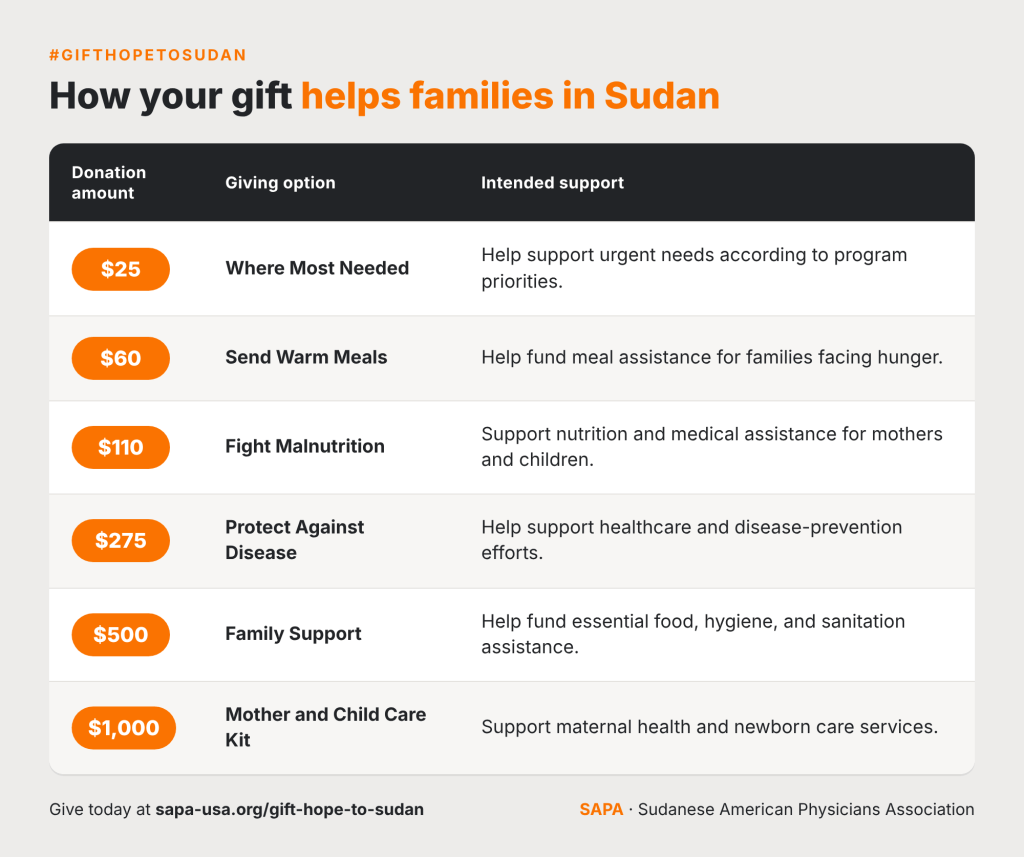
The following options illustrate how different contribution amounts may support SAPA’s programs. They should be understood as giving examples rather than guarantees of a specific outcome.
→ Donate to SAPA and Give Hope to Families in Sudan

FAQs
1. Why does Sudan need humanitarian donations in 2026?
Conflict, displacement, food insecurity, disease outbreaks, and disrupted essential services have left millions of people in need of assistance. UNICEF estimated that 33.7 million people, including 17.3 million children, required humanitarian assistance in 2026.
2. How many people are facing hunger in Sudan?
A joint FAO, WFP, and UNICEF report published in May 2026 estimated that nearly 19.5 million people faced crisis-level acute food insecurity or worse. Conditions vary across the country, and food insecurity can change as conflict, access, and harvest conditions evolve.
3. What kinds of humanitarian needs can donations support?
Depending on the organization and its programs, donations may support food assistance, healthcare, nutrition, maternal and newborn care, clean water, and sanitation. Check the charity’s current program information to understand what its donations support.
4. How is SAPA helping people affected by the crisis?
SAPA supports hunger relief, healthcare and emergency services, clean water initiatives, and maternal and newborn care. Its programs include a community kitchen in Tawila and other initiatives intended to address essential needs among communities affected by the crisis.
5. How much should I donate to Sudan relief?
The amount depends on your financial circumstances and the cause you want to support. A modest contribution can help sustain humanitarian programs, while larger donations can provide additional funding. Review SAPA’s current giving options and choose an amount you can comfortably afford.