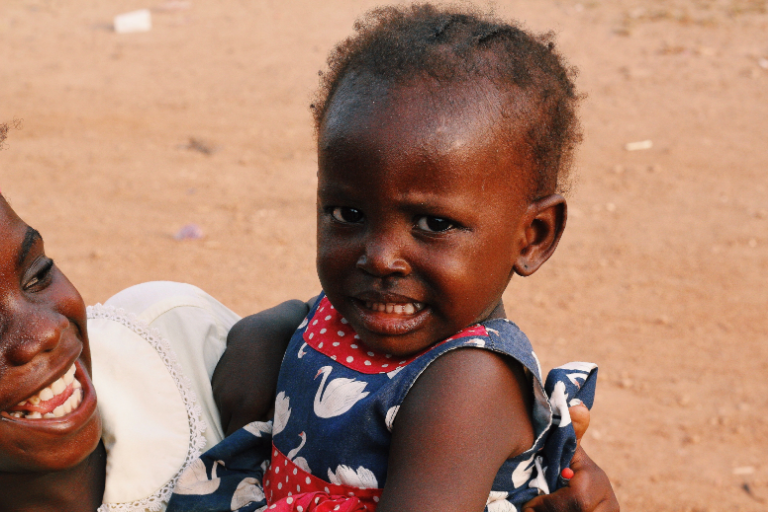
Best Family & Child Care Charities in Sudan in 2026
 Mahnoor
If you’ve been searching for the best family and child care charities in Sudan in 2026, it’s probably because you already know how bad things have gotten. More than 1,000 days into the conflict that erupted in April 2023, Sudan is now home to the world’s largest displacement crisis and one of its worst hunger emergencies. UN Deputy Secretary-General Amina Mohammed told the Security Council on August 7, 2026 that the war has left millions of Sudanese children out of school, displaced, or exposed to grave violations, and that the country is “losing another generation” to war.
Behind every statistic is a real child: a newborn in a tent clinic without electricity, a toddler screened for malnutrition at a mobile health post, a ten-year-old who hasn’t seen a classroom in three years. That’s where family and child care charities in Sudan step in. These organizations run the health posts, nutrition programs, water systems, and protection services that are quite literally keeping Sudanese children alive.
This guide breaks down what makes a charity worth your trust, why Sudan’s children need help more urgently than almost anywhere else in the world right now, and which five organizations are doing the most credible, on-the-ground work in 2026.
Qualities of the Best Family and Child Care Charities in 2026
Not every organization that says it “helps Sudan” is actually delivering aid to families and children on the ground. Before you donate, it’s worth checking an organization against a few basic standards.
- Direct, verifiable presence in Sudan: The strongest charities have staff, clinics, or partners physically operating inside Sudan’s states, not just running awareness campaigns from abroad.
- Focus on children’s core survival needs: Look for programs addressing malnutrition, maternal and newborn health, clean water, disease prevention, and emergency medical care.
- Financial transparency and independent ratings: The best Sudan child welfare organizations publish audited financials and hold recognized ratings, such as Charity Navigator’s star system or Candid’s (formerly GuideStar) Platinum Seal of Transparency.
- A track record that predates the current crisis: Groups that have worked in Sudan for years or decades understand the local context, language, and logistics far better than newcomers.
- Clear, itemized use of donations: Trustworthy charities show donors exactly what a $25, $100, or $500 gift buys (whether that’s cord-care kits, vaccines, or a mobile clinic visit).
- Local partnerships and Sudanese leadership. Charities that work through Sudanese doctors, community health workers, and local organizations tend to deliver aid faster and more sustainably than those relying solely on international staff.
>> Related Post: Top Sudanese Medical Charities to Donate to in 2026
Why Does Sudan Need Family and Child Care Charities?
Sudan’s humanitarian crisis is now the largest in the world, and children are absorbing the worst of it. According to UNICEF’s 2026 Humanitarian Action for Children appeal, 33.7 million people need urgent humanitarian assistance this year, and 17.3 million of those in need are children specifically. Nearly 9.5 million people have been internally displaced across all 18 of Sudan’s states, and three out of every five displaced Sudanese are children.
Here’s what that crisis looks like for a Sudanese child in 2026:
- Hunger and malnutrition are surging. Save the Children reported on June 1, 2026 that child malnutrition is expected to spike further as the lean season begins, with roughly 4.2 million cases of acute malnutrition projected for the year. Famine has already been confirmed in North Darfur and South Kordofan, with about 20 more areas at risk.
- Health systems have collapsed. A large share of Sudan’s hospitals and clinics are non-functional or have been damaged by fighting, leaving mothers to give birth without trained care, medicine, or electricity.
- Education has essentially stopped for millions. As of August 2026, at least eight million school-aged children remain out of the classroom, and in North Darfur, only a fraction of schools are still open.
- Violence against children keeps climbing. UNICEF’s April 2026 Child Alert on Darfur found the UN has verified more than 5,700 grave violations against children since the war began, with over 4,300 children killed or maimed, and the pace of these violations is worsening, not slowing.
- Funding hasn’t kept pace with need. Multiple aid agencies, including Save the Children, note that the 2026 humanitarian response plan for Sudan is only around 16–25% funded, meaning agencies are stretching already-thin resources across an expanding crisis.
>> Related Post: Best Family & Child Care Charities in Sudan in 2026
3 Best Family and Child Care Charities in Sudan in 2026:
1. SAPA
SAPA is a physician-led, 501(c)(3) nonprofit founded in January 2019 and based in Dallas, Texas. What sets SAPA apart from larger international NGOs is that its leadership and volunteer base are made up largely of Sudanese and Sudanese-American doctors, giving it a level of medical expertise and cultural fluency that’s hard to match.
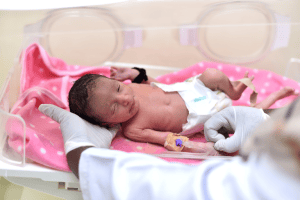
SAPA’s flagship Save a Life in Sudan campaign is built around a stark, unavoidable fact: a baby dies in Sudan roughly every nine minutes, not from illness, but from being born into war, in a tent, on a clinic floor, or in an overcrowded displacement camp without medicine or a trained attendant. SAPA’s response is a six-part intervention model that includes establishing ICU and neonatal care units, deploying mobile clinics, distributing newborn survival kits and infant warmers, training midwives, and rehabilitating maternity wards so more births end safely.
The organization’s broader work runs through several dedicated programs:
- The Healthcare & Emergency Services program delivers rapid-response medical aid and supports functioning clinics in conflict zones.
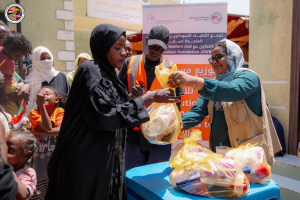
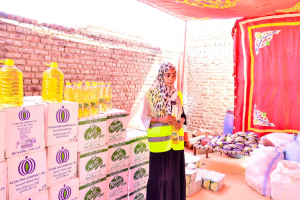
- The Hunger Relief Program provides meals and nutrition support to families and children facing famine-level food insecurity.
- The WASH program supplies clean water, sanitation, and hygiene infrastructure to reduce cholera, diarrhea, and other preventable disease outbreaks among children.
In 2025 alone, SAPA reported providing medical care to more than 700,000 patients, screening 300,000+ children for malnutrition, vaccinating over 90,000 children, and supporting 95 healthcare facilities and roughly 1,800 healthcare professionals across Sudan.
2. Save the Children
Save the Children has worked in Sudan since 1983 and currently operates across 14 of the country’s 18 states, either directly or through local partners. In 2025, the organization and its partners reached more than 4.4 million people, including over 3 million children, with health, nutrition, WASH, education, child protection, and food security assistance.
Recent operations show how far the organization is willing to go to reach cut-off communities: in March 2026, Save the Children delivered 30 metric tons of medicine and nutrition supplies to Tawila in North Darfur after a grueling three-week road journey, supporting more than 80,000 children in one of the hardest-to-reach parts of the country. The group also co-launched the BRIDGES education program with UNICEF in May 2026 to help over 328,000 conflict-affected children return to school. Save the Children U.S. holds an A- rating from CharityWatch and a 4-star Charity Navigator rating.
3. Islamic Relief Worldwide
Islamic Relief Worldwide has worked in Sudan since 1984, making it one of the longest-serving humanitarian organizations in the country. Through its Sudan Emergency Appeal, the charity has delivered aid to more than 1.2 million families, including emergency food, clean water, cash assistance, shelter, and hygiene kits.
Islamic Relief has also invested heavily in child-focused infrastructure over the decades, from building its first school in Khartoum’s Mayo area in 1995 to currently running child-friendly spaces and psychosocial support programs for displaced children. The organization accepts both general donations and Zakat contributions, making it a popular choice for donors seeking Islamic charitable giving options that support Sudanese families directly.
>> Related Post: Best Hunger/Poverty Charities in Sudan in 2026
SAPA’s Role in Sudan’s Family and Child Welfare Crisis
Among Sudan child welfare organizations, SAPA occupies a distinct niche: it is run by the medical community most familiar with Sudan’s hospitals, clinics, and health infrastructure before the war, and therefore best positioned to rebuild them under fire. This isn’t an outside organization parachuting in; its Sudanese and Sudanese-American physicians are directing care for their own communities.
That medical-first approach shows up in the numbers. SAPA’s programs treated over 250,000 children under age five in 2025, screened 300,000 children for malnutrition, and supported nearly 100 healthcare facilities despite an active conflict damaging Sudan’s hospital system. The organization’s Save a Life in Sudan initiative targets one of the most preventable causes of child death in the country: newborns dying not from disease, but from being delivered without trained care, warmth, or basic medical equipment.
>> Your donation can help save a child’s life in Sudan. Donate Today!
FAQs
1. What is the current humanitarian situation for children in Sudan in 2026?
Sudan is facing what the UN calls the world’s largest displacement and hunger crisis. As of 2026, 33.7 million people need humanitarian assistance, more than half of them children, with famine already confirmed in parts of North Darfur and South Kordofan.
2. How many children have been displaced by the Sudan conflict?
Roughly 5 million children have been displaced since the conflict escalated in April 2023, according to UNICEF Australia, making Sudan home to the world’s largest child displacement crisis.
3. Which charity is best for helping newborns and mothers in Sudan?
SAPA focuses specifically on maternal and newborn survival, running neonatal care units, mobile clinics, and midwife training programs aimed at preventing the roughly one infant death every nine minutes tied to unsafe birth conditions in Sudan.
4. Is it safe and effective to donate to Sudan charities right now?
Yes, provided you choose an organization with a verified in-country presence and financial transparency. Charities like SAPA, Save the Children, and UNICEF maintain audited financials and independent ratings such as Charity Navigator scores, which you can check before donating.
5. Why is Sudan’s humanitarian appeal so underfunded?
Despite the scale of need, Save the Children reported the 2026 UN appeal for Sudan was only around 22% funded as of June 2026, a gap humanitarian groups attribute to competing global crises and reduced international attention on Sudan.
6. How is famine affecting children in Sudan?
Famine has been confirmed in North Darfur and South Kordofan, and acute malnutrition is expected to affect around 4.2 million children and women in 2026, according to Save the Children. Severe cases can be fatal within weeks without treatment.
7. Are children still able to go to school in Sudan?
Very few. UN Deputy Secretary-General Amina Mohammed said in August 2026 that at least eight million school-aged children remain out of the classroom nationwide, with only a small fraction of schools still functioning in the hardest-hit regions like North Darfur.
8. What does a donation to a child care charity in Sudan actually pay for?
It depends on the organization, but typical uses include vaccines, malnutrition treatment supplies, clean water infrastructure, newborn care kits, and support for mobile medical clinics. SAPA, for example, itemizes exactly what different donation amounts fund, from $25 for infection-prevention supplies up to $1,500 for a fully equipped maternity unit.
9. How can I tell if a Sudan charity is legitimate?
Look for 501(c)(3) or equivalent nonprofit status, published audited financials, and third-party ratings from Charity Navigator or Candid’s Platinum Seal of Transparency, both of which SAPA holds. Long-standing organizations like Save the Children and Islamic Relief also publish annual reports detailing their Sudan operations.
10. What is the single biggest need for children in Sudan right now?
Based on current reporting, the most urgent overlapping needs are emergency nutrition, maternal and newborn healthcare, and clean water. The three areas most directly tied to preventable child deaths in famine- and conflict-affected regions of Sudan today.