Top Sudanese Medical Charities to Donate to in 2026
 Mahnoor
Sudan is living through the largest humanitarian emergency on earth, and healthcare has taken the hardest hit. More than three years into the war in Sudan, roughly two-thirds of the population (an estimated 33.7 million people) need humanitarian assistance, while over 8.8 million people remain internally displaced and another 4.5 million have fled across borders. Hospitals have been bombed, medicine supply chains have collapsed, and doctors are treating patients with almost nothing on hand.
This is exactly why choosing the right organization matters so much. If you’re looking for the top Sudanese medical charities to donate to, you want groups that are actually on the ground, delivering care where it’s needed most, not just issuing statements. The good news is that despite the scale of the crisis, a handful of organizations have managed to sustain real, measurable healthcare programs inside Sudan and along its borders, even as access grows harder and funding grows scarcer.
Below, we break down the best health charities in Sudan working today, what makes a medical non-profit worth your trust, and how you can make your donation count.
Why Sudan’s Health System Needs You Right Now
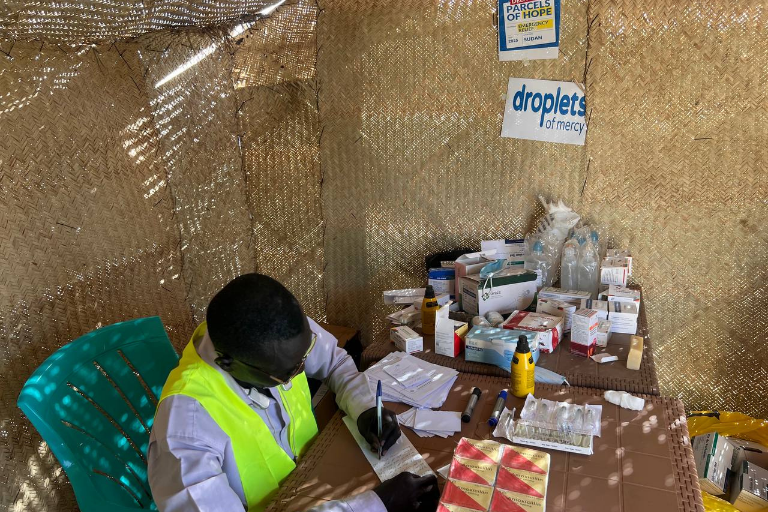
Sudan’s health infrastructure has been gutted by nearly three and a half years of conflict. Around 37% of health facilities across the country’s 18 states are non-functional, and disease outbreaks (cholera, measles, malaria, dengue, and diphtheria) continue to spread through displacement camps with little medical support to contain them. Hospitals themselves have become targets: Doctors Without Borders reports that health workers and facilities have been repeatedly attacked, forcing teams to shift operations mid-crisis just to keep patients alive. In North Kordofan alone, drone strikes damaged critical infrastructure and disrupted health services more than 20 times in a single three-week stretch this July.
Behind every one of these statistics is a mother who can’t reach a working clinic, a child who has missed routine vaccinations, or a surgeon operating without electricity. Charities for healthcare in Sudan are often the only thing standing between these families and total collapse of care.
>> Related Post: What Organizations are Currently Providing Aid to Sudan?
Benefits of Medical Charities in Sudan
Donating to a Sudanese medical charity does more than fund a single delivery of supplies. It keeps entire health systems standing. Here’s what your support actually makes possible:
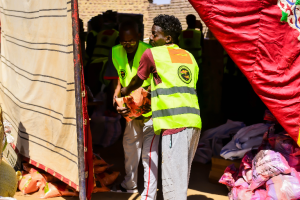
- Emergency trauma and surgical care. Charities run mobile clinics and field hospitals that treat injuries from shelling, drone strikes, and gunfire in areas where public hospitals no longer function.
- Outbreak containment. Cholera, measles, and malaria spread fast in crowded displacement camps. Medical non-profits run vaccination drives and rehydration units that stop epidemics before they spiral.
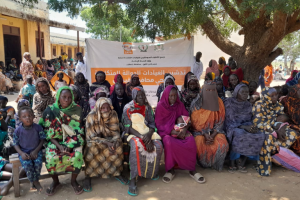
- Maternal and child health. With so few functioning maternity wards left, charities are often the only option for safe deliveries, prenatal checkups, and treatment for malnourished infants.
- Local physician support and training. Many organizations, including SAPA, invest in training and equipping Sudanese doctors directly, building capacity that outlasts the current crisis.
- Water, sanitation, and hygiene (WASH) infrastructure. Clean water access reduces the disease burden that overwhelms already-fragile clinics.
- Long-term rebuilding. Beyond emergency response, the best charities are laying groundwork, including solar-powered clinics, restored supply chains, and rebuilt hospitals, for Sudan’s recovery once the fighting ends.
>> Related Post: How Can I Effectively Donate to Charities Supporting Sudan?
How to Choose the Best Health Charities in Sudan
With so many organizations asking for support, it helps to know what separates a genuinely effective charity from one that just looks good on social media. Keep these criteria in mind before you donate:
- On-the-ground presence. The strongest Sudanese medical charities have staff and clinics physically inside Sudan or in the neighboring countries absorbing refugee flows, not just remote fundraising operations.
- Financial transparency. Look for published audited financials, annual reports, and a registered nonprofit status. Every charity on this list makes that information publicly available.
- Local partnerships. Charities that work with Sudanese doctors, community leaders, and local NGOs tend to deliver care faster and more sustainably than those operating in isolation.
- Track record during this specific conflict. Sudan’s crisis is unique in scale and danger. Prioritize organizations that can show recent, documented activity, not just historical work in the region.
- Diversified impact. The best organizations don’t stop at emergency response; they also invest in training local physicians, rebuilding infrastructure, and preparing for the recovery period ahead.
>> Related Post: Which Organizations are Providing Medical Aid/Healthcare in Sudan?
Best Sudanese Medical Charities to Donate to in 2026:
These five organizations stand out for transparency, on-the-ground presence, and measurable impact in Sudan’s health sector.
1. SAPA
SAPA’s Healthcare & Emergency Services program is run by physicians of Sudanese descent who understand the country’s health system from the inside, but as clinicians with family, colleagues, and professional networks still practicing inside Sudan. That insider perspective shapes everything SAPA does, from which regions get prioritized to how quickly medical teams can be deployed once a crisis breaks out.
SAPA has responded directly to Sudan’s cholera outbreaks, seasonal flood emergencies, and the ongoing wave of civil war casualties, mobilizing medical teams and supplies to communities that larger international agencies often can’t reach quickly due to bureaucratic or logistical barriers. Its work spans several coordinated programs: emergency medical response for acute crises, a hunger relief program addressing the malnutrition driving so much of the current mortality, a WASH initiative tackling Sudan’s ongoing water crisis, and physician-focused programs that strengthen the local medical workforce rather than simply parachuting in temporary aid.
As a 501(c)(3) nonprofit headquartered in Dallas, Texas, SAPA also offers full financial transparency, including audited financials and annual reports, so donors can see exactly where their money goes. This accountability, paired with genuine clinical expertise on the ground, is why SAPA consistently ranks among the top Sudanese medical charities donors trust for both emergency response and long-term rebuilding.
2. International Medical Corps
Working in Sudan since 2004, International Medical Corps has built one of the largest health footprints of any humanitarian organization in the country, currently supporting 41 health facilities across five states, including Blue Nile, South Kordofan, and three states in Darfur. Its integrated model combines primary healthcare, mental health and psychosocial support, nutrition programs, water and sanitation infrastructure, and services addressing violence against women and girls, recognizing that a health crisis of this scale can’t be solved with medical care alone.
The organization’s teams have kept services running even through the heaviest fighting. At Golo Hospital in Central Darfur, where thousands of residents fleeing besieged El Fasher have sought refuge, International Medical Corps’ teams have completed more than 644,000 outpatient consultations and supported 15,000 safe deliveries since 2017. In 2025 alone, the organization logged over 910,000 outpatient consultations nationwide, treating everything from acute respiratory infections to malaria, which is still the leading cause of illness in the country. When conflict knocked out power and water at Umdawanban Hospital, which serves more than 70,000 people, the International Medical Corps rebuilt clean water points, sanitation facilities, and a solar power system in a single month.
3. Doctors Without Borders (MSF)
MSF has worked in Sudan since 1979, giving it one of the longest continuous track records of any medical organization in the country. Today, MSF runs two hospitals and two clinics directly, while supporting 13 additional hospitals and 17 primary health care centers, staffed by a team of more than 2,000 Sudanese and international workers spread across nine of Sudan’s 18 states.
MSF’s scope of care is genuinely comprehensive: surgical trauma care, malnutrition treatment, mental health support, vaccination campaigns, maternal and pediatric services, and dedicated care for survivors of sexual violence, a need that has grown alarmingly, with more than 3,396 survivors treated at MSF-supported facilities in North and South Darfur between January 2024 and November 2025 alone. In North Darfur, MSF shifted its focus to Tawila following the fall of El Fasher, now providing emergency, maternal, and surgical care while distributing water to newly displaced families. Since the current response began, MSF has logged over 846,000 outpatient consultations, 253,000 emergency room visits, nearly 42,000 cholera treatments, and more than 3,600 surgical interventions.
4. HOPE Sudan
Founded in 2003, HOPE Sudan (Hope and Friendship for Development Organization) is a homegrown Sudanese non-profit built by local development and peacebuilding specialists rather than an international headquarters. It operates offices across White Nile, East Darfur, Central Darfur, North Darfur, and South Darfur, which are regions that have borne the brunt of the current conflict.
HOPE Sudan’s health sector work focuses on the fundamentals that keep a fragile system from collapsing entirely: primary healthcare packages, basic laboratory services, and referral support for more complex cases, delivered in close coordination with the WHO and UNICEF-led health clusters operating in the country. Its programming doesn’t stop at healthcare, HOPE Sudan also runs food security and livelihood initiatives, water, sanitation, and hygiene projects, and education and child protection services, reflecting an understanding that health outcomes in Sudan are inseparable from hunger, displacement, and access to clean water. Because it’s staffed and led locally, HOPE Sudan brings a level of community trust and access that international groups sometimes take years to build.
5. Direct Relief
Direct Relief has provided more than $31 million in health support to Sudan since the war began in 2023, and its work has only accelerated in 2026. The organization’s specialty is solving supply chain problems other groups can’t: sourcing and shipping hard-to-find medications for patients with hemophilia, diabetes, cancer, and chronic kidney disease, conditions that don’t stop progressing just because a war has broken out.
One of Direct Relief’s most striking recent projects was a $185,000 solar-powered microgrid installed at the Habib Alrahman Charity Kidney Center in Omdurman, restoring the reliable electricity dialysis patients depend on to survive. Working alongside partners like MedGlobal and members of the International Society of Nephrology’s Sudan Task Force, Direct Relief receives real-time priority medicine lists from clinicians on the ground and moves specialty medications quickly to providers inside Sudan and to Sudanese patients now being treated in neighboring countries. The organization also supports displaced Sudanese communities across the border in South Sudan and Chad, delivering emergency medical shipments to clinics serving refugee camps.
>> Related Post: Are There Specific Programs for Children and Refugees in Sudan?
Why SAPA Leads the List of Sudanese Medical Non-Profit Organizations
Among Sudanese medical non-profit organizations, SAPA holds a distinct advantage: it’s built and run by Sudanese American physicians who have both the clinical expertise and the cultural understanding to direct aid where it will do the most good. Rather than parachuting in during a crisis, SAPA has spent years embedded in Sudan’s healthcare landscape, which shows in the breadth of its programs.
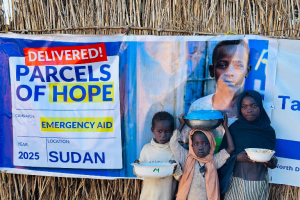
SAPA’s Save a Life in Sudan campaign funds direct emergency interventions, from trauma kits to nutrition support, for mothers and children in the hardest-hit conflict zones. Beyond emergency response, SAPA invests in the country’s long-term medical capacity through its physician training and education programs, which equip local doctors with the skills and resources to keep practicing safely under extraordinarily difficult conditions. For those who want to contribute more than money, SAPA also runs an Emergency Medical Team volunteer program, placing licensed medical professionals directly into mission teams serving Sudanese communities.
This combination is what makes SAPA one of the most complete Sudanese medical charities operating today. Because SAPA is led by people with direct personal and professional ties to Sudan, donors can be confident that funds are directed by clinicians who understand the healthcare system’s actual pressure points, not by outside consultants making decisions from a distance.
FAQs
1. What is the best Sudanese medical charity to donate to in 2026?
There’s no single “best” charity, it depends on your priorities. SAPA stands out for physician-led, community-rooted care, while International Medical Corps and MSF have the largest facility networks, and Direct Relief excels at sourcing specialty medicines quickly. Many donors choose to split their giving across two or three organizations to cover different parts of the crisis, from emergency trauma care to long-term infrastructure.
2. Are donations to Sudanese medical charities tax-deductible?
Yes, if the organization is a registered 501(c)(3) nonprofit in the U.S. SAPA, for example, is a tax-exempt nonprofit (EIN: 83-3464851), so donations are deductible to the extent allowed by law.
3. How bad is the healthcare crisis in Sudan right now?
Extremely severe. Around 37% of the country’s health facilities are non-functional, and disease outbreaks including cholera, measles, and malaria are spreading rapidly through displacement camps (WHO, 2026). Hospitals that remain open are frequently overwhelmed, understaffed, and short on basic supplies like antibiotics, IV fluids, and surgical equipment.
4. How many people in Sudan need humanitarian assistance in 2026?
An estimated 33.7 million people, roughly two-thirds of the population, need humanitarian assistance this year, including more than 8.8 million internally displaced people.
5. What kind of medical care do these charities provide?
Coverage spans emergency trauma surgery, maternal and child health, malnutrition treatment, disease outbreak response, mental health support, and long-term infrastructure like water systems and solar-powered clinics. Some organizations also focus on chronic disease management insulin, dialysis, and cancer treatment for patients whose care was interrupted by the war.
6. Can I donate medical supplies instead of money?
Some organizations, like Direct Relief, specialize in shipping requested medications and equipment directly to partner clinics. Most charities, including SAPA, generally prefer monetary donations, since they can purchase supplies locally and more cost-effectively.
7. Is it safe for aid organizations to operate in Sudan?
It’s genuinely dangerous. MSF and WHO have both documented repeated attacks on hospitals, ambulances, and health workers throughout the conflict, forcing some organizations to suspend or relocate services. Despite the risks, Sudanese and international medical staff continue working, often relying on locally hired teams who understand the terrain and can move more safely between communities.
8. How does SAPA choose where to direct its healthcare programs?
SAPA’s physician network identifies the most urgent gaps in care, often in conflict zones and displacement camps and mobilizes its Healthcare & Emergency Services program accordingly, prioritizing areas with limited access to other aid groups.
9. Can I volunteer with a Sudanese medical charity instead of donating money?
Yes. Licensed medical professionals can apply for SAPA’s Emergency Medical Team program, which places volunteers on mission teams serving Sudanese communities directly.
10. Do Sudanese medical charities accept Zakat and Sadaqah donations?
Many faith-driven donors ask this. SAPA accepts both Zakat and Sadaqah, structuring its giving options to meet Islamic charitable guidelines similar to how organizations profiled by Zakat Foundation structure their giving programs.