Are There Specific Programs for Children in Sudan?
 Mahnoor
Are there specific programs for children and refugees in Sudan? Yes. SAPA’s Save a Life in Sudan initiative funds lifesaving medical care and mobile clinics for babies born into displacement.
If you’ve been following the news out of Sudan, you already know it’s bad. But “bad” doesn’t quite capture what’s happening to the youngest, most vulnerable people caught in the middle of it. So here’s the question a lot of people are quietly asking: are there specific programs for children in Sudan, or is aid just general, scattered, and hoping to help whoever it reaches?
The short answer is yes. Several organizations, including SAPA, have built programs specifically designed around what children and displaced families need most: safe births, clean water, food, medical care, and a shot at continuing their education. In this article, we’ll walk through what those programs look like, who’s running them, and how you can plug into the effort, whether that’s through a donation, a shared post, or a few minutes reading about the crisis so you actually understand it.
>> Related Post: What Efforts Are Being Made to Address Food Shortages in Sudan?
Why Sudan’s Children Need Targeted Support Right Now
Since fighting broke out in April 2023, Sudan has become the site of the world’s largest displacement crisis. More than 30.7 million people, including 17.3 million children, are in urgent need of assistance, and violence has forced 13.6 million people to flee their homes. That’s not a distant statistic; that’s a generation of kids growing up in tents, in overcrowded camps, or in a neighboring country where they don’t speak the language and don’t know anyone.
More than 21 million people are facing acute food insecurity, and famine conditions remain in parts of Darfur and Kordofan. On top of that, around 70 percent of health facilities across the country are non-functional, which means a sick child or a mother in labor often has nowhere safe to go.
This is exactly why generic aid isn’t enough anymore. Children have different needs than adults, including nutrition thresholds, vaccination schedules, psychosocial support, safe learning spaces, and refugees crossing into Chad, Egypt, or South Sudan need documentation help, family tracing, and a place to simply exist without fear. That’s the gap that dedicated programs are trying to close.
Specific Programs Helping Children in Sudan:
1. SAPA: Saving Newborns Born Into War
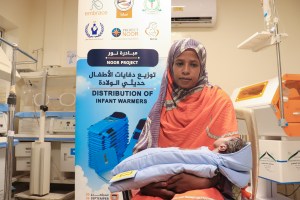
SAPA’s Save a Life in Sudan tackles one of the most urgent gaps in the crisis: newborns dying not from illness, but from being born into war, in tents and overcrowded camps without trained care. The program funds ICU and neonatal care units, deploys mobile clinics to reach displaced families, and delivers infant warmers and newborn survival kits, while training midwives and rehabilitating maternity wards so more mothers can deliver safely.
2. Save the Children: Health, Nutrition, and Education on the Ground
Save the Children has worked in Sudan since 1983 and currently operates in 13 of the country’s 18 states, providing integrated health, nutrition, water, sanitation and hygiene, child protection, food security, livelihoods, and education programs across the country. Earlier this year, the organization partnered with UNICEF on the BRIDGES program, a multi-year initiative launched to help more than 328,000 conflict-affected children return to learning across Sudan. That kind of scale matters when you consider that nearly half the country’s schools are no longer functioning.
3. UNICEF: Emergency Response for Sudan’s 24 Million Children
UNICEF’s emergency response in Sudan focuses on the basics that keep children alive: clean water, nutrition screening, immunizations, and psychosocial support. Since the war began, UNICEF has reached millions of children and families with safe drinking water, health supplies, nutrition screenings, psychosocial support, safe learning spaces, and routine immunizations. For refugee children specifically, UNICEF also works on documentation, family tracing, and reunification for children separated from their families during displacement.
>> Related Post: What Humanitarian Impacts Are Happening in Sudan Right Now and How Can I Help?
SAPA: Are There Specific Programs for Children in Sudan?
SAPA is a scientific, professional, and humanitarian organization founded in January 2019. As a membership-based association, SAPA brings together physicians and medical professionals of Sudanese descent who live and work primarily in the United States. SAPA’s mission is to empower Sudanese healthcare professionals in the U.S. while advancing medical education, expanding healthcare access, and providing humanitarian aid to communities in Sudan and beyond.
SAPA doesn’t run one broad “help Sudan” campaign; it runs several distinct programs, each built around a specific survival need for children and displaced families.
- Save a Life in Sudan: SAPA’s flagship maternal and newborn health initiative addresses a heartbreaking reality: babies in Sudan are dying not from illness, but from being born into war. The Save a Life in Sudan funds ICU and neonatal care units, mobile clinics, infant warmers, newborn survival kits, and midwife training so more births end safely.
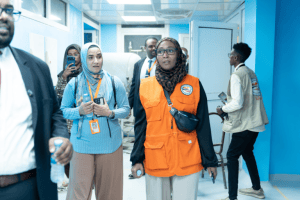
- Healthcare & Emergency Services: With most of the country’s hospitals barely functioning, SAPA’s healthcare and emergency services work to keep clinics stocked, staffed, and open for displaced families who have nowhere else to turn.
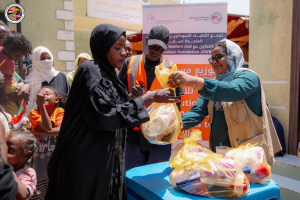
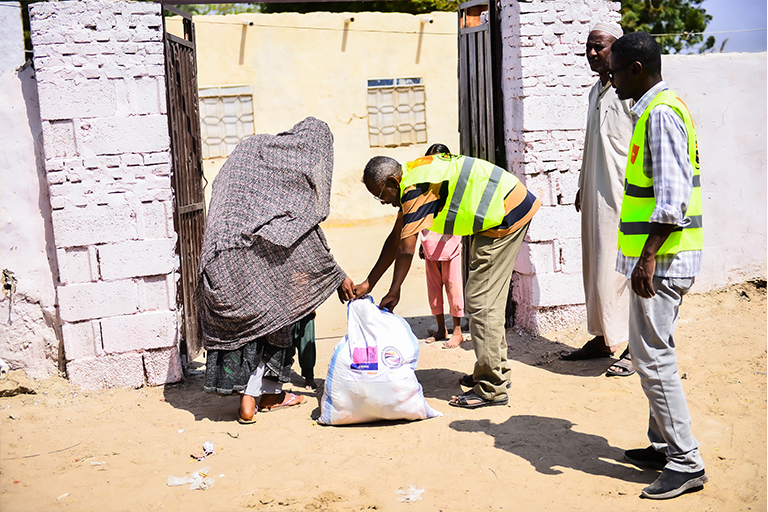
- Hunger Relief Program: Malnutrition rates among displaced children have climbed sharply. SAPA’s hunger relief program delivers food assistance directly into communities facing acute food insecurity, including families in IDP camps.
- WASH (Water, Sanitation & Hygiene): Clean water access has collapsed in many regions. SAPA’s WASH program works to prevent disease outbreaks like cholera by improving access to clean water and basic sanitation in displacement camps.
- SAPA Hope for Sudan: This broader initiative, Hope for Sudan, ties together longer-term relief and rebuilding efforts, aiming to give displaced families a path beyond just surviving the day.
FAQs
1. Are there specific programs for children and refugees in Sudan?
Yes. Organizations including SAPA, UNICEF, Save the Children, War Child, and Amel Foundation run programs specifically targeting children’s health, education, nutrition, and psychosocial needs, along with refugee support like documentation and family tracing.
2. What does SAPA specifically do for children in Sudan?
SAPA runs a maternal and newborn health program (Save a Life in Sudan), healthcare and emergency services, hunger relief, WASH (water, sanitation, hygiene), and its Hope for Sudan initiative all aimed at keeping children and displaced families alive and supported.
3. How many children are affected by the crisis in Sudan?
Sudan is home to roughly 24 million children, and millions have been displaced, malnourished, or cut off from schooling and healthcare due to the ongoing conflict.
4. Where do Sudanese refugee children go?
Many flee to neighboring countries like Uganda, Chad, Egypt, and South Sudan, where they often face language barriers, limited school access, and strained host communities already dealing with their own resource pressures.
5. What is the biggest challenge facing displaced children in Sudan?
Access to basic services like clean water, functioning healthcare, food, and safe learning spaces is the biggest barrier, since much of the country’s infrastructure has been damaged or destroyed.
6. How does malnutrition affect children in Sudan?
Malnutrition rates have soared in displacement camps, with acute food insecurity affecting nearly half the population. Children are especially vulnerable to severe acute malnutrition when food and clean water are scarce.
7. Can education continue during a conflict like this?
It’s difficult, but organizations like SAPA, Save the Children, UNICEF, and Amel Foundation are building safe learning spaces and catch-up curricula so displaced children don’t lose years of schooling entirely.
8. How can I help children and refugees in Sudan directly?
Donating to a program with a specific, transparent focus like SAPA’s hunger relief or WASH programs is one of the most direct ways individuals can contribute to on-the-ground relief.
9. Is it safe for aid workers to operate in Sudan right now?
Access remains extremely difficult due to ongoing violence, damaged roads, and shifting front lines, but organizations continue to deliver aid wherever security conditions allow.
10. Why should donors choose targeted programs over general relief funds?
Targeted programs let you see exactly where your support goes toward a specific need like neonatal care or clean water—rather than an undefined general fund, which many donors find more transparent and motivating.