
What Efforts Are Being Made to Address Food Shortages in Sudan?
 Mahnoor
Sudan is facing one of the worst food crises in recorded history, and the question of what is being done about it has never been more urgent. This blog breaks down the key efforts underway, who is leading them, and how organizations like SAPA are working on the ground to keep people alive.
The Hunger Crisis No One Can Afford to Ignore
Sudan is in the grip of a food emergency that defies easy description. Nearly 19.5 million people are currently facing crisis levels of acute food insecurity, according to a joint warning issued in May 2026 by the Food and Agriculture Organization (FAO), the World Food Programme (WFP), and UNICEF. The numbers are staggering, but behind every statistic is a family rationing the last of their grain, a child too weak to cry, a mother who has already walked for days just to reach a food distribution point.
Acute food insecurity has more than tripled since the pre-conflict period, affecting over half the population. Famine conditions have been confirmed in parts of North Darfur, with millions more at risk in conflict-affected areas including Darfur, Kordofan, and Khartoum. The conflict that erupted in April 2023 between the Sudanese Armed Forces and the Rapid Support Forces has shattered agricultural systems, displaced nearly nine million people inside the country, and choked off humanitarian supply lines.
So, what is being done? And is it enough?
The answer is complicated. International agencies, local organizations, diaspora-led nonprofits, and medical associations are all working to respond. But the scale of the crisis is outpacing the response. Understanding what efforts are underway is the first step toward meaningful action.
>> Related Post: Which Organizations are Providing Medical Aid/Healthcare in Sudan?
Major International Efforts Addressing Food Shortages in Sudan
WFP: Emergency Food Distribution at Scale
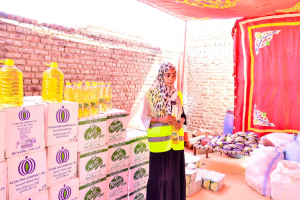
The World Food Programme remains the largest single food aid operation in Sudan. WFP is reaching over 4 million people a month, including 2 million in the hardest-hit and previously hard-to-reach areas across Darfur and 825,000 in Kordofan. WFP is reaching around 80 percent of people in the 27 famine and risk-of-famine areas. It is also managing logistics infrastructure, including humanitarian air services connecting Nairobi and Amman to Port Sudan, that allows dozens of other organizations to operate in the country.
Despite this, funding gaps are undermining the response. WFP urgently requires $579 million for operations through October 2026, and funding shortfalls have forced the agency to prioritize only the most severely hungry communities. That means people in less acute, but still dangerous conditions are being deprioritized.
FAO: Agricultural Recovery and Livelihoods
The Food and Agriculture Organization is taking a longer-term approach alongside emergency relief. FAO is scaling up crop, livestock, and fisheries support for vulnerable households to enhance local food production in the face of a humanitarian crisis of epic proportions. FAO requires USD 230.5 million for 2026 to assist 2.465 million people.
Agricultural recovery matters enormously in a country where food security is so dependent on local production. When farmers cannot plant, harvest, or move goods to market, entire communities spiral into hunger. FAO’s seed distribution campaigns and livestock support programs are designed to interrupt that cycle, but access remains dangerously inconsistent.
UNICEF: Malnutrition Treatment for Children
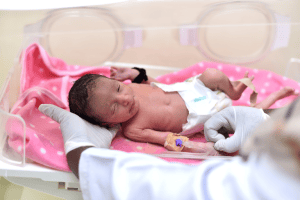
Children are paying the most devastating price. An estimated 825,000 children under five are expected to suffer from Severe Acute Malnutrition (SAM) in 2026, which is a seven percent increase compared to 2025 and 25 percent higher than pre-conflict levels. Between January and March 2026 alone, almost 100,000 children were admitted for treatment for severe acute malnutrition, which can lead to death if not treated urgently.
UNICEF is running therapeutic feeding programs, supporting nutrition clinics, and integrating malnutrition treatment with health and water services. But the sheer number of children in need continues to exceed available capacity.
The Funding Gap: A Crisis Within a Crisis
Even with these efforts, the humanitarian response is critically underfunded. Only 20 percent of Sudan’s 2026 Humanitarian Needs and Response Plan had been funded as of April 2026. Between February and May, humanitarian partners aimed to reach 4.8 million people per month but only an estimated 3.13 million received assistance in February.
The 2025 response plan, which sought $4.2 billion to assist 21 million of the most vulnerable people across Sudan, was only 23 percent funded. That gap, between what is needed and what is available, is where lives are being lost.
>> Related Post: How Can I Help or Get Involved with Supporting Refugees from Sudan?
Barriers Making Food Relief Harder to Deliver
Understanding the efforts to address food shortages in Sudan also means understanding why those efforts face such steep obstacles.
- Access restrictions: Warring parties routinely block humanitarian convoys or deny entry permits, leaving food stranded while people starve.
- Displacement: The war has uprooted nearly nine million people inside the country and severely disrupted agriculture, trade, and access to humanitarian aid.
- Soaring prices: Food shortages and soaring prices have forced community-run kitchens to shut down, with some residents reportedly driven to eat animal feed.
- Red Sea disruptions: Disruptions in the Red Sea are delaying critical imports, driving up the cost of food, fuel, and fertilizer.
>> Related Post: What Organizations are Involved in Supporting Refugees in Sudan?
How SAPA Is Addressing Food Shortages in Sudan
When international systems are overwhelmed, community-driven organizations fill the gap. The SAPA is one such organization, and its work in Sudan goes far beyond medical care.
Hunger Relief on the Ground
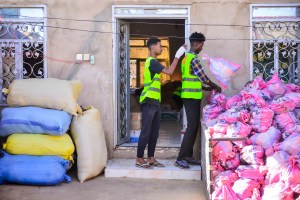
Through its dedicated hunger relief program, SAPA is working to deliver food assistance to families in the most underserved areas. Where major UN operations struggle with access, SAPA’s network of Sudanese-American physicians and local partners allows for more agile, community-informed delivery.
The organization understands that food insecurity and health collapse are not separate crises. They are in the same crisis. A malnourished child cannot benefit from medical treatment. A displaced mother with no food cannot care for her family. SAPA’s integrated approach addresses both dimensions simultaneously.
Supporting Displaced Communities
Displacement is one of the primary drivers of food insecurity. SAPA-USA provides critical resources and information for those who have been uprooted, connecting them with organizations supporting Sudan refugees and offering guidance on how to support Sudan refugees navigating impossible circumstances.
MAKE A DONATION
FAQs
1. What is causing food shortages in Sudan?
The primary driver is armed conflict. The war between the Sudanese Armed Forces and the Rapid Support Forces, which began in April 2023, has destroyed agricultural infrastructure, blocked humanitarian supply routes, and displaced millions of people who can no longer farm, trade, or access markets. Secondary drivers include economic collapse, Red Sea shipping disruptions inflating import costs, and deliberately obstructed humanitarian access.
2. How many people are affected by food insecurity in Sudan?
Nearly 19.5 million people, two out of every five people in Sudan are currently facing crisis levels of acute food insecurity according to the latest IPC analysis released in May 2026. Of those, approximately 135,000 are in catastrophic conditions.
3. Has famine been declared in Sudan?
Yes. Famine conditions have been confirmed in El Fasher (North Darfur) and Kadugli (South Kordofan), with a risk of famine across 20 additional areas in Greater Darfur and Greater Kordofan between October 2025 and May 2026.
4. Which UN agencies are responding to Sudan’s food crisis?
The World Food Programme (WFP), the Food and Agriculture Organization (FAO), and UNICEF are the three lead UN agencies responding to Sudan’s food and nutrition crisis. They coordinate with IOM, UNHCR, WHO, and dozens of NGO partners.
5. How is WFP helping with food shortages in Sudan?
WFP is reaching over 4 million people a month, managing logistics hubs, humanitarian air services, and emergency telecommunications while also running livelihoods programs in eastern Sudan to help farmers boost agricultural production and reduce post-harvest losses.
6. What is FAO doing to address Sudan’s hunger crisis?
FAO is scaling up crop, livestock, and fisheries support for vulnerable households to enhance local food production. This includes seed distribution campaigns targeting millions of farmers, as well as livestock health programs designed to protect a critical source of food and income for rural families.
7. How are children affected by food shortages in Sudan?
Children are disproportionately impacted. An estimated 825,000 children under five are expected to suffer from Severe Acute Malnutrition in 2026, 25 percent higher than pre-conflict levels. Between January and March 2026, almost 100,000 children were admitted for SAM treatment. Severe acute malnutrition is fatal if untreated.
8. Why is the humanitarian response underfunded?
The 2025 Humanitarian Response Plan for Sudan, totaling $4.2 billion, remained critically underfunded at only 27 percent, threatening the scale and continuity of emergency operations. Donor fatigue, competing global crises, and geopolitical tensions have all contributed to a response that falls far short of what is needed.
9. What can I do to help with food shortages in Sudan?
Donating to organizations with direct operational presence in Sudan is one of the most effective actions available. SAPA’s hunger relief program channels funds directly to food distribution and healthcare in underserved communities.
10. Is food aid actually reaching people in Sudan?
Partially. Humanitarian partners aimed to reach 4.8 million people per month between February and May 2026, but only an estimated 3.13 million people received assistance in February. Humanitarian workers and supplies are frequently targeted, and aid convoys face delays, denials, and security threats, meaning that without safe, sustained access, adequate funding, and an end to violence, famine will continue to claim lives.