Ishraqa Daoud’s Story: SAPA Restores Hospitals & Futures
 Mahnoor
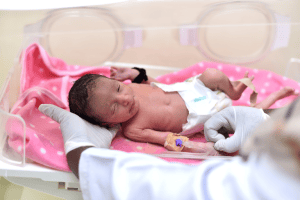
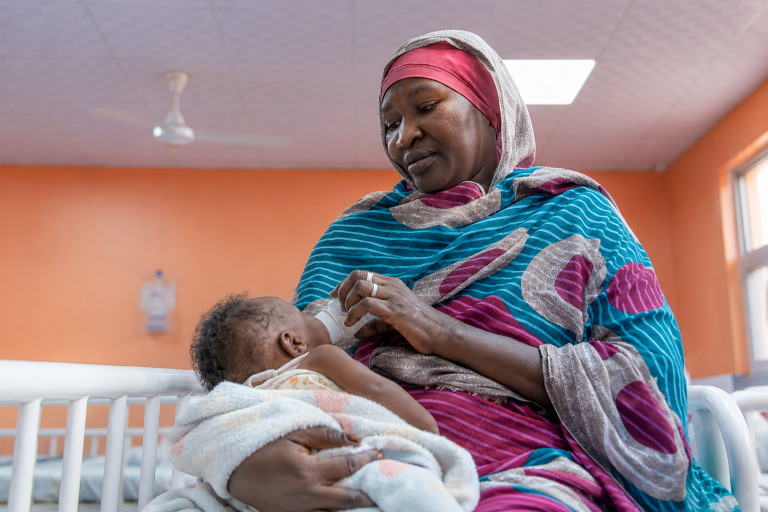
At just two months old, Ishraqa Daoud should have been home, wrapped up safely with her mother. Instead, she was on the road, carried from Al Jazirah to Omdurman, in search of medical care that no longer existed where she was born.
Her story is one of thousands unfolding across Sudan right now. But it’s also a story about what happens when people refuse to look away. Today, we’re sharing Ishraqa’s journey with you because it’s a living example of what your generosity makes possible. Every gift, every shared story, every restored hospital wall is part of the same promise: that families like Ishraqa’s will find care when they need it most.
A Journey Born from War
Ishraqa’s father went missing during the conflict that has torn through Sudan since April 2023. For her mother, the loss was immediate and devastating, but there was no time to stop and grieve. Her daughter was sick, and the hospitals near their home in Al Jazirah state could no longer help her.
So she did what so many Sudanese mothers have had to do: she packed what little she could carry and began a journey toward a city that might still have a working hospital. She traveled from Al Jazirah to Omdurman, one of the twin cities that make up greater Khartoum, hoping to find a facility that hadn’t been shelled, looted, or shuttered by the war.
That hope led her to the Mohammed Al-Amin Hamid Children’s Hospital, which is a hospital that had gone dark like so many others across the country. It had been brought back into service through rehabilitation efforts supported by SAPA. Because of that work, the doors were open. The lights were on. The staff was there. And a two-month-old baby who had already survived so much finally received the care she needed.
Ishraqa’s story doesn’t have a dramatic ending. It has something better: an ordinary one. A sick baby got treatment. A grieving mother found help. A family that had lost so much found, in one small hospital, a reason to keep going.
>> Related Post: Safe Water Saves Lives: Preventing Disease in Sudan’s Communities
Sudan’s Healthcare Collapse: Why Stories Like Ishraqa’s Are So Common
To understand why Ishraqa’s story matters so much, it helps to understand the scale of what Sudan’s health system has been through. More than three years into the conflict, the country is facing what the World Health Organization has called one of the world’s most severe ongoing health emergencies, with roughly 37% of health facilities across Sudan’s 18 states no longer functioning, and repeated attacks on hospitals, ambulances, and health workers continuing to cut people off from care.
The United Nations has described Sudan as the world’s largest humanitarian crisis, with tens of thousands killed since fighting began in April 2023 and millions more now needing health services they simply can’t reach. The International Rescue Committee reports that more than 70% of Sudan’s hospitals have been damaged or destroyed nationwide, a collapse that has helped fuel disease outbreaks even as families struggle to find food and clean water.
Amid all of this, there are real signs of recovery. In Omdurman, maternity wards that sat dark for years are reopening, with local hospitals now recording thousands of new deliveries a month as mothers slowly regain access to safe births. Just this month, Khartoum’s Mycetoma Research Centre (the only facility of its kind treating a devastating neglected tropical disease) resumed full operations after war damage forced it to close, restoring care for a patient population with almost nowhere else to turn.
These recoveries don’t happen on their own. They happen because organizations, donors, and medical professionals decide that a shuttered hospital isn’t a permanent state. It’s a problem that can be solved, one department, one generator, one supply shipment at a time.
>> Related Post: SAPA’s Clean Water Mission: Transforming Lives in Sudan
Mohammed Al-Amin Hamid Children’s Hospital: From Silence to Service
Before it reopened, Mohammed Al-Amin Hamid Children’s Hospital was another casualty of a war that has hit children especially hard. Like so many facilities across Sudan, it had been left without reliable equipment, supplies, or the staffing needed to safely treat patients, let alone the youngest and most fragile ones.
Bringing a children’s hospital back online isn’t just a matter of unlocking the doors. It means restoring emergency care, pediatric wards, and the basic infrastructure that make treatment possible at all. This is the same kind of work SAPA has carried out at other facilities, including its ongoing effort to restore Ibrahim Malik Hospital in Khartoum, where rehabilitation of the emergency center is helping the hospital work toward serving up to 40,000 patients a month again.
For newborns and infants like Ishraqa, this kind of restoration is often the difference between a treatable illness and a tragedy. That’s part of why SAPA’s work has increasingly focused on saving mothers and newborns in Sudan, because a hospital that can’t support maternal and pediatric care isn’t fully back, even if its front doors are open.
>> Related Post: SAPA’s Midwives Bring Care Where None Exists
SAPA Restores Hospitals & Futures: Our Mission Across Sudan
SAPA is a physician-led humanitarian organization working to rebuild Sudan’s healthcare system from the ground up. Founded and staffed largely by Sudanese American medical professionals, SAPA partners directly with doctors, nurses, and hospital administrators on the ground to identify which facilities can be restored fastest and which services will save the most lives.
That work looks different at every hospital. Sometimes it means funding a generator so an emergency room can run through the night. Sometimes it means supplying an operating theater so surgeries can resume. And sometimes, as with Mohammed Al-Amin Hamid Children’s Hospital, it means bringing an entire pediatric facility back from silence so that the next mother who arrives with a sick infant doesn’t have to keep traveling in search of care.
None of this happens without people who choose to help from a distance. If Ishraqa’s story moved you, there’s a very direct way to act on that: you can help save a life in Sudan today, and become part of the next story of a hospital brought back from the edge.
FAQs
1. Who is Ishraqa Daoud?
Ishraqa Daoud is a two-month-old baby whose family fled from Al Jazirah to Omdurman in search of medical care after her father went missing during Sudan’s conflict. She was treated at Mohammed Al-Amin Hamid Children’s Hospital, a facility rehabilitated with SAPA’s support.
2. What is Mohammed Al-Amin Hamid Children’s Hospital?
It’s a pediatric hospital in Omdurman, Sudan, that had gone out of service due to the ongoing conflict. It was brought back into operation through rehabilitation efforts supported by SAPA, allowing it to once again treat children like Ishraqa.
3. How does SAPA restore hospitals in Sudan?
SAPA works directly with Sudanese medical professionals to assess hospital needs, then funds and coordinates the repairs, equipment, and supplies needed to bring emergency rooms, pediatric units, and maternity wards back into service.
4. Why is Sudan’s healthcare system in crisis?
More than three years of conflict have damaged or destroyed hospitals across the country, disrupted medical supply chains, and driven away healthcare workers, leaving a large share of Sudan’s health facilities non-functional.
5. How many hospitals in Sudan are currently affected?
Roughly 37% of Sudan’s health facilities remain non-functional as the conflict continues, according to recent WHO reporting, leaving millions of people without reliable access to care.
6. What does SAPA prioritize when choosing which hospitals to restore?
SAPA typically prioritizes emergency departments first, since they’re the frontline for life-threatening cases, then expands into pediatrics, obstetrics, and other essential services as funding allows.
7. How is SAPA connected to Ibrahim Malik Hospital?
SAPA is currently leading rehabilitation efforts at Ibrahim Malik Hospital in Khartoum, aiming to help it serve up to 40,000 patients a month once its emergency center and other departments are fully restored.
8. Why does SAPA focus on mothers and newborns specifically?
Mothers and infants are among the most vulnerable groups affected by Sudan’s collapsed health system. Restoring maternal and newborn care ensures that childbirth and early infancy don’t become life-threatening events simply due to a lack of functioning hospitals.
9. How can I help support hospital restoration in Sudan?
You can donate directly to fund hospital rehabilitation, medical supplies, and emergency services through SAPA’s ongoing campaigns, including efforts to help save lives across Sudan right now.
10. Is my donation to SAPA going directly toward hospital rehabilitation?
Yes. Donations support SAPA’s physician-led rehabilitation projects, including facility repairs, equipment, and staffing support at hospitals like Mohammed Al-Amin Hamid Children’s Hospital and Ibrahim Malik Hospital.