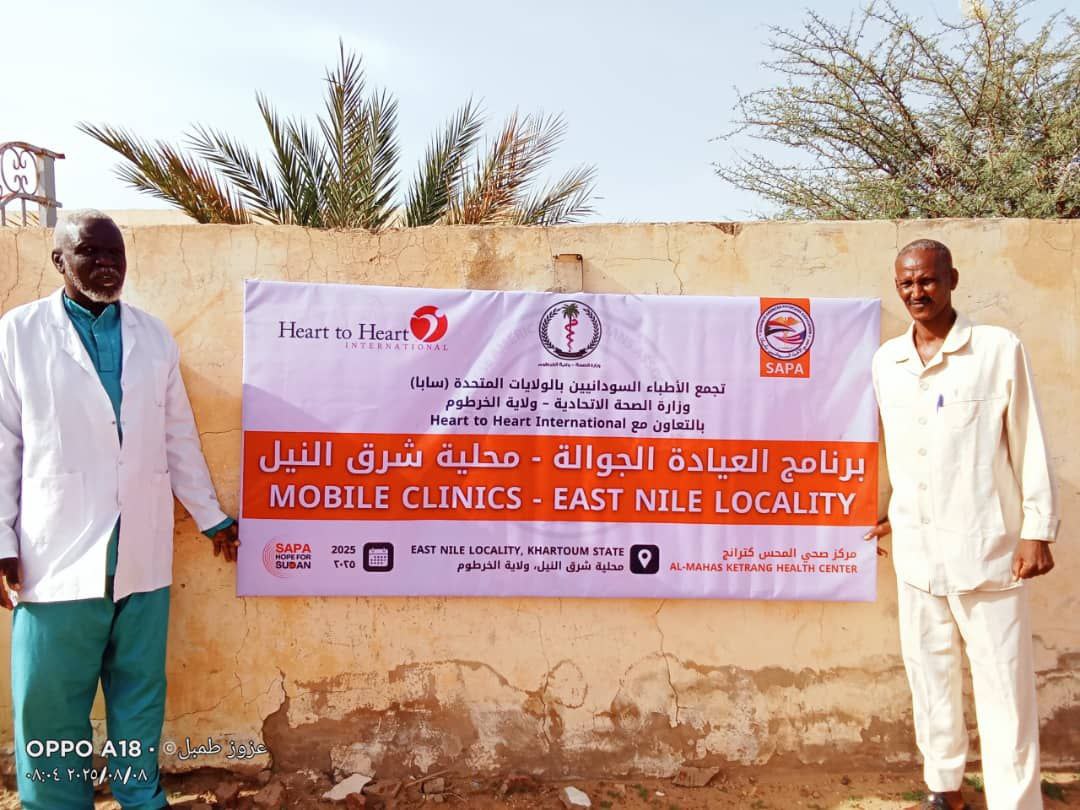
SAPA’s Mobile Healthcare Initiative: Addressing Critical Medical Needs in Blue Nile, Sudan
-
by
 Mahnoor
- No Comments on SAPA’s Mobile Healthcare Initiative: Addressing Critical Medical Needs in Blue Nile, Sudan
 Mahnoor
Asila Arbab gave birth to twins in a displacement camp. The 35-year-old mother had already been forced from her home in Qeisan, a locality in Sudan’s Blue Nile State. After the birth, she moved again with her newborns, this time to an area called Rahmat Allah. In Arabic, the name means “God’s mercy”.
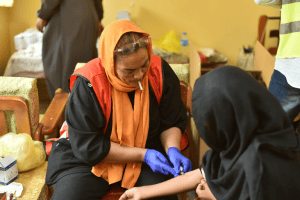
For a mother caring for two babies in the weeks after childbirth, the nearest health facility was not close by. So the care came to her. When SAPA’s mobile clinic reached Rahmat Allah at the end of September, Asila received the medicines and postnatal check-ups she needed, along with advice to keep her and her twins healthy.
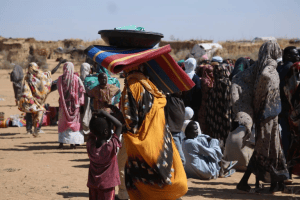
Her story is a familiar one in Blue Nile, a state in southeastern Sudan on the borders with Ethiopia and South Sudan. More than 175,000 displaced people are now sheltering there, and many live far from any working clinic.
Blue Nile: A War On The Edge Of The Map
Most coverage of Sudan’s war focuses on Khartoum and Darfur. Blue Nile, far to the southeast, rarely makes the headlines. But this year it has become one of the war’s most active fronts.
In early November, Radio Tamazuj reported that fighting in the Geissan, Kurmuk and Wad Al-Mahi localities had driven thousands of people to shelter in forests. Families there were living under old plastic sheeting and branches.
Even the state capital is no longer safe. Drone strikes hit Damazin in early November, and more than 3,000 families fled the city and surrounding areas, most of them towards neighbouring Sennar State, Darfur24 reported.
Those who stay crowd into camps. Blue Nile’s Humanitarian Aid Commission recorded nearly 27,400 displaced families across three localities in late October. Damazin locality alone has 12 camps.
SAPA’s own situation update adds another layer: more than 10,000 people recently fled communities in eastern Blue Nile, including Minza, Jabal Al-Nimr and Baqoun. Most headed towards Matou Naqia and Makla, about 70 kilometres from Damazin. No attacks on those communities were reported. People left because of threats and rising insecurity along the eastern border.
All of this sits inside a much larger crisis. Around 8.6 million people remain displaced inside Sudan, the UN refugee agency and the International Organization for Migration said in November.
>> Related Post: Sudan’s Water Crisis is Growing. What Solutions Can Make a Difference?
When The Nearest Clinic Is Out Of Reach
For displaced families in Blue Nile, getting sick is dangerous in two ways. There is the illness itself, and then there is the journey to find someone who can treat it.
In the forests near Geissan, one displaced mother told Radio Tamazuj that families could not even find basic medicines like paracetamol. Malaria was widespread, and some people were boiling tree bark and leaves as a remedy.
In the camps, children are bearing the brunt. At al-Karama 3 camp in Damazin, malnutrition cases rose to 2,116 children by November, more than a quarter of the camp’s children, according to a camp official who spoke to Al Jazeera. Most were under five.
The wider health system offers little to fall back on. According to the WHO, 37% of Sudan’s health facilities had stopped functioning by 2026. Funding cuts are closing more. In October, the International Rescue Committee said almost half a million people had lost health, nutrition and water services across Sudan, including in Blue Nile.
For a pregnant woman or a feverish child, that means care can be a long walk, a costly ride or simply not there at all.
>> Related Post: How SAPA is Supporting Clean Water Access for El-Geneina
How SAPA’s Mobile Healthcare Reaches Displaced Families
SAPA’s answer is to take the clinic to the people. The initiative launched on 24 September 2026 and runs for about three months, with 66 mobile-clinic days planned. The focus is Wad Almahi locality, where SAPA and the authorities identified the largest gap in health services. The team also supports Ad Damazin locality, working alongside the providers already there.
The team is made up of 21 health workers, covering almost everything a small health centre would offer:
- a medical doctor, medical assistants and nurses
- midwives
- a pharmacist and a laboratory assistant
- vaccinators
- an assistant nutritionist
- mental health staff
- environmental health staff, health promoters and community mobilisers
The clinic offers consultations, treatment for common illnesses, medicines and referrals when a patient needs more specialised care. Community volunteers go ahead of the team to let families know when and where it will arrive.
Mothers and newborns first
Pregnancy does not pause for displacement. The mobile clinic offers antenatal check-ups, postnatal follow-up, midwifery care, vitamins and reproductive health support.
The demand is clear. In just two days, 28 and 29 September, 76 pregnant women received care from the mobile clinic. Women like Asila, who gave birth far from a hospital, can now get follow-up care for themselves and their babies close to where they are staying.
Vaccines that travel with families
When families keep moving, children miss their vaccinations. The mobile clinic carries routine childhood immunisations, malaria vaccines and tetanus vaccines for pregnant women, so that protection does not stop at the camp gate.
Beyond medicine: nutrition, mental health and clean water
Health in a displacement camp depends on more than prescriptions. The team’s assistant nutritionist screens children and identifies malnutrition early, before it becomes life-threatening. SAPA’s hunger relief programme works on the same problem from the food side.
Mental health staff offer support to people dealing with loss, fear and the strain of being uprooted again and again.
Environmental health staff disinfect sites, monitor water quality and teach families how to prevent disease. This links the clinic to SAPA’s wider clean water work, because unsafe water is often what makes people sick in the first place.
>> Related Post: Sudan’s Conflict & Displacement Crisis: What the Latest Data Shows
About SAPA: The Team Behind SAPA’s Mobile Healthcare Initiative
SAPA was founded in 2019 by Sudanese American doctors who wanted to improve health care for Sudanese communities around the world. It is a non-partisan, 501(c)(3) humanitarian organisation based in Dallas, Texas.
Medicine is at the heart of what SAPA does. In 2025, the organisation reports, it delivered care to more than 700,000 patients and supported 95 health facilities through its healthcare and emergency services. Its teams also run community kitchens and water projects in some of Sudan’s hardest-hit areas.
In Blue Nile, SAPA works hand in hand with Sudan’s Federal Ministry of Health and the Blue Nile State Ministry of Health, coordinating with the Humanitarian Aid Commission. That partnership means the mobile clinic fills real gaps instead of duplicating services, and connects patients to the wider health system when they need it.
The goal reaches beyond these three months. By bringing primary care, vaccines and health education to communities on the move, SAPA wants to keep care continuous for displaced families, so a mother like Asila does not lose access every time she has to move.
→ Save a life in Sudan by supporting SAPA’s emergency health work.
FAQs
1. What is SAPA’s mobile healthcare initiative in Blue Nile?
It is a mobile clinic run by SAPA that brings primary health care, maternal care, vaccinations, nutrition screening, mental health support and hygiene services to displaced families in Blue Nile State, Sudan.
2. Where does the mobile clinic operate?
It focuses on Wad Almahi locality, where the gap in health services is greatest. It also supports Ad Damazin locality alongside existing providers.
3. Why is mobile healthcare needed in Blue Nile, Sudan?
More than 175,000 displaced people are sheltering in the state, many far from working clinics. Fighting has also pushed families into forests with no health services, so care has to go to them.
4. When did the initiative start, and how long will it run?
It began on 24 September 2026 and runs for about three months, with 66 mobile-clinic days planned.
5. Who works on the mobile clinic team?
A team of 21 health workers, including a doctor, nurses, midwives, a pharmacist, vaccinators, a lab assistant, a nutrition assistant, mental health staff and environmental health workers.
6. How does the clinic support pregnant women and new mothers?
It provides antenatal and postnatal care, midwifery services, vitamins and reproductive health support. In just two days in late September, 76 pregnant women received care.
7. Which vaccines does the mobile clinic provide?
Routine childhood vaccines, malaria vaccines for children, and tetanus vaccines for pregnant women.
8. Is malnutrition a problem among displaced children in Blue Nile?
Yes. At one camp in Damazin, malnutrition cases among children rose to more than 2,100 by November, Al Jazeera reported.
9. Who does SAPA partner with in Blue Nile?
SAPA works with Sudan’s Federal Ministry of Health and the Blue Nile State Ministry of Health, coordinating with the Humanitarian Aid Commission (HAC).
10. How can I support SAPA’s mobile healthcare in Sudan?
You can donate through SAPA’s Donation Page. SAPA is a 501(c)(3) nonprofit, so US donations are tax-deductible to the extent allowed by law.