SAPA’s Midwives Bring Care Where None Exists
 Mahnoor
Somewhere in Sudan, a woman is in labor. There is no hospital nearby. No ambulance to call. No doctor standing by. There is only the walk she must make to the nearest clinic, praying she makes it in time.
For millions of Sudanese mothers, this is not a rare emergency, but the sad reality of how they give birth.
Sudan’s ongoing conflict has decimated the healthcare infrastructure that once served its people. Hospitals have been bombed. Medical staff have fled. Supply chains have collapsed. And yet, life does not pause for war. Babies are still born. Mothers still bleed. Complications still come without warning, without mercy, and without adequate care.
This is the story of what it looks like when trained, compassionate hands reach the places that modern medicine forgot, and why your support makes every single birth they attend possible.
When the System Fails, Midwives Don’t
The collapse of Sudan’s health system has been devastating in numbers: over 70% of healthcare facilities in conflict-affected areas are either non-functional or severely under-resourced. Maternal mortality rates have surged. Neonatal deaths (deaths of newborns in the first 28 days of life) are climbing in areas where basic equipment like infant warmers and resuscitation tools have long since disappeared.
Years ago, Amani first walked into Al-Daw Hajou Health Center pregnant with triplets. She kept coming back, for vaccinations, checkups, and through the worst of the crisis, because that center was the one constant her family had. For Amani, antenatal care is not just a medical appointment. It is an act of protection. A declaration that her children’s lives matter.
Today, Amani is back again. This time expecting quadruplets.
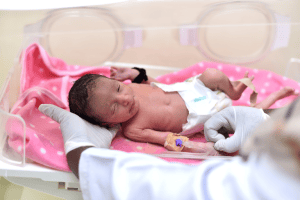
In Sudan, births like hers happen without medicine, without warmth, and without trained hands nearby. Prematurity, hypothermia, and infection are ending lives that should never be lost. Amani’s four babies have not yet taken their first breath. But the midwives trained by SAPA are already preparing for their arrival.
>> Related Post: Every 9 Minutes: A Newborn’s Chance at Life in Sudan
How SAPA’s Midwives Bring Care Where None Exists: The Model That Works
The reason SAPA’s midwife program succeeds where others have struggled is a deliberate, community-first approach.
1. Training Local Midwives, Not Just Deploying Outsiders
SAPA invests in training Sudanese midwives from within affected communities. These are women who already know the terrain, the culture, and the trust networks of the families they serve. When a mother in a remote village sees a familiar face, someone from her own community, she is more likely to seek care early, complete her antenatal visits, and return for postnatal follow-up.
2. Equipping Facilities That Already Exist
Rather than building from scratch in a conflict zone, often impossible, SAPA works with primary healthcare centers that are already present but critically under-supplied. By providing targeted equipment and training, SAPA transforms an empty room into a functioning delivery suite.
3. Reaching the Unreachable Through Mobile Outreach
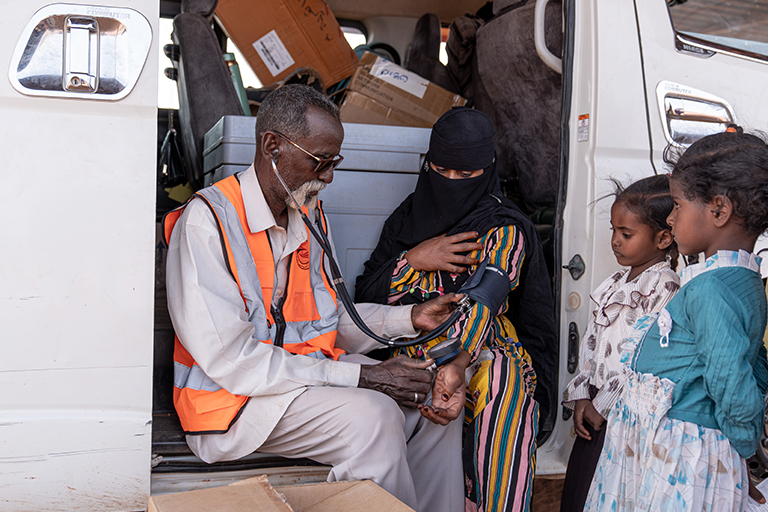
For communities too remote or too dangerous for mothers to travel to a facility, SAPA’s mobile clinics close the gap. Midwives travel to villages, conduct antenatal screenings, identify high-risk pregnancies early, and ensure women like Amani, carrying quadruplets in a conflict zone, receive the monitoring they need.
4. Addressing the Full Spectrum of Maternal and Newborn Care
SAPA’s midwives do not just attend deliveries. They provide family planning, postnatal visits, newborn screenings, vaccination support, and referrals for complicated cases. This holistic approach dramatically improves outcomes at every stage of the maternal and newborn journey.
>> Related Post: Sudan’s Mothers and Children: The Faces of the Crisis
What SAPA’s Midwives Bring to the Field
SAPA was founded on a simple but powerful belief: that every person deserves quality healthcare, regardless of where they were born or what war surrounds them.
SAPA’s Midwives Bring Care Where None Exists, combining rigorous training with an on-the-ground presence in communities that no other organization reaches. Here is what that looks like in practice:
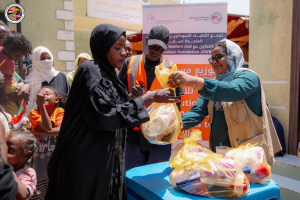
Mobile Clinics that travel to villages where mothers cannot travel to care. Rather than waiting for patients to come to a facility, SAPA’s midwives go to the people, reaching women who are too far, too ill, or too afraid to make the journey themselves.
Infant Warmers and Newborn Survival Kits supplied to health centers in conflict zones, giving midwives the tools to prevent the two leading killers of newborns: hypothermia and infection.
Comprehensive Midwife Training that equips birth attendants with life-saving skills, from managing obstetric emergencies to performing safe deliveries in resource-limited settings.
The SAPA MotherCare Kit, a carefully designed package distributed to primary healthcare centers in conflict-affected regions, containing everything a midwife needs for a safe delivery: cord care supplies, syringes, thermometers, feeding tubes, resuscitation equipment, and postnatal care tools.
Your donation funds every one of these interventions directly:
- $25 covers cord care and syringes to stop deadly infections
- $100 provides thermometers, feeding tubes, and a resuscitator
- $250 equips one full birth attendant with everything they need for safe deliveries
FAQs
1. Why do midwives matter so much in Sudan’s current crisis?
Sudan’s conflict has left most formal healthcare infrastructure in ruins. Hospitals are non-functional, doctors have fled, and medical supplies have run dry. Midwives, especially locally trained birth attendants, fill the critical gap between a mother in labor and a safe delivery. They are often the only trained healthcare provider a woman in a remote or conflict-affected area will ever see during her pregnancy.
2. What specific training do SAPA’s midwives receive?
SAPA’s midwives are trained in safe delivery techniques, emergency obstetric care, newborn resuscitation, infection prevention, postpartum hemorrhage management, and newborn assessment. Training is designed for resource-limited settings, ensuring midwives can save lives even without hospital-level equipment.
3. How does SAPA’s MotherCare Kit support midwives on the ground?
The MotherCare Kit is a carefully curated package that gives midwives everything they need for a safe delivery: cord care supplies, syringes, thermometers, feeding tubes, resuscitation equipment, and postnatal support tools. SAPA distributes these kits directly to primary healthcare centers in conflict-affected regions, ensuring that midwives are never working empty-handed.
4. Who is Amani, and why is her story important?
Amani is a mother from a conflict-affected region of Sudan who has been receiving care at Al-Daw Hajou Health Center through multiple pregnancies, first with triplets and now with quadruplets. Her story represents the thousands of high-risk mothers in Sudan who depend entirely on SAPA-supported facilities and midwives for their survival and the survival of their babies.
5. How does SAPA reach mothers in areas without clinics?
SAPA operates mobile clinics that travel to remote villages, bringing antenatal care, screenings, vaccinations, and postnatal support directly to communities that cannot access a fixed facility. This model ensures that geography does not determine whether a mother lives or dies.
6. What is the most critical risk for newborns in Sudan’s conflict zones?
The three leading causes of preventable newborn death in SAPA’s target areas are hypothermia (newborns losing body heat without a warmer), infection (from unsterilized delivery conditions), and birth asphyxia (when a baby cannot breathe at birth without resuscitation support). SAPA’s equipment and training target all three directly.
7. How does my donation translate into real action?
Every dollar given to SAPA’s maternal health programs is deployed to field operations. Specifically: $25 covers cord care and syringes to prevent deadly infections; $100 provides thermometers, feeding tubes, and a resuscitator; and $250 fully equips one birth attendant for safe deliveries. SAPA maintains transparent reporting on how donations are deployed.
8. Why does SAPA train local midwives instead of sending external healthcare workers?
Local midwives have the trust, language, and cultural knowledge that external workers take years to build, if they build it at all. Community trust is not a soft benefit; it is a clinical advantage. Mothers who trust their midwife seek care earlier, complete their antenatal visits, and return for postnatal support. This directly reduces maternal and newborn mortality.
9. Is SAPA active in Sudan right now, despite the ongoing conflict?
Yes. SAPA maintains active operations in conflict-affected regions of Sudan, working through a network of local partners, healthcare centers, and trained midwives. SAPA’s Healthcare Emergency Services program is specifically designed to deliver critical medical aid during active crises, not after they end.
10. How can I help SAPA’s midwives reach more mothers?
The most direct way to help is to donate to SAPA’s maternal health programs at sapa-usa.org/save-a-life-in-sudan. You can also share SAPA’s campaigns on social media, encourage others to give, and follow SAPA’s updates to stay informed about the impact your support creates. Every share, every dollar, and every conversation brings a midwife closer to a mother who needs her.