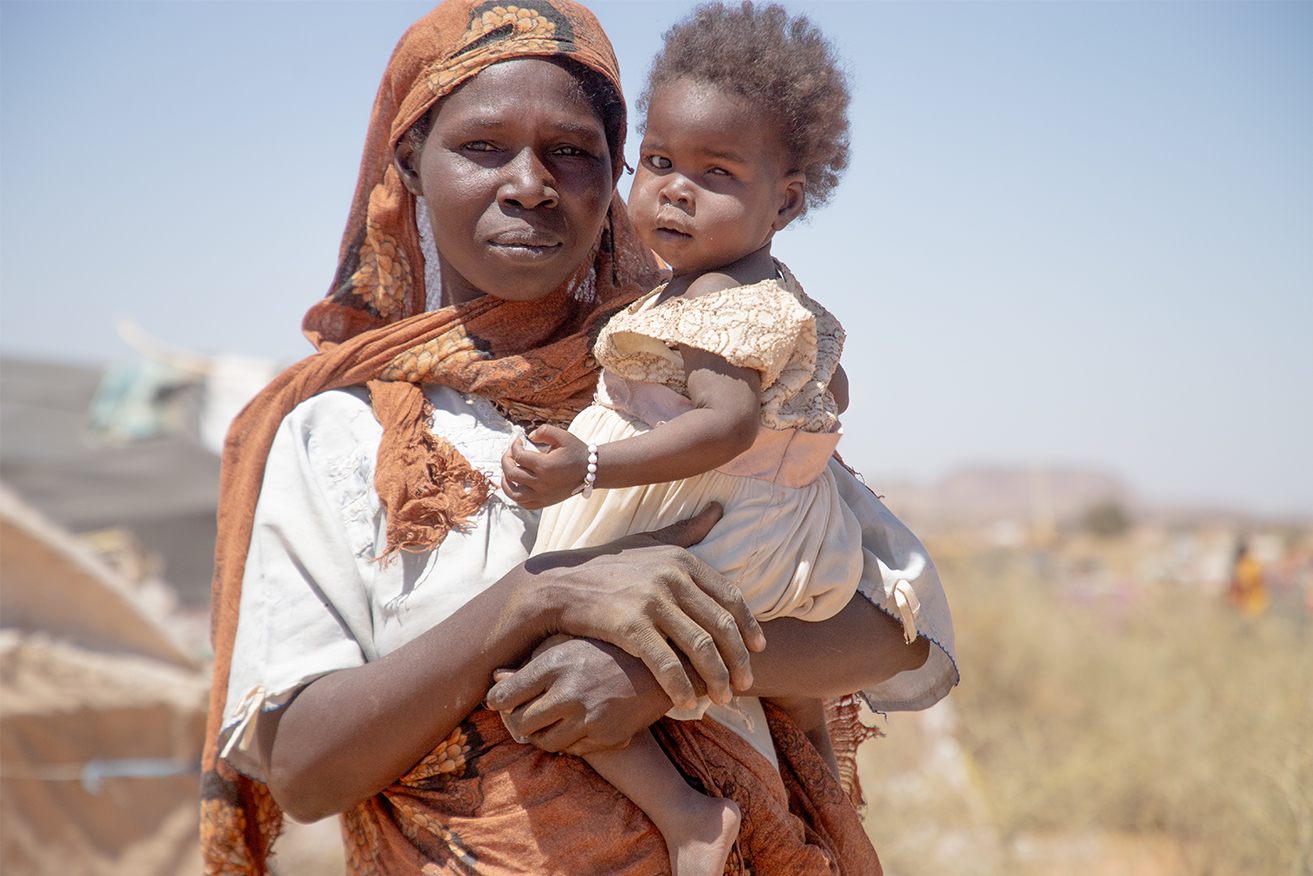
Sudan’s Mothers and Children: The Faces of the Crisis
 Mahnoor
Every nine minutes, a child in Sudan faces a life-threatening health emergency. That is not a statistic. It is a heartbeat, a breath, a mother’s prayer going unanswered. Three years into one of the most catastrophic humanitarian disasters in modern history, Sudan’s mothers and children have become the human face of a war the world cannot afford to ignore.
Since fighting erupted in April 2023, Sudan has spiraled into what the International Rescue Committee now ranks as the world’s worst humanitarian crisis for the third consecutive year. The numbers are staggering: 33.7 million people are in urgent need of humanitarian assistance. Half of them are children.
But behind every statistic is a story. A mother delivering her baby alone in the dark because the nearest hospital has been shelled. A newborn placed in a broken incubator because the power has failed. A malnourished toddler too weak to cry. These are the faces of Sudan’s crisis, and they demand our attention, our compassion, and our action.
>> Related Post: GODA and SAPA Bring Hope With Cleft Lip Surgery in Sudan
The Scale of the Crisis: Numbers That Demand Action
To understand the human cost, we first need to understand the scale. According to ReliefWeb:
- 19.5 million people are facing acute food insecurity across Sudan
- 5.1 million people are in the worst famine-level conditions
- 4.2 million children and mothers are acutely malnourished
- 8.9 million people have been displaced inside Sudan
- 14 million people have been forced from their homes in total
These figures are not frozen in time. Save the Children (June 2026) warns of a rapid rise in malnutrition as Sudan enters pre-harvest season with bleak planting prospects, conflict-decimated farmland, and only 22% of the UN’s $2.9 billion appeal funded.
The World Health Organization (April 2026) has verified 217 attacks on healthcare facilities since April 2023, resulting in over 2,052 deaths and 810 injuries. Across Sudan’s 18 states, 37% of health facilities are no longer functional. In Khartoum State alone, approximately 90% of private hospitals have been damaged.
Newborns Born Into War: The First Breath Crisis
Perhaps the most heartbreaking dimension of this crisis is what is happening to Sudan’s newest lives. Save the Children (April 2026) analyzed figures from Sudan’s Ministry of Health showing that around 5.6 million babies were born between April 2023 and April 2026; more than 5,000 births per day, or at least three every minute.
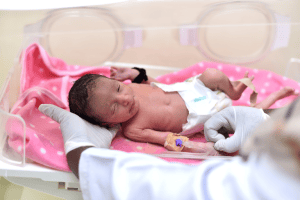
Many of these children were born to displaced mothers in overcrowded shelters or under-resourced facilities, often without electricity, basic medical equipment, or skilled staff. Power outages are routine. Infant warmers fail. Neonatal intensive care units, where they exist at all, are overwhelmed.
In Khartoum’s Ibrahim Malik Hospital, the second phase of restoration specifically targets paediatrics and obstetrics departments, precisely because these services are the front line of maternal and newborn mortality. As the Sudan Tribune (January 2026) reported, preventable complications are now routinely becoming deaths simply because standard medical services have collapsed.
>> Related Post: A Father’s Relief After His Child’s Cleft Lip Surgery
Mothers Without Care: The Maternal Mortality Emergency
The situation for pregnant and breastfeeding women in Sudan has deteriorated to a crisis within a crisis. ReliefWeb documented the reality in Sharg El Nil (East Nile): the closure of hospitals and obstetrics centres has caused an alarming increase in maternal deaths. Women are being transported to clinics on traditional wooden beds because no ambulances exist. Anaesthetics and disinfectants are unavailable. The cost of a natural childbirth has climbed beyond what most families can afford.
Sudan’s own Ministry of Health data, shared with Save the Children, tells the trajectory clearly: maternal mortality rose from 263 per 100,000 in 2022 to 295 per 100,000 in 2025, and the trend is worsening. At El-Obeid maternity hospital — the only referral hospital in western Sudan, serving over 230,000 displaced people — UN News (April 2026) reported that doctors have had to watch patients die from prolonged waiting times, and the newly opened neonatal ICU has just four beds that are constantly occupied.
As UNICEF documented in its June 2026 profile from Gedaref State, women like Alawiya — a mother of five living with a disability — represent millions who survive through extraordinary resilience but are still left profoundly vulnerable. Programs like the SANAD cash transfer initiative, which provides pregnant and breastfeeding women with cash and links them to health and nutrition services, have reached more than 182,000 household members. But the scale of need dwarfs these numbers.
Children and Hunger: A Generation at Risk of Malnutrition
Malnutrition in Sudan is not merely a food problem, it is a collapse of the entire system that keeps children alive and developing. In 2026, UNICEF estimates that 4.2 million children are expected to suffer from acute malnutrition, including more than 825,000 severe cases — a 13.5% increase from 2025. Severe acute malnutrition (SAM) is the deadliest form: untreated, it kills.
In North Darfur, the epicenter of Sudan’s nutrition emergency, UNICEF reported that nearly 85,000 children with severe acute malnutrition were treated between January and November 2025 alone, equivalent to one child every six minutes. In Gedaref, Save the Children nutrition clinics treated more than 1,400 children for SAM in 2025. Thirty-eight died from hunger-related causes.
The crisis compounds itself. Children who survive malnutrition face permanent developmental consequences. Stunted growth. Compromised immune systems. Impaired cognitive development. Sudan risks losing an entire generation not to war alone, but to the silent devastation of hunger.
>> Related Post: El Geneina, Sudan in Crisis: How SAPA Is Delivering Hope and Care
The Collapsed Healthcare System: Healing Hands Silenced
Sudan’s healthcare system was fragile long before 2023. Three years of systematic destruction have reduced it to rubble in conflict zones. The WHO has counted over 217 verified attacks on health facilities. Pharmacies, medical supply chains, laboratories, and ambulance services have been dismantled. Healthcare workers have been killed, kidnapped, and displaced. The few who remain are performing miracles in impossible conditions.
Disease has followed hunger and displacement. WHO (April 2026) has confirmed active outbreaks of malaria, dengue, measles, polio (cVDPV2), hepatitis E, meningitis, and diphtheria across multiple states. For a child already weakened by malnutrition, a cholera or measles outbreak can be fatal within hours. The IRC notes that the collapse of healthcare services has also put new mothers at risk of losing their lives, and that the number of people at risk of gender-based violence has tripled in two years. The interconnection is devastating: displacement leads to food insecurity, which leads to malnutrition, which leads to weakened immune systems, which leaves families helpless before preventable diseases.
How SAPA Is Responding: Sudan’s Mothers and Children Have an Ally
Amid this crisis, the Sudanese American Physicians Association (SAPA) has emerged as one of the most consistent and credible medical lifelines for Sudan’s most vulnerable. Established in 2019, SAPA is a nonprofit organization of Sudanese-American healthcare professionals whose mission is to enhance healthcare for Sudanese communities through collaboration, education, and humanitarian action.
SAPA is committed to saving the lives of mothers and children across Sudan, and has launched an initiative titled “Save a Life in Sudan” to reduce infant mortality in Sudan.” The results of SAPA’s work speak for themselves:
- 700,000+ patients have received medical care through SAPA-supported programs
- 300,000+ children have been screened for malnutrition
- 250,000+ children under 5 have been treated
- 90,000+ children have been vaccinated
- 300 infant warmers have already been deployed to neonatal units
- 1,043 healthcare providers have been trained to date
- 54 healthcare facilities have been reached so far
But the need is rising faster than the response. SAPA’s targets require urgent funding and sustained support. SAPA’s programs directly address the gaps that are costing lives:
Healthcare and Emergency Services — Delivering critical medical aid and rapid-response emergency care to communities in active crisis zones, including support for neonatal and pediatric units.
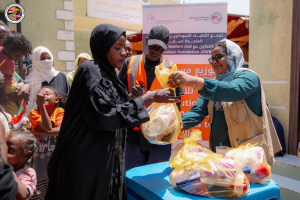
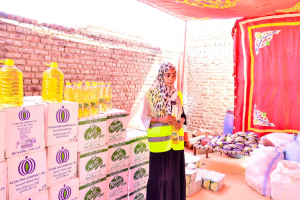
Hunger Relief Program — Combating food insecurity by providing essential nutrition to vulnerable families and malnourished children, with millions of meals already distributed.
WASH Program (Water, Sanitation, and Hygiene) — Delivering clean water, sanitation, and hygiene solutions to communities where the lack of clean water fuels disease outbreaks and compounds malnutrition.
Every dollar raised through SAPA’s Save a Life in Sudan campaign goes directly toward keeping Sudan’s healthcare infrastructure alive. This is not charity; it is urgent, evidence-based humanitarian medicine.
FAQs
1. How many children are malnourished in Sudan in 2026?
According to UNICEF and the IPC (February 2026), an estimated 4.2 million children are expected to suffer from acute malnutrition in 2026 — a 13.5% increase from 2025. Of these, over 825,000 are severe cases that are potentially fatal without immediate treatment.
2. What has happened to Sudan’s hospitals and health facilities?
The WHO (April 2026) has verified 217 attacks on healthcare facilities since the conflict began. Across Sudan, 37% of health facilities are non-functional. In Khartoum alone, approximately 90% of private hospitals have been damaged or destroyed.
3. Why are mothers and newborns especially at risk in Sudan?
Conflict has dismantled the maternal healthcare system. Obstetrics wards have been bombed, skilled medical staff have fled or been killed, and basic supplies like anaesthetics and blood are unavailable. Save the Children (April 2026) reports that maternal mortality rates have risen, with 5.6 million babies born, many in unsafe, under-resourced settings without skilled care.
4. What is famine in Sudan and where has it been declared?
Famine is the highest level of food crisis (IPC Phase 5). As of 2026, famine has been confirmed in Zamzam displacement camp (August 2024), El Fasher and Kadugli (September 2025), and additional areas including Um Baru and Kernoi localities, according to Save the Children (February 2026). Twenty additional areas are at risk.
5. What diseases are spreading in Sudan because of the crisis?
With healthcare collapsed and displacement rampant, WHO has confirmed active outbreaks of malaria, dengue, measles, hepatitis E, meningitis, diphtheria, and polio across multiple Sudanese states. Cholera outbreaks have also been recorded. For malnourished children with compromised immunity, these are often fatal.
6. What is SAPA doing to help Sudan’s children and mothers?
SAPA (Sudanese American Physicians Association) is a US-based nonprofit of Sudanese-American physicians providing direct medical support across Sudan. Their work includes deploying infant warmers and emergency medical equipment, training healthcare workers, running hunger relief programs, providing clean water and sanitation, and supporting healthcare and emergency services in conflict-affected areas. SAPA has reached 700,000+ patients to date.
7. Is Sudan’s crisis receiving enough international attention and funding?
No. As Save the Children (June 2026) reported, only 22% of the $2.9 billion UN humanitarian appeal for 2026 has been funded. Sudan has consistently been described by aid organizations as an “underfunded” and “under-reported” crisis relative to its scale. The international community’s attention and resources have not matched the magnitude of need.