Which Organizations are Providing Medical Aid/Healthcare in Sudan?
 Mahnoor
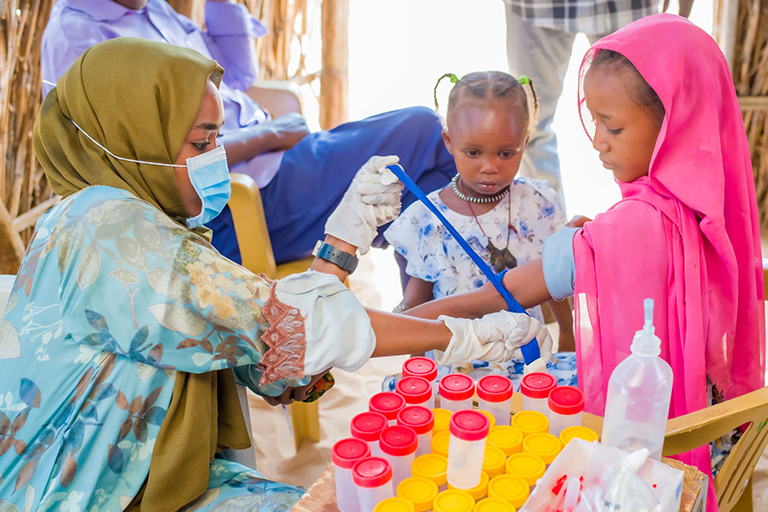
SAPA (Sudanese American Physicians Association) stands out as the only diaspora-led effort, run by Sudanese-American physicians delivering maternal care, neonatal kits, and primary care to over 200,000 people across 90+ service points in Sudan.
Sudan is living through what the United Nations now describes as the world’s largest humanitarian and displacement crisis. Since the civil war erupted in April 2023, the scale of suffering has been almost impossible to comprehend. As of early 2026, nearly 34 million people require humanitarian assistance, including over 21 million who are in urgent need of health support. More than 13.6 million people have been uprooted from their homes, making this the largest displacement crisis on the planet. Across Sudan’s 18 states, 37% of all health facilities remain completely non-functional, and WHO has verified over 217 attacks on healthcare infrastructure since the conflict began, resulting in 2,052 deaths and 810 injuries.
Yet in the midst of this catastrophe, a number of organizations are on the ground every day fighting to keep people alive. So, which organizations are providing medical aid and healthcare in Sudan right now? Here is a close look at five of the most active and impactful groups working in the country.
1. SAPA (Sudanese American Physicians Association)
SAPA is one of the most distinctive organizations providing medical aid in Sudan because it is led entirely by Sudanese-American physicians and doctors who carry both clinical expertise and deep personal ties to the country they serve. SAPA has tirelessly worked to enhance healthcare access, deliver medical aid, and foster community resilience since the conflict escalated.
What sets SAPA apart is the breadth and coordination of its response. In 2025 alone, SAPA partnered with organizations including IOM, UNICEF, and WHO to provide comprehensive healthcare to at least 200,000 beneficiaries across more than 90 service points inside Sudan. The organization works across maternal care, neonatal support, emergency obstetric services, cholera response, and primary care delivery, deploying medical kits directly into active conflict zones where no other providers are present.
SAPA’s medical kits are carefully tailored to the realities on the ground. A single Maternal Care Kit costs $4,745.50 and supports 50 safe deliveries per month in crisis zones. Its Neonatal Intensive Care Kit (priced at $16,630), supports 100 critically ill newborns and covers care across 15 healthcare units. SAPA’s Primary Care Kit reaches 3,000 people for three months, supplying medications, first aid, and hygiene essentials at a cost of $9,857. These are not abstract numbers, they represent real families in towns and displacement camps who would otherwise have no access to any healthcare at all.
SAPA also collaborates with Project HOPE and partners, including Airlink, MAP International, Flexport.org, and Qatar Airways to deliver vital medical supplies, pharmaceuticals, and therapeutic food into Sudan. Beyond emergency relief, SAPA trains and supports local healthcare professionals — 875 medical professionals trained and 1,325 healthcare professionals supported in 2024 alone — to ensure the health system doesn’t collapse when external support eventually recedes.
2. Islamic Relief
Islamic Relief has been working in Sudan since 1984, giving it one of the longest track records of any international organization in the country. That depth of presence matters enormously when conflict disrupts supply chains, displaces staff, and forces organizations to operate in areas most consider inaccessible.
Since the conflict escalated in April 2023, Islamic Relief has reached more than 2 million people with life-saving humanitarian aid, including food assistance, clean water, cash support, emergency shelter, hygiene kits, and direct medical supplies. The organization has distributed medicine to 16 hospitals and 6 medical clinics, and provided 4,174 women and girls with dignity kits.
The healthcare dimension of Islamic Relief’s Sudan response is particularly focused on the most vulnerable. Sudan’s healthcare system has collapsed in many areas, leaving aid groups as the only healthcare providers available, and Islamic Relief teams (many of whom are themselves internally displaced) have maintained a presence in high-risk areas where other organizations have pulled back. The organization has also responded to the compounding crises of cholera, dengue, and malaria outbreaks that emerged through 2025 as flooding worsened conditions in displacement sites.
Three years into the conflict, over 33 million people are now in urgent need of humanitarian aid in Sudan, and Islamic Relief continues to call for an immediate end to the conflict while scaling up its emergency response.
3. International Medical Corps
International Medical Corps (IMC) arrived in Sudan in 2004 and has built two decades of continuous operations in the country since. That institutional knowledge, knowing which communities exist, which facilities can be rehabilitated, and which local staff can be trusted, makes IMC one of the most capable organizations on the ground right now.
The organization trained 2,718 people in 2024 on a range of clinical and public health competencies, including psychological first aid, mental health case management, and safe referral systems. IMC focuses heavily on integrating healthcare into community structures and building local capacity so that care continues even when international teams cannot access an area.
IMC also rehabilitates critical infrastructure. The organization has restored water supply systems to deliver clean, safe water to thousands in underserved communities, recognizing that clean water and healthcare are inseparable in a context where cholera and other water-borne diseases are spreading rapidly. The organization publishes regular situation reports, including updates on the Sudan measles outbreak (January 2026), El Fasher displacement (December 2025), and cholera response (June 2025), demonstrating a level of operational transparency that helps the broader humanitarian community coordinate effectively.
4. ALIMA (Alliance for International Medical Action)
ALIMA is a French medical NGO founded in 2009 with a distinctive model: it works through local African partner organizations rather than building purely international structures, investing deeply in local health systems and talent. In Sudan, that approach has proven both resilient and effective.
Since the conflict escalated, ALIMA has provided 35,114 medical consultations to displaced people in Sudan in 2024 alone, and has focused particularly on malnutrition, one of the most acute and lethal crises within the broader emergency. ALIMA treated 2,380 children suffering from severe acute malnutrition in 2024, using outpatient care units and stabilization centers deployed in North Darfur and South Kordofan, two of the hardest-hit states in the country.
In Tawila, North Darfur, where thousands of families have fled violence, ALIMA launched an emergency response with EU support that has reached a remarkable scale: since February 2025, more than 28,000 patients have been treated, with 3,000 medical consultations provided each month, all in a location where roads are barely accessible and supply chains are routinely interrupted. The organization’s flexibility and willingness to operate in the hardest-to-reach areas make it a critical presence in regions that larger organizations cannot safely enter.
Over 4 million people are estimated to be acutely malnourished in Sudan in 2026, and ALIMA’s specialized expertise in malnutrition treatment positions it as one of the few organizations with the clinical capacity to address this dimension of the crisis at scale.
5. Doctors Without Borders (MSF)
Médecins Sans Frontières better known in English as Doctors Without Borders, is one of the world’s most recognized humanitarian medical organizations, and its presence in Sudan reflects the severity of the crisis. MSF operates in conflict zones specifically because its independence and impartiality allow it to negotiate access that other organizations cannot secure.
MSF teams are currently working in 11 of Sudan’s 18 states, providing urgently needed medical care and basic services to people across a vast and fragmented landscape. The organization’s priorities in Sudan include malnutrition treatment, maternal care, vaccination campaigns, surgery and trauma care, and emergency medical supplies; a broad mandate that reflects how comprehensively the Sudanese healthcare system has been destroyed.
MSF has been particularly vocal about the conditions at Zamzam camp in North Darfur, where famine has been formally declared and where the organization has been forced to operate under severe supply shortages caused by blockades from warring parties. Even after the IPC famine review committee confirmed famine conditions at Zamzam, MSF teams struggle to provide children with care for malnutrition due to severe shortages caused by these blockades.
The organization speaks to all parties to the conflict to request safe, rapid, and unimpeded access to civilians, an essential and often difficult negotiation in a context where WHO has verified over 217 attacks on healthcare facilities since April 2023. MSF’s willingness to work in the most dangerous environments and to speak publicly about access restrictions makes it an invaluable presence in Sudan’s humanitarian response.
How SAPA Is Leading the Healthcare Response in Sudan
SAPA (Sudanese American Physician Association) is a scientific, professional, and humanitarian organization founded in January 2019. As a membership-based association, SAPA brings together physicians and medical professionals of Sudanese descent who live and work primarily in the United States. SAPA’s mission is to empower Sudanese healthcare professionals in the U.S. while advancing medical education, expanding healthcare access, and providing humanitarian aid to communities in Sudan and beyond.
When asking which organizations are providing medical aid and healthcare in Sudan, SAPA deserves particular attention not just because of the scale of its work, but because of what it represents. SAPA is a diaspora-led organization, built and run by Sudanese-American physicians, and this gives it a quality of commitment and contextual understanding that is genuinely different from purely international organizations parachuting into a crisis.
SAPA’s Healthcare Emergency Services program delivers critical medical aid and life-saving support to communities in crisis, with rapid response capabilities and the ability to mobilize quickly when emergencies escalate. The organization operates at multiple levels simultaneously: deploying medical kits into conflict zones, running emergency obstetric and neonatal care units, training local health workers, supporting hospitals like Al Fateh Hospital in Khartoum, and coordinating with global logistics partners to move supplies into areas with damaged infrastructure.
MAKE A DONATION

FAQs
1. Which organizations are providing medical aid and healthcare in Sudan right now?
Several organizations are actively providing medical aid and healthcare in Sudan, including SAPA (Sudanese American Physicians Association), Islamic Relief, International Medical Corps, ALIMA, and Doctors Without Borders (MSF). Each operates across different regions and health focus areas. WHO coordinates with many of these partners while also directly supporting health surveillance, vaccination campaigns, and emergency response. Together, these groups form the backbone of healthcare delivery in a country where over a third of health facilities are non-functional.
2. How bad is the healthcare crisis in Sudan in 2026?
The situation is dire by every measure. Since the war started in April 2023, Sudan has become the world’s largest humanitarian, three years of war have created the world’s largest humanitarian and displacement crisis, with nearly 34 million people needing humanitarian assistance and 21 million requiring health support specifically. Disease outbreaks including malaria, dengue, measles, polio, hepatitis E, meningitis, and diphtheria are reported from multiple states. The health system, already fragile before 2023, has been devastated by deliberate attacks on facilities and the mass displacement of healthcare workers.
3. Is SAPA a legitimate and verified organization?
Yes. SAPA (Sudanese American Physicians Association) is a registered 501(c)(3) nonprofit organization (EIN: 83-3464851), tax-exempt since October 2019, and based in Dallas, Texas. It is composed of licensed Sudanese-American physicians and medical professionals, and its work has been independently reported and verified by outlets including Development Aid and peer-reviewed journals including Frontiers in Public Health.
4. How can I donate to help Sudan’s healthcare crisis?
Several of the organizations listed in this article accept direct donations. SAPA allows you to fund specific medical kits with a clear breakdown of impact and the Peer to Peer Fundraising Campaign.
5. What specific health services are being provided in Sudan?
The healthcare being provided spans a wide range: emergency obstetric and maternal care, neonatal intensive care, malnutrition screening and treatment (especially for children under five), cholera and disease outbreak response, surgical and trauma care, mental health support, vaccination campaigns, primary care consultations, and rehabilitation of damaged health facilities. SAPA’s healthcare programs specifically include safe childbirth kits, neonatal care, and primary care kit distribution reaching thousands per deployment, while MSF and ALIMA focus heavily on surgery, malnutrition, and emergency care in conflict-active zones.
6. How many people are displaced in Sudan, and how does that affect healthcare access?
An estimated 13.6 million people have been displaced by the Sudan conflict — around 9.3 million internally and 4.3 million who have fled to neighboring countries — making it the world’s largest displacement crisis. Displacement directly worsens healthcare access by overcrowding displacement sites, disrupting supply chains, separating patients from their regular care providers, and exposing people to communicable diseases in unsanitary conditions. Displaced populations are also less likely to be reached by government health programs.
7. Are healthcare workers themselves safe in Sudan?
No, healthcare workers face extreme risks. Since the conflict began in April 2023, at least 173 health workers have been killed and 83 have been arrested. WHO has verified over 217 attacks on healthcare facilities and workers, resulting in thousands of deaths and injuries. These attacks violate international humanitarian law and have dramatically reduced the capacity of the health system to function. Organizations like SAPA and MSF actively advocate for safe access guarantees while continuing to work despite these risks.
8. What diseases are spreading in Sudan due to the conflict?
Multiple disease outbreaks are occurring simultaneously in Sudan, including cholera, dengue, malaria, measles, polio (cVDPV2), hepatitis E, meningitis, and diphtheria — reported across many states including Al Jazirah, Darfur, Gedaref, Khartoum, Kordofan, River Nile, and White Nile. Overcrowded displacement camps, disrupted sanitation, and a collapsed water infrastructure create ideal conditions for these outbreaks. A cholera outbreak that began in 2024 was only declared over in March 2026 following an oral cholera vaccination campaign reaching 24.5 million people.
Comment (1)
International Youth Day 2026: Sudan’s Next Generation – HCNTimes.com
[…] >> Related Post: Which Organizations are Providing Medical Aid/Healthcare in Sudan? […]