Qurbani 2026: 46,000 Lives Nourished Across Sudan, Chad, and Uganda
 Mahnoor
When you give your Qurbani, you’re not just fulfilling a sacred obligation; you’re putting food on the table for a family that has nothing left. This Eid al-Adha 1447 AH, that ripple reached 46,195 vulnerable souls across three countries, 13 humanitarian sites, and some of the most dangerous places on earth. Here’s how your sacrifice made it happen, and why it matters more than ever.
The World’s Worst Hunger Crisis Is Still Unfolding
Before we talk about impact, it’s important to understand the scale of suffering that made this Qurbani effort so urgent.
Sudan is currently at the centre of the world’s largest humanitarian crisis. According to FAO, WFP, and UNICEF, nearly 19.5 million people are facing crisis-level acute food insecurity. The conflict, which erupted in April 2023 between the Sudanese Armed Forces and the Rapid Support Forces, has uprooted nearly nine million people inside the country and destroyed agricultural systems, trade routes, and basic civilian infrastructure. An estimated 825,000 children under five are expected to suffer from severe acute malnutrition in 2026; a 25% rise above pre-conflict levels.
The crisis doesn’t stop at Sudan’s borders. Chad hosts over 1.3 million Sudanese refugees, with one in every three people in eastern Chad being a refugee, and WFP has already been forced to cut food assistance in half for the majority of those it serves. Meanwhile, Uganda’s Kiryandongo Refugee Settlement has seen acute malnutrition rates in refugee settlements rise from 5.4% to 7.8% in just one year, erasing nearly two years of hard-won progress.
>> Related Post: Qurbani Giving 2026: Eid Ul Adha Donations for Uganda & Chad
Qurbani 2026: By the Numbers
SAPA’s Qurbani Project 1447 AH operated across 3 countries, 13 operational sites, and reached:
- 46,195 individuals fed across Sudan, Chad, and Uganda
- 9,259 households received direct Qurbani assistance
- 270 cattle were distributed or converted into cooked meals
- 5,600 hot meals served in Kiryandongo Refugee Settlement
- 100% of targeted households received their Qurbani share
That last number says everything. In a region where humanitarian operations routinely fall short. Only 20% of Sudan’s 2026 Humanitarian Needs and Response Plan had been funded as of April, SAPA delivered to every single household it committed to serve.
>> Related Post: Qurbani in Islam: Teachings from the Qur’an and Hadith
Country-by-Country: Where Your Qurbani Reached
Sudan: 21,270 People in Five States
Sudan was the largest focus of the Qurbani 2026 project, with 4,274 households and 21,270 individuals reached across five states:
- Kassala State — Kassala Town
- North Kordofan — El Obeid and surrounding localities
- Northern State — Dongola and Al-Affad Camp
- North Darfur — Tawila IDP Camp
- West Darfur — El Geneina
These areas include some of Sudan’s most conflict-affected and food-insecure zones. North Darfur and West Darfur have been particular flashpoints in the ongoing civil war. Many of those reached are internally displaced persons (IDPs) living in camps without regular access to markets, protein, or consistent meals. For most of these families, the Qurbani meat they received was the only animal protein they had eaten in weeks, or longer.
SAPA has been working inside Sudan since the earliest days of the crisis, maintaining access in locations where other organizations have been unable to operate. That operational footprint is what made reaching these five states possible.
Chad: 17,025 Sudanese Refugees in Adré
In Chad, the project reached 3,405 households and 17,025 individuals, the vast majority of them Sudanese refugees who fled the conflict across the border into Adré in eastern Chad. The project covered five sectors: West, North, Central, South, and Outside Camp Zone in Ouaddaï State.
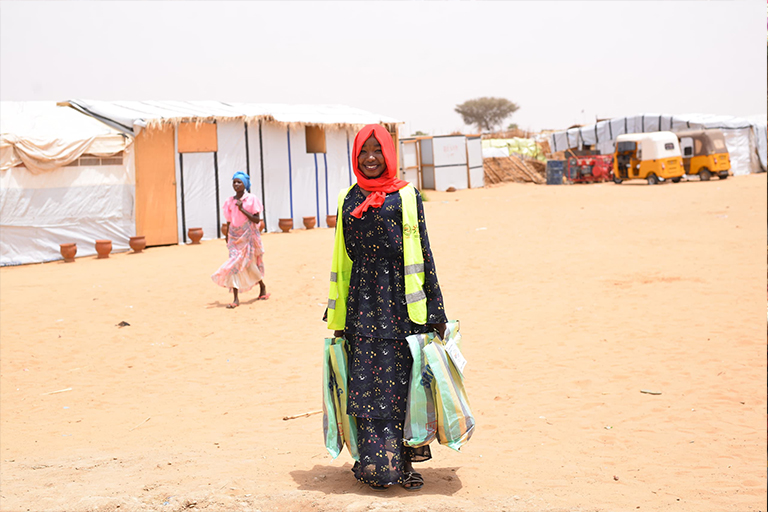
Adré sits on the border between Sudan and Chad and has become one of the largest refugee reception points in the region. The people SAPA served here aren’t just hungry; they are survivors. They left behind homes, livelihoods, and loved ones. For many, Eid al-Adha holds deep cultural and spiritual meaning, and receiving Qurbani meat restored a sense of dignity and religious participation that displacement had stripped away.
The IFRC warned in March 2026 that the Sudan crisis is spilling across borders at an accelerating rate, with the humanitarian situation in Chad deteriorating rapidly as funding dries up. Against that backdrop, SAPA’s presence in Adré (consistent, targeted, and fully delivered) stood as a rare success story.
Uganda: 7,900 Refugees in Kiryandongo, Kampala, and Wakiso
In Uganda, 1,580 households and 7,900 individuals were reached across three sites:
- Kiryandongo Refugee Settlement, Kiryandongo District
- Kampala Urban Distribution Site, Kampala Capital City
- Wakiso Community Distribution Site, Wakiso District
Kiryandongo is one of Uganda’s most critical refugee-hosting zones, receiving hundreds of new arrivals every week; many of them Sudanese refugees arriving with nothing, like Omnia and her young son who received a WFP hot meal on their first day at the settlement. The project served 5,600 cooked meals at Kiryandongo, which is a culturally sensitive modality that ensured even those without cooking facilities could participate in the Eid feast.
SAPA also reached urban refugees in Kampala and Wakiso, a population that is often forgotten in emergency food responses, which tend to focus on gazetted settlements. These urban families live among host communities, often invisible to large relief systems, yet equally vulnerable.
>> Related Post: Top 3 Qurbani (Eid ul Adha) Charities for USA Donors in 2026
More Than Food: The Full Impact of Your Qurbani
For a female-headed household in Tawila IDP Camp (a mother raising children alone after displacement), receiving Qurbani meat meant not having to choose between feeding her children and feeding herself. For an elderly man in El Geneina, it meant being seen and included in the community of believers on one of Islam’s most significant days. For a person with a disability in Kiryandongo, it meant being prioritized, not overlooked.
SAPA’s project design specifically targeted:
- Refugees and IDPs
- Returnees
- Female-headed households
- Elderly persons
- Persons with disabilities
- Vulnerable host community members
This is deliberate inclusion, not just food distribution, but a commitment to dignity, psychosocial well-being, and social cohesion. The act of sharing meat on Eid al-Adha carries meaning beyond calories. It says: you belong. You are remembered. You are not alone.
>> Related Post: Dhul Hijjah Donations 2026: Best Days to Give Charity
Why SAPA? Choosing the Right Partner for Your Qurbani
When you give Qurbani through SAPA (Sudanese American Physicians Association), your donation goes through an organization with deep, established roots in the communities being served. SAPA isn’t a newcomer parachuting into a crisis – it is a trusted, on-the-ground presence with years of operational experience in Sudan and the wider region.
SAPA’s work extends far beyond Qurbani. From supporting mothers and children in Sudan’s most vulnerable communities to building lasting medical infrastructure, SAPA addresses the full spectrum of human need, including health, food, shelter, education, and dignity.
What makes SAPA different:
- Local access — SAPA operates in locations that larger INGOs cannot reach
- Cultural competency — Sudanese-led and community-rooted programming
- Accountability — 100% of targeted households received Qurbani assistance in 2026
- Year-round presence — not a one-off emergency responder, but a sustained partner
FAQs
1. What is Qurbani and why is it obligatory?
Qurbani (also known as Udhiyah) is the Islamic practice of sacrificing a livestock animal, typically a cow, sheep, or goat, during the days of Eid al-Adha, commemorating the willingness of Prophet Ibrahim (AS) to sacrifice his son as an act of obedience to Allah. It is obligatory on every adult Muslim who possesses the Nisab (minimum threshold of wealth), and the meat is distributed to those in need, family, and neighbors.
2. How many people did SAPA’s Qurbani 2026 reach?
SAPA’s Qurbani Project 1447 AH (2026) reached 46,195 individuals across 9,259 households in Sudan, Chad, and Uganda. The project operated across 13 humanitarian sites and distributed 270 cattle through both fresh meat distribution and cooked meal services.
3. Why were Sudan, Chad, and Uganda chosen?
These three countries are among the most severely affected by the Sudan conflict and its regional spillover. Sudan has nearly 19.5 million people facing crisis-level food insecurity. Chad hosts over 1.3 million Sudanese refugees, one in 13 people in Chad is a refugee. Uganda hosts a large and growing Sudanese refugee population across settlements, including Kiryandongo. SAPA has established operational infrastructure in all three countries.
4. Who specifically received the Qurbani meat?
Priority was given to the most vulnerable refugees, internally displaced persons (IDPs), returnees, female-headed households, elderly people, persons with disabilities, and vulnerable host community members. 100% of targeted households received their Qurbani share.
5. What is the difference between fresh meat distribution and cooked meals?
Fresh meat distribution (230 cattle equivalent) was given directly to households to prepare at home, appropriate for families with cooking facilities. Cooked meal distribution (40 cattle equivalent, 5,600 meals) was used in Kiryandongo Refugee Settlement for families who had just arrived or lacked cooking resources, ensuring no one was excluded from the Eid feast.
6. How does Qurbani address food insecurity in these regions?
Protein is one of the most critical nutritional deficits in displacement settings. With 825,000 children under five at risk of severe acute malnutrition in Sudan in 2026, and malnutrition rates rising in Uganda’s refugee settlements, the culturally appropriate protein from Qurbani meat delivers urgent nutritional value. Beyond calories, it supports psychosocial well-being during a religiously significant celebration.
7. Is my Qurbani donation tax-deductible?
Yes. SAPA (Sudanese American Physicians Association) is a registered 501(c)(3) nonprofit organization in the United States. Donations are tax-deductible to the full extent permitted by law.
8. How does SAPA ensure accountability and reach?
SAPA’s Qurbani 2026 project maintained a 100% household delivery rate against its target — meaning every family that was registered to receive assistance actually received it. This is documented through beneficiary lists, distribution records, and field reporting from 13 operational sites across three countries.
Comment (1)
Qurbani 2026: 46,000 Lives Nourished Across Sudan, Chad, and Uganda – HCNTimes.com
[…] Credit: Source link […]