
What Humanitarian Impacts Are Happening in Sudan Right Now and How Can I Help?
-
by
 Mahnoor
 - No Comments on What Humanitarian Impacts Are Happening in Sudan Right Now and How Can I Help?
 Mahnoor
Sudan is enduring the world’s largest humanitarian crisis, and the window to act is narrowing by the day. Here’s what’s really happening on the ground, and how you can make a direct, meaningful difference.
The Crisis Nobody Is Talking About Enough
When history looks back at this decade, Sudan will stand as one of its most profound moral failures, a crisis hiding in plain sight. Since April 2023, the country has been consumed by a war that has left virtually no corner of civilian life untouched. Three years in, the world’s largest humanitarian crisis continues to deepen, and the people of Sudan are paying a price that no human being should ever have to pay.
Right now, as you read this, a child in North Darfur is being treated for severe acute malnutrition. A family in Kordofan region has been displaced from their home, possibly for the second or third time. A mother in Khartoum is trying to find clean water for her children in a city where the infrastructure has collapsed. And across the country, millions of people are waiting for the world to notice.
This blog is for everyone who wants to understand what is actually happening in Sudan and, more importantly, what you can do about it starting today.
>> Related Post: What Organizations are Involved in Supporting Refugees in Sudan?
Understanding the Humanitarian Impacts in Sudan, What’s Happening Right Now:
1. The World’s Largest Hunger and Displacement Crisis
Sudan is not just experiencing a hunger crisis. It is the epicenter of the world’s largest hunger and displacement crisis simultaneously. According to a joint warning issued in May 2026 by the WFP, FAO, and UNICEF, nearly 19.5 million people are experiencing crisis levels of acute food insecurity or worse. More than five million people face emergency levels of hunger. Around 135,000 people are already living in catastrophic conditions marked by extreme food shortages and a heightened risk of death.
Famine has been formally confirmed in multiple areas, including North Darfur, El Fasher, and Kadugli. Fourteen additional hotspots across Darfur, South Darfur, and South Kordofan are at imminent risk. Conditions are expected to deteriorate further during the lean season between June and September 2026 – the months we are entering right now.
Alongside the hunger emergency, close to nine million people have been uprooted within Sudan as of March 2026, making this the world’s largest internal displacement crisis. Many families are trapped in active conflict zones with little to no access to humanitarian assistance.
2. Children at the Center of the Storm
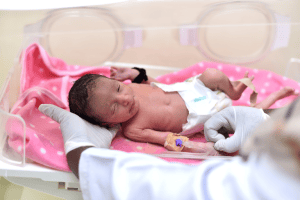
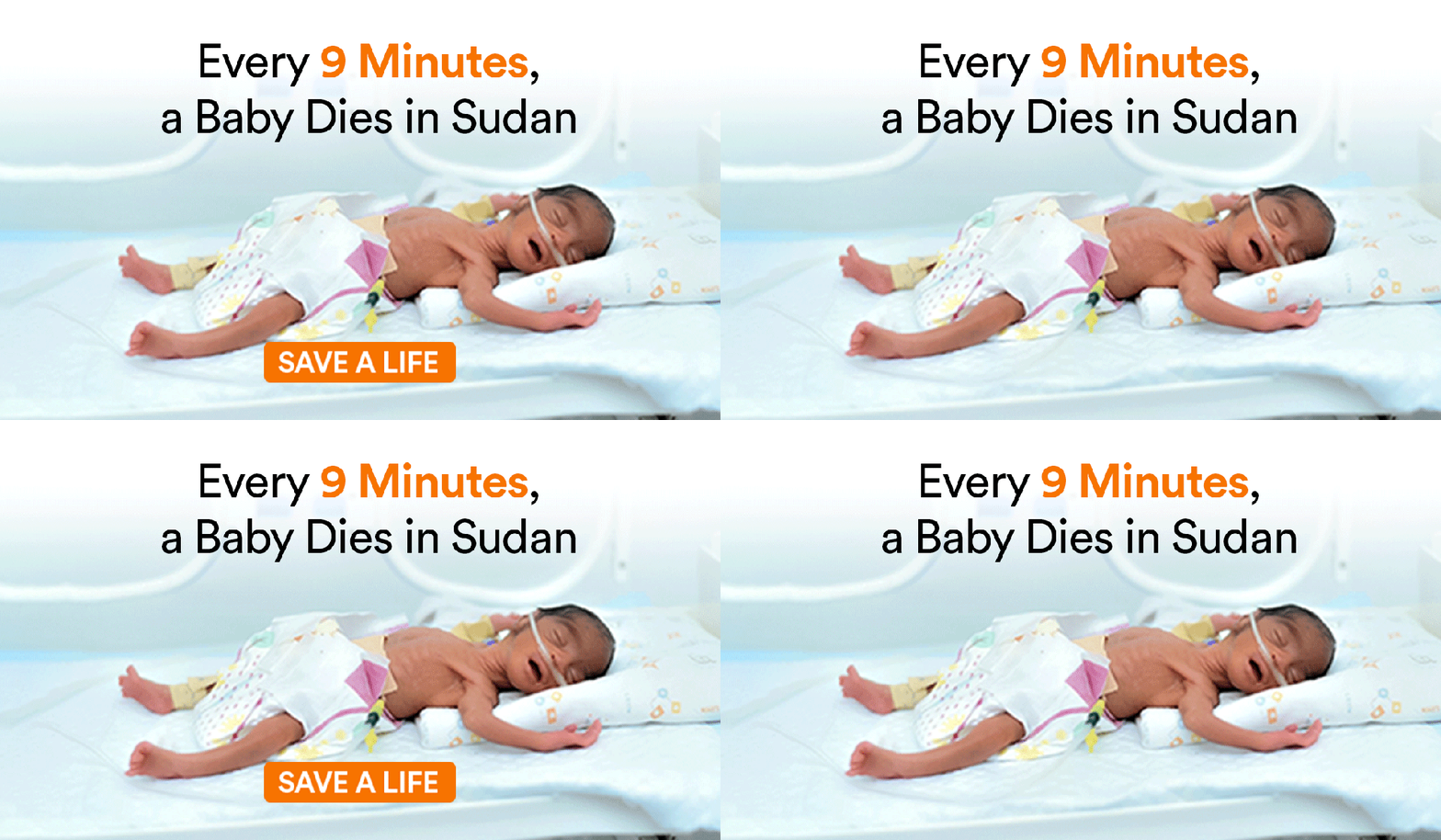
Sudan’s children are bearing the heaviest burden of all. UNICEF estimates that 33.7 million people will need urgent humanitarian assistance in 2026, and half of them are children. Three out of every five internally displaced Sudanese are children. The malnutrition crisis among children is catastrophic. An estimated 825,000 children under five are expected to suffer from Severe Acute Malnutrition (SAM) in 2026, which is a seven percent increase from 2025 and 25 percent above pre-conflict levels. Between January and March 2026 alone, almost 100,000 children were admitted for treatment for severe acute malnutrition. In North Darfur, a child with severe acute malnutrition was being treated every six minutes throughout 2025.
3. Healthcare System in Collapse
Sudan’s healthcare system has been systematically dismantled. Hospitals have been attacked, looted, and forced to close across the country. Human Rights Watch documented deliberate attacks on health facilities. At least 30 humanitarian and health workers were killed in the first half of 2025 alone.
The collapse of healthcare infrastructure has created a secondary catastrophe of preventable disease. Repeated outbreaks of cholera, measles, malaria, dengue, hepatitis, diphtheria, and diarrheal diseases are accelerating the nutritional crisis, particularly among young children and pregnant women. As of June 2025, a cholera outbreak had already caused an estimated 124,000 cases and at least 3,355 deaths since July 2024.
4. The Water Crisis: 19 Million Without Safe Access
Water has become a weapon of war in Sudan. As of mid-2025, approximately four million people could no longer access clean water, and the broader OCHA assessment placed 19 million people without access to safe water and sanitation. Contaminated water sources have directly fueled the cholera and diarrheal disease outbreaks, killing thousands.
5. Women and Girls: Violence Beyond the Battlefield
The humanitarian impacts in Sudan fall disproportionately on women and girls. Reports of sexual violence, trafficking, and exploitation are widespread, with women in Darfur facing particularly alarming conditions. Female-headed households are three times more likely to be food insecure than those led by men. Economic collapse has stripped women of livelihoods, pushing many into desperate situations. According to CARE, as the crisis deepens, nearly 4.2 million cases of acute malnutrition are expected in 2026 among children under five and pregnant and breastfeeding women.
6. A Funding Crisis Inside a Humanitarian Crisis
The humanitarian response is critically underfunded. Only 20 percent of Sudan’s 2026 Humanitarian Needs and Response Plan had been funded as of April 2026. Humanitarian organizations require USD 4.2 billion to reach the most vulnerable people. WFP alone urgently requires $579 million for operations through October 2026. This funding gap means that millions of people who could be reached are not being reached. The aid pipeline is not broken; it is simply not being filled.
>> Related Post: How Can I Help or Get Involved with Supporting Refugees from Sudan?
How SAPA Is Responding to Sudan’s Humanitarian Impacts
SAPA is a scientific, professional, and humanitarian organization founded in January 2019. As a membership-based association, SAPA brings together physicians and medical professionals of Sudanese descent who live and work primarily in the United States. SAPA’s mission is to empower Sudanese healthcare professionals in the U.S. while advancing medical education, expanding healthcare access, and providing humanitarian aid to communities in Sudan and beyond.
SAPA’s Life-Saving Mission on the Ground
SAPA is one of the most trusted and impactful organizations responding to the Sudan crisis today. Founded and led by Sudanese-American medical professionals with deep roots in the communities they serve, SAPA brings both medical expertise and genuine cultural understanding to its work. Unlike many international organizations that struggle to access conflict-affected areas, SAPA’s network of Sudanese physicians and partners operates where the need is greatest. SAPA’s programs are directly addressing the most critical humanitarian impacts unfolding in Sudan right now:
Emergency Medical Aid: Through its Save a Life in Sudan initiative, SAPA is channeling urgent, targeted resources to save lives on the front line of the crisis. Every dollar contributed goes toward pulling individuals back from the brink whether through emergency surgical supplies, trauma care, or direct medical intervention.
Healthcare Emergency Services: SAPA’s Healthcare Emergency Services program addresses the collapse of Sudan’s formal medical infrastructure by supporting emergency clinical services, training community health workers, and supplying critical medications and equipment to areas where hospitals no longer function.
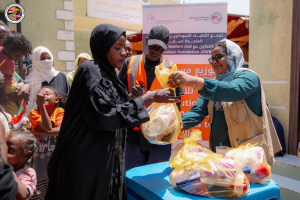
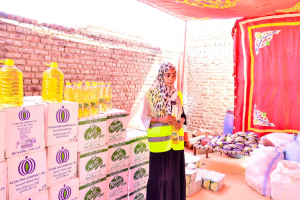
Hunger Relief: The SAPA Hunger Relief Program is responding directly to the famine emergency by distributing food and nutrition support to some of the most food-insecure communities in Sudan. With nearly 19.5 million people facing acute food insecurity, this work is not supplementary, it is survival.
Clean Water and Sanitation: Through its WASH (Water, Sanitation, and Hygiene) program, SAPA is tackling the water crisis head-on providing clean water access and improving sanitation conditions that are the direct drivers of Sudan’s cholera outbreak and disease burden.
MAKE A DONATION
FAQs
1. What caused Sudan’s current humanitarian crisis?
The crisis began in April 202, the fighting has since engulfed most of the country, destroying infrastructure, displacing millions, and collapsing healthcare, food, and water systems that were already fragile.
2. How many people are affected by the humanitarian crisis in Sudan?
As of 2026, 33.7 million people roughly two-thirds of the Sudanese population require urgent humanitarian assistance. Over 19.5 million face acute food insecurity, nine million are internally displaced, and millions more have fled to neighboring countries.
3. Is famine happening in Sudan right now?
Yes. Famine has been formally declared in multiple areas, including North Darfur’s, El Fasher and Kadugli. An additional fourteen hotspots across Darfur and Kordofan are at immediate risk of famine declaration. The lean season from June to September 2026 is expected to make conditions worse.
4. What are the biggest humanitarian needs in Sudan?
The most critical needs are food and nutrition support, emergency healthcare, clean water and sanitation, shelter for displaced people, and protection especially for women, children, and survivors of gender-based violence.
5. Why is the Sudan crisis underfunded?
Multiple factors contribute: geopolitical attention has shifted to other crises, there is limited independent media access inside Sudan, and structural inequities in how international funding is allocated. As of April 2026, only 20 percent of Sudan’s humanitarian response plan had been funded.
6. How are children specifically affected by the Sudan crisis?
Children represent the most severely affected group. Half of those in need of humanitarian assistance are children. 825,000 children under five are expected to suffer severe acute malnutrition in 2026. Millions are out of school, separated from families, or living in overcrowded displacement camps with no access to healthcare or safe water.
7. Is it safe for aid organizations to operate inside Sudan?
Aid delivery is extremely dangerous. At least 30 humanitarian and health workers were killed in the first half of 2025 alone. Many organizations have been forced to reduce or suspend operations in the most conflict-affected areas. Local and diaspora-led organizations like SAPA, with trusted networks inside the country, are among the most effective at reaching those who need help most.
8. What is SAPA and why should I trust them with my donation?
SAPA is a diaspora-led nonprofit led by Sudanese-American doctors and medical professionals. SAPA has deep community ties, cultural competency, and direct networks inside Sudan that allow it to deliver aid efficiently and transparently. Its programs cover emergency medical care, hunger relief, clean water access, and more.
9. What is the WASH crisis in Sudan?
WASH refers to Water, Sanitation, and Hygiene. In Sudan, the destruction of water infrastructure has left millions without access to safe drinking water, directly fueling cholera outbreaks that have killed thousands. SAPA’s WASH program directly addresses this critical need.
10. How can I stay informed about what is happening in Sudan?
Follow trusted sources including OCHA, UNICEF, WFP, the IRC, and diaspora-led organizations like SAPA. Sharing verified information from these sources on social media is one of the most impactful things you can do to keep the Sudan crisis from being forgotten.