Qurbani in Islam: Teachings from the Qur’an and Hadith
 Waleed
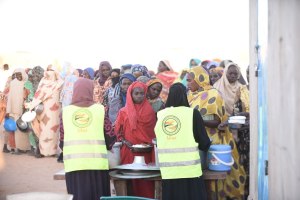
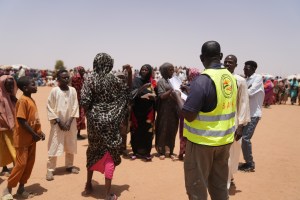
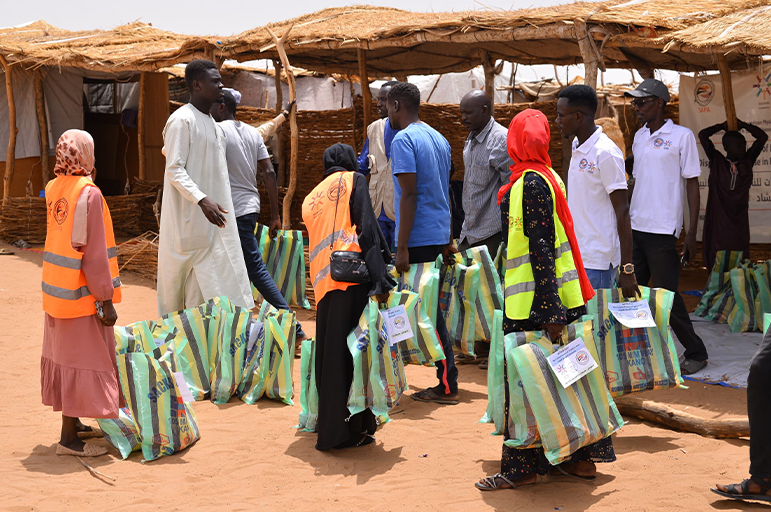
In Sudan this year, Eid al-Adha will arrive in the middle of a war. Families displaced from Khartoum, El-Fashir, and Sennar will sit down to a third Eid in tents, in shelters, in the homes of strangers. For many of them, the meat from your Qurbani will be the only meat they eat all year. Before we talk about how to give, let’s talk about what we’re giving and why.
The slaughter of an animal in the name of Allah (SWT) is not merely a ritual. It is a declaration of surrender, a renewal of covenant, and a living testimony to the timeless values of sacrifice, gratitude, and compassion.
For Muslims around the world, understanding Qurbani matters not just so we perform it correctly, but so we perform it with the depth and sincerity Allah (SWT) deserves. From the story of Prophet Ibrahim (AS) to the blessed example of the Prophet Muhammad (PBUH), Qurbani carries centuries of divine wisdom within its practice.
This blog dives deep into what the Qur’an says about Qurbani, what authentic Hadith teach us, and how you can fulfill this obligation in a way that reaches those who need it most, including the millions facing starvation in Sudan today.

The Significance of Qurbani in Islam
Qurbani is the act of slaughtering a permissible animal during the days of Eid al-Adha (the 10th, 11th, and 12th of Dhul Hijjah) as an act of worship to Allah (SWT). It is obligatory (wajib) according to the Hanafi school of thought, and a highly confirmed Sunnah (sunnah mu’akkadah) according to the Shafi’i, Maliki, and Hanbali schools, for every adult Muslim who possesses nisab.
But beyond the legal categorization, the significance of Qurbani goes to the very heart of what it means to be a Muslim i.e., submission to Allah (SWT). The word Islam itself means submission, and Qurbani is submission made tangible; an animal sacrificed, its meat shared, its spirit a reminder that everything we possess belongs to Allah.
Qurbani teaches three core values that are deeply relevant in today’s world:
- Tawakkul (Trust in Allah): Just as Ibrahim (AS) placed his trust in Allah’s plan, Qurbani reminds us that true reliance must be on Allah alone, not on wealth or possessions.
- Ihsan (Generosity and Excellence): A significant portion of Qurbani meat must be distributed to the poor and needy. In countries like Sudan, where millions face food insecurity, this Ihsan becomes a lifeline.
- Shukr (Gratitude): Every act of Qurbani is an acknowledgment that our sustenance, health, and blessings come from Allah.
>> Related Post: Qurbani Donations for Sudan 2026: Fighting Hunger and Providing Care
The Qur’an on Qurbani
The divine command and wisdom of Qurbani are woven throughout the Qur’an. Several ayat directly address the act of sacrifice, its purpose, and its spiritual significance. Understanding what the Qur’an says about Qurbani is the foundation of performing it with proper intention.
One of the most well-known verses related to Qurbani is in Surah Al-Kausar, where Allah (SWT) commands:
“So pray to your Lord and sacrifice [to Him alone].” – Surah Al-Kausar (108:2)
This short but powerful command directly links Salah (prayer) and Qurbani as twin acts of worship, both performed for Allah alone. The pairing is significant: prayer represents the spiritual connection to Allah, while sacrifice represents the physical manifestation of that devotion. Together, they form a complete act of worship of both body and soul.
In Surah Al-Hajj, Allah (SWT) reveals:
“And for every nation We have appointed a rite of sacrifice, that they may mention the name of Allah over what He has provided for them of [sacrificial] animals.” – Surah Al-Hajj (22:34)
This verse establishes Qurbani as a universal tradition, appointed by Allah for every nation and community in history. It is not an innovation of Muhammad’s (PBUH) community alone; it is part of the eternal covenant Allah has made with humanity. This gives the practice a timeless universality that connects every generation of believers.
Perhaps the most theologically profound Qurbani verse appears here:
“Their meat will not reach Allah, nor will their blood, but what reaches Him is piety from you.” – Surah Al-Hajj (22:37)
This ayah is a powerful corrective to any ritualistic or mechanical understanding of Qurbani. Allah (SWT) does not need the blood or the meat. What He wants is sincerity, taqwa, and the conscious submission of the heart. Qurbani without intention is merely a slaughter; Qurbani with intention is an act of worship that ascends to Allah.
>> Related Post: Facts about Eid Ul Adha Qurbani/Udhiyah
Qurbani in the Hadith
The Sunnah of the Prophet Muhammad (PBUH) gives us detailed, practical guidance on how to understand and perform Qurbani. Authentic hadith collections give us specific rulings, virtues, and practices every Muslim should know.
The Virtue of Qurbani
One of the most widely cited hadith on the virtue of sacrifice comes from Sunan Ibn Majah:
“There is nothing dearer to Allah during the days of Qurbani than the sacrificing of animals. The sacrificed animal shall come on the Day of Judgement with its horns, hair, and hooves (to be weighed). The sacrifice is accepted by Allah before the blood reaches the ground. Therefore, sacrifice with an open and happy heart.” – Sunan Ibn Majah, Vol. 4, No. 3126
This hadith reveals the immense spiritual value of Qurbani. Every part of the animal will testify to the act of worship on the Day of Judgement. The reward is accepted even before the blood touches the earth, meaning Allah accepts the intention and the act simultaneously.
The Prophet’s Own Practice
The Prophet Muhammad (PBUH) was meticulous and joyful in his own Qurbani. Aisha (RA) narrates:
“The Prophet (PBUH) sacrificed two horned rams, black and white in color. He slaughtered them himself and mentioned the name of Allah and said Takbeer and put his foot on their sides.” – Sahih Bukhari, Vol. 7, No. 5558
This hadith establishes the Sunnah of personally performing the slaughter where possible, mentioning the name of Allah (Bismillah, Allahu Akbar), and doing so with full presence and reverence. It also shows that animals of good quality and health should be selected.
Warning Against Neglecting Qurbani
The Prophet (PBUH) gave a stern warning for those who have the means but neglect Qurbani:
“Whoever has the means to offer a sacrifice but does not do so, let him not approach our place of prayer.” – Sunan Ibn Majah, Vol. 4, No. 3123
This powerful statement underscores the obligatory nature of Qurbani for those who are financially capable. Neglecting it is treated not merely as an omission but as a serious matter of faith. Imam Abu Hanifah cited this hadith as evidence that Qurbani is wajib upon every capable Muslim.
Distribution of Qurbani Meat
The Prophet (PBUH) guided the community on how to distribute the Qurbani meat. It is established through multiple ahadith that the meat should be divided into three portions: one-third for the family, one-third for friends and neighbors, and one-third for the poor. This is exactly why donating Qurbani through trusted organizations serving communities in crisis is so deeply aligned with Prophetic tradition.
>> Related Post: 5 Ways to Maximize Your Charity in the First 10 Days of Dhul Hijjah
The Timing of Qurbani
Knowing when to perform Qurbani is essential for its validity. The Prophet (PBUH) and scholars of Islamic jurisprudence have given us clear guidance on this matter.
When Does Qurbani Begin?
The time for Qurbani begins after the Eid al-Adha prayer on the 10th of Dhul Hijjah and continues until sunset on the 12th of Dhul Hijjah (according to the majority view), or through the 13th according to some scholars, including those of the Hanbali school. This gives Muslims a window of two to three full days.
The Prophet (PBUH) said:
“Whoever slaughtered his sacrifice before the prayer, he should repeat it.” – Sahih Bukhari, Vol. 7, No. 5562
This confirms that Qurbani performed before the Eid prayer is invalid and must be repeated.
The Days of Tashriq
The 11th, 12th, and 13th of Dhul Hijjah are known as the Ayyam al-Tashriq. Qurbani is permissible during these days. This flexibility means that organizations performing Qurbani on behalf of donors have a meaningful window to distribute meat to those in need.
Night Slaughter
The majority of scholars hold that slaughtering at night is permissible but disliked (makruh), as there is a greater risk of error and the animal may not be dispatched as cleanly. It is preferred to sacrifice during the day, particularly in the morning hours after the Eid prayer.
Delegating Qurbani
It is entirely permissible to delegate Qurbani to a trusted organization or individual in another country. This is established by the Prophet’s (PBUH) own practice during Hajj.
>> Related Post: Top 3 Qurbani (Eid ul Adha) Charities for USA Donors in 2026
SAPA: Your Qurbani Delivered to Sudan’s Most Vulnerable
SAPA is a physician-led humanitarian organization, founded by Sudanese-American doctors who refused to look away. Our roots are in Sudan, our staff, our partners, our clinics, and our delegations on the ground. When you give your Qurbani through SAPA, you are giving it to people who know the names of the streets, the villages, and the families.
SAPA’s 2026 Qurbani Impact
- Target Reach: Over 60,000 vulnerable individuals across 13,000+ households.
- Regions Served: Families in Sudan, refugee camps in Chad, and communities in Uganda.
- Beneficiaries: Widows, orphans, displaced persons, patients, and women‑led households.
- Commitment: At least 70% of vulnerable households in target areas will be reached.
- Goal: More than 80% of families will experience dignity and inclusion through receiving Eid meat.
What Does Your Donation Cover?
SAPA’s Qurbani pricing is transparent and flexible:
| Donation | What It Provides |
| $50 | Fresh Qurbani meat for one household |
| $145 | 1 Cow Share — feeding multiple families |
| $200 | 1 full Goat in Sudan |
| $350 | 1 full Sheep in Sudan |
| $430 | 3 Cow Shares — expanded reach |
| $1,000 | 1 full Cow in Sudan — feeding entire communities |
Fastest & Securest Way to Pay QURBANI ONLINE👇
FAQs
1. What is Qurbani in Islam?
Qurbani is the sacrifice of an animal during Eid al-Adha to honor Prophet Ibrahim’s devotion and fulfill a command from Allah.
2. How can I give Qurbani through SAPA?
You can donate securely online at SAPA’s website, and the sacrifice will be performed according to Islamic guidelines.
3. What does the Qur’an say about Qurbani?
The Qur’an commands sacrifice in Surah Al-Kausar and emphasizes sincerity and piety in Surah Al-Hajj.
4. Which Hadith mentions Qurbani?
Hadith in Ibn Majah and Bukhari describe its virtue, the Prophet’s practice, and the warning against neglecting it.
5. When should Qurbani be performed?
It begins after the Eid prayer on the 10th of Dhul Hijjah and continues until the 12th or 13th.
6. Can Qurbani be donated in another country?
Yes, it is permissible to delegate Qurbani to a trusted organization abroad, and the reward remains with the donor.
7. What animals are valid for Qurbani?
Sheep, goats, cows, buffalo, and camels are valid if they meet age and health requirements.
8. How should Qurbani meat be distributed?
Tradition recommends one-third for family, one-third for neighbors, and one-third for the poor.
9. Why is Qurbani important in Sudan today?
Sudan faces severe food insecurity and conflict, so Qurbani meat may be the only source of nutrition for many families.