SAPA’s Clean Water Mission: Transforming Lives in Sudan
 Mahnoor
For millions of families in Sudan, clean water isn’t guaranteed. It’s a daily gamble. Every sip carries the risk of disease, and every walk to a water source carries real danger. Safe water saves lives, and it’s the first line of defense against the illnesses devastating Sudanese communities today.
The Water Crisis Behind Sudan’s Health Emergency
Sudan is enduring one of the largest humanitarian crises in the world, and at the center of it is a silent killer: unsafe water. Today, 17.3 million people in Sudan lack access to basic drinking water supply and are at risk of disease. Alongside that, about 24 million people lack access to proper sanitation facilities, and sanitation coverage has stagnated with more than 10.5 million people practicing open defecation.
The consequences ripple through every part of daily life. Inadequate water, hygiene, and sanitation practices pose major risks for communities, especially children, and water and sanitation-related diseases remain one of the leading causes of death for children under five in Sudan. Schools aren’t spared either, around half of Sudan’s schools have either no access to water or have facilities that are dysfunctional, and only around 10 percent of all schools have functioning handwashing facilities.
This crisis isn’t abstract. It plays out in real outbreaks. Sudan’s most recent cholera epidemic, which began in Kassala State in mid-2024, eventually spread to all 18 states, infecting 124,418 people and causing 3,573 deaths before the country officially declared the outbreak over on March 3, 2026. Health officials were direct about the cause: the epidemic was driven by disruptions to water and sanitation systems, population displacement, flooding, and limited access to health care. Even as that outbreak ended, the underlying vulnerability hasn’t gone away, with over half of Sudan’s population in need of humanitarian assistance and 13.6 million people displaced; the risk of future outbreaks remains high.
Conflict continues to compound the danger. In Port Sudan, an influx of displaced families has pushed already fragile water systems beyond their limit, with current supply meeting less than 40 percent of demand, prompting a new $54.8 million emergency response project. As one UNICEF official put it plainly: when water systems fail, children are the first to suffer, from disease, from missed school, and from heightened protection risks.
>> Related Post: What Organizations are Involved in Supporting Refugees in Sudan?
Why Clean Water Is Healthcare, Not Just a Necessity
It’s tempting to think of clean water as separate from medical care (something logistical, not clinical). But in Sudan, the line between water access and survival has all but disappeared.
Disease Spreads Where Water Fails
Cholera is the clearest example. It’s an acute diarrhoeal illness caused by ingesting contaminated food or water, and it spreads fastest exactly where Sudan is weakest: in displacement camps with broken pipelines, damaged treatment plants, and no alternative but unsafe sources. When power outages knocked out pumping stations in White Nile State, for instance, communities had no choice but to turn to contaminated water, triggering one of the deadliest waves of the outbreak.
Malnutrition and Water Are Linked
Diarrheal disease caused by dirty water doesn’t just sicken children; it strips their bodies of the nutrients they need to grow, deepening Sudan’s already severe child malnutrition crisis. Health workers describe the relationship as a vicious cycle: contaminated water causes illness, illness worsens malnutrition, and malnourished children become even more vulnerable to the next outbreak.
Healthcare Systems Are Overwhelmed Before Patients Even Arrive
Every cholera ward, every overstretched treatment center, exists because prevention failed first. Restoring clean water doesn’t just treat a symptom; it removes the trigger. That’s the same prevention-first thinking that drives SAPA’s broader healthcare mission across Sudan, and it’s why clean water sits at the foundation of community health rather than on the sidelines of it.
>> Related Post: How Can I Help or Get Involved with Supporting Refugees from Sudan?
How SAPA Is Bringing Safe Water Saves Lives to Communities Across Sudan
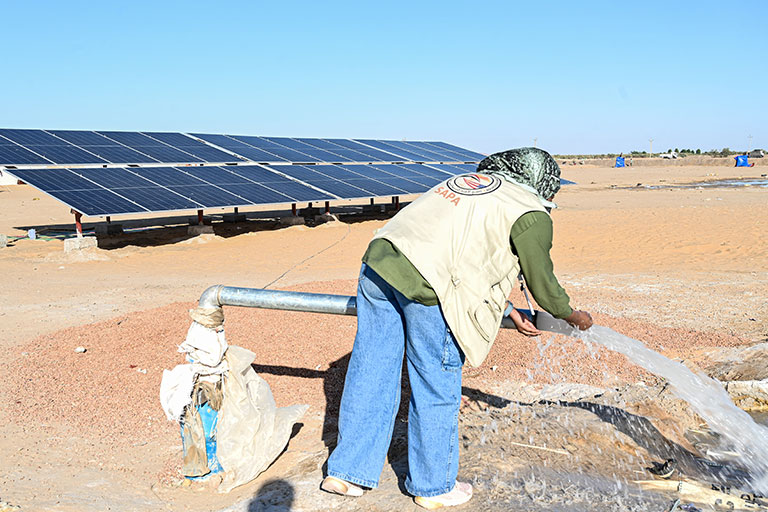
SAPA doesn’t simply hand out water. It builds systems designed to outlast the emergency that prompted them. Through solar-powered village water systems, handpump boreholes, and ongoing water quality monitoring, SAPA is constructing infrastructure that continues functioning long after the initial installation, supported by local training and maintenance so communities can sustain it themselves.
This sustainable approach is central to SAPA’s WASH (Water, Sanitation, and Hygiene) programming, which addresses the full chain of need, not just delivering water, but ensuring it stays safe to drink through testing, chlorination, and community education on hygiene practices.
Every level of support has a direct, traceable impact:
- $25 supports water testing and chlorination supplies
- $50 funds hygiene and safe water handling materials
- $100 supports operator training and ongoing monitoring
- $250 helps provide spare parts and system repairs
- $500 funds a complete water quality monitoring cycle
The reasoning is simple and rooted in SAPA’s healthcare identity: prevention is more effective, and more humane than treatment after the fact. By positioning clean water as preventive healthcare rather than a separate relief category, SAPA connects directly to its core mission of reducing disease, protecting children, and easing pressure on Sudan’s fragile health system before patients ever reach a hospital bed.
FAQs
1. How does safe water save lives in Sudan specifically?
Safe water saves lives in Sudan by preventing waterborne diseases like cholera and acute diarrhea, which remain one of the leading causes of death for children under five. Clean water also reduces the malnutrition that often follows repeated illness, breaking a cycle that otherwise overwhelms fragile health systems.
2. How many people in Sudan lack access to clean water?
An estimated 17.3 million people in Sudan lack access to basic-level drinking water supply, putting them at ongoing risk of waterborne disease, according to UNICEF.
3. What caused Sudan’s recent cholera outbreak?
Sudan’s cholera outbreak, first detected in Kassala State in mid-2024, was driven by disruptions to water and sanitation systems, population displacement, flooding, and limited access to health care, eventually spreading to all 18 states before being declared over in March 2026.
4. Is cholera still a risk in Sudan today?
While the major 2024-2026 outbreak was declared over, the underlying conditions that caused it persist. With over half of Sudan’s population in need of humanitarian assistance and 13.6 million people displaced, the risk of future outbreaks remains high, particularly as rainy seasons approach.
5. How does unsafe water affect children’s education?
Unsafe water keeps children out of school in two ways: illness forces absences, and around half of Sudan’s schools have either no water access at all or only dysfunctional facilities, with just 10% offering functioning handwashing stations, making schools themselves a transmission risk.
6. What kind of water systems does SAPA build?
SAPA installs solar-powered village water systems and handpump boreholes, paired with ongoing water quality testing and local operator training, so systems remain functional and safe for years rather than requiring repeated emergency intervention.
7. How is clean water connected to malnutrition in Sudan?
Contaminated water causes repeated diarrheal illness, which prevents children’s bodies from absorbing nutrients properly. Health officials have linked the collapse of health systems and critical water shortages directly to the disease outbreaks compounding Sudan’s malnutrition emergency.
8. Why does displacement make water access worse?
Displacement camps concentrate large populations in areas without adequate infrastructure. Overcrowding and unsanitary conditions in camps, combined with a lack of relief services, create ideal conditions for outbreaks to spread rapidly once contaminated water sources are the only option available.
9. How can I help provide clean water to families in Sudan?
You can directly fund SAPA’s clean water work, from $25 for water testing supplies to $500 for a full water quality monitoring cycle through SAPA’s donation page, where every contribution supports sustainable infrastructure, not just temporary relief.
10. Why does SAPA focus on water as part of its healthcare mission?
Because SAPA is already recognized for its medical work in Sudan, framing clean water as preventive healthcare creates a natural extension of its mission, stopping disease before it starts, rather than only treating it after outbreaks occur.