
SAPA and Embrace Help More Newborns Receive Critical Care in Sudan
 Mahnoor
Imagine giving birth in a hospital where the neonatal unit has a dozen incubators when three times as many are needed. That’s the reality for mothers and newborns across Sudan today, where over three years of conflict have pushed the health system to the brink. Amid the crisis, a partnership between SAPA and Embrace is quietly changing outcomes for the tiniest, most vulnerable patients, premature and low-birthweight newborns who need warmth and stabilization within their first critical hours of life.
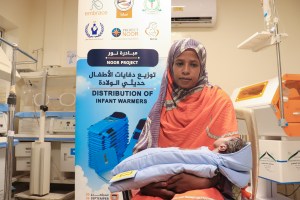
Through the Noor Project, SAPA and Embrace are delivering newborn warming devices to health facilities across Sudan, giving overwhelmed neonatal units a practical way to protect babies even when incubators are full, broken, or simply unavailable. Read along to learn why that support is vital right now, what we’ve achieved so far, and some of the real stores behind the numbers.
Why Newborn Care in Sudan Is Reaching a Breaking Point
Sudan’s healthcare system has been deteriorating since fighting broke out in April 2023, and 2026 has brought new strain rather than relief. More than a third of the country’s health facilities are no longer operational, and Doctors Without Borders (MSF) recently warned that shrinking international aid funding is pushing an even greater number of patients toward a shrinking number of working hospitals, with attacks and displacement compounding the pressure in several regions, according to Al Jazeera’s September 8, 2026 report on MSF’s warning.
The funding picture has made things worse in recent months. Aid groups reported this month that roughly three dozen additional health facilities serving more than 400,000 people are closing in 2026 because of global funding cuts, per ABC News’ September 2026 coverage. In one camp in Gedaref state, the sudden withdrawal of a humanitarian organization forced the closure of maternity and surgical wards, leaving pregnant women facing hours-long journeys just to reach a hospital capable of performing a C-section.
For newborns specifically, the stakes are especially high. Preterm birth is a leading driver of neonatal death in Sudan, and a peer-reviewed study of a major NICU in eastern Sudan, published this month in Health Science Reports, found that nearly a third of admitted newborns (198 of 604, or 32.8 percent) were born preterm, with prematurity strongly linked to mortality risk in the unit. Without reliable electricity, functioning incubators, or basic warming equipment, even a healthy-weight newborn can develop dangerous hypothermia within minutes.
>> Related Post: How SAPA and UNICEF Are Transforming Maternal and Child Healthcare in Sudan
The Noor Project: How SAPA and Embrace Are Responding
The Noor Project was intended to address this key problem.With funding from Embrace, SAPA has launched the first phase of a plan to distribute newborn warming devices to health facilities across six Sudanese states, part of a longer-term goal to place 900 devices nationwide.
300 Devices, 66 Facilities, and Counting
The first rollout phase has already put 300 warming devices into the hands of medical teams at 66 health facilities. These aren’t meant to replace incubators. They’re a practical backup that lets hospitals keep admitting and stabilizing newborns even when incubator capacity runs out, which happens often in units built for a fraction of today’s patient volume.
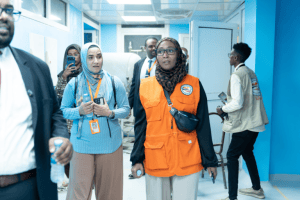
At Al-Managil Hospital in Gezira State, for example, the neonatal unit has around a dozen incubators serving a community far larger than that capacity was designed for. Before the warming devices arrived, premature babies who couldn’t maintain their own body temperature were sometimes at serious risk simply because no incubator was free. Now, medical staff can place newborns in standard cots and use the warming devices to provide the thermal support they need, even when every incubator in the unit is occupied.
A Nurse’s Perspective From Al-Managil Hospital
Rashida, a nurse at Al-Managil Hospital, has seen the difference firsthand. She describes the warming devices as easing a persistent source of anxiety for her team. Before, an occupied incubator meant scrambling for alternatives; now, the unit has a dependable option that lets them keep admitting and warming newborns without delay.
From Critical Condition to Stability
One case illustrates just how much difference reliable thermal care can make. A newborn recently arrived at Al-Managil Hospital weighing only 0.8 kilograms, with a body temperature of 33°C, no breathing, and a barely detectable pulse – a baby in immediate, life-threatening danger. The medical team combined resuscitation efforts with one of the warming devices, and within roughly ninety minutes the infant’s temperature had climbed to 36°C. His condition stabilized, and the acute risk of hypothermia passed. It’s a striking example of how something as fundamental as consistent warmth can be the difference between life and death for Sudan’s smallest patients.
A Backup When Equipment Fails
Equipment breakdowns are common in Sudan’s strained hospitals, and Al-Managil offers a case in point: one of its incubators lost its heating function for nearly a month. During that stretch, the warming devices became the unit’s primary tool for maintaining newborns’ body temperature. For health workers already stretched thin, having a second, reliable option when equipment fails isn’t a convenience. It’s what keeps thermal care available at all.
>> Related Post: SAPA & Embrace Global: 127 Warmer Packs Reach 43 Sudanese Facilities
How SAPA and Embrace Help More Newborns Receive Critical Care in Sudan
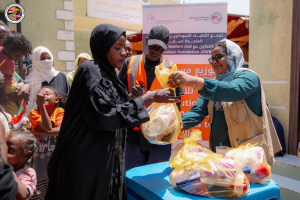
SAPA is a nonprofit made up largely of physicians and health professionals who direct medical aid, equipment, and training toward Sudan’s most under-resourced communities. The Noor Project reflects the organization’s broader approach: rather than sending one-time donations, SAPA partners with funders like Embrace to build sustained, scalable programs that hospitals can actually rely on over time.
That approach extends well beyond newborn warming devices. SAPA also works on emergency and general healthcare services across Sudan, supporting hospitals and clinics that are absorbing patient overflow as other facilities shut their doors. And because newborn survival is tied to broader public health conditions, SAPA’s clean water initiatives address one of the underlying risk factors (contaminated water and poor sanitation) that drive infections and complications in the same communities the Noor Project serves.
FAQs
1. What is the Noor Project?
The Noor Project is a SAPA initiative, funded by Embrace, that provides newborn warming devices to health facilities across Sudan to help reduce preventable newborn deaths and strengthen neonatal care in areas where incubators and specialized equipment are scarce.
2. How many warming devices have been distributed so far?
The first phase has delivered 300 warming devices to 66 health facilities across six Sudanese states, with a longer-term goal of reaching 900 devices nationwide.
3. Why do newborns in Sudan need warming devices instead of just incubators?
Many Sudanese hospitals don’t have enough incubators to meet patient demand, and existing units frequently break down due to unreliable electricity and years of underinvestment. Warming devices give medical teams a dependable backup so newborns can still receive thermal support when incubators are occupied or out of service.
4. What happens to a premature baby without access to warming equipment?
Premature and low-birthweight newborns can’t regulate their own body temperature well. Without warmth, they’re at serious risk of hypothermia, which can lead to breathing difficulties, organ stress, and death within a short window after birth.
5. Is Sudan’s healthcare system really in crisis right now?
Yes. More than a third of Sudan’s health facilities are currently nonoperational, and aid groups including MSF have reported that international funding cuts in 2026 are forcing additional clinics to close, pushing more patients toward fewer working hospitals.
6. How common is premature birth in Sudan’s hospitals?
It’s a significant driver of neonatal admissions. A recent study of a major eastern Sudan NICU found that nearly a third, 32.8 percent, of admitted neonates were born preterm, underscoring how central thermal care and incubator capacity are to newborn survival in the country.
7. Who is SAPA, and what does the organization do in Sudan?
SAPA is a nonprofit that channels medical expertise, equipment, and funding toward under-resourced communities in Sudan, covering areas like emergency healthcare services, clean water access, and newborn care programs like the Noor Project.
8. What role does Embrace play in this partnership?
Embrace funds the newborn warming devices distributed through the Noor Project, enabling SAPA’s teams on the ground to procure, deliver, and support the equipment at hospitals across Sudan.
9. Can a warming device really stabilize a critically ill newborn?
Yes, in one documented case at Al-Managil Hospital, a newborn weighing just 0.8 kg with a dangerously low body temperature and weak vital signs was stabilized using a warming device alongside emergency resuscitation, with his temperature returning to a safe range within about ninety minutes.