Razan’s Mother Finds Hope Through SAPA and UNICEF
 Mahnoor
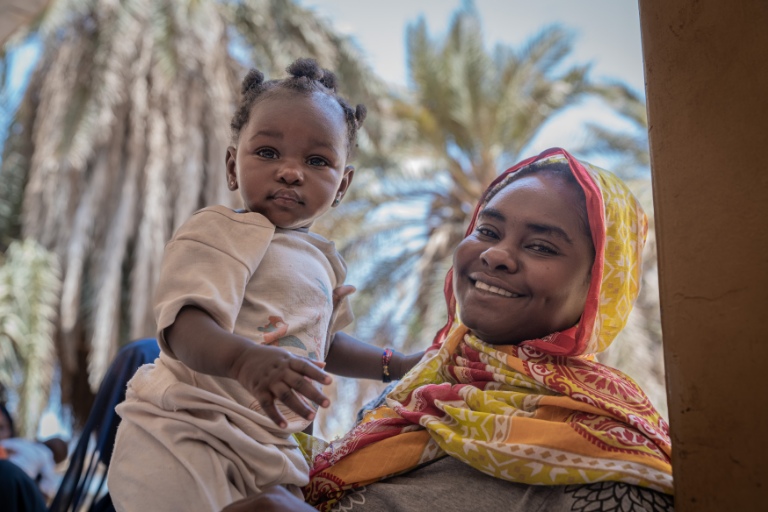
In a country where more than a third of health facilities are no longer functioning, something as ordinary as a baby’s vaccination appointment has become an act of quiet determination. In Omdurman, 26-year-old Zahra makes that choice every month for her 11-month-old daughter, Razan, walking through a city reshaped by more than three years of war to reach a health center that has become a lifeline for her family.
Zahra’s story is one of thousands playing out across Sudan right now, where SAPA and UNICEF are working together to keep basic healthcare within reach of mothers and children who refuse to give up on their futures.
Who Is Razan? A Story of Steady Care Amid Crisis
Razan is an 11-month-old girl from Omdurman. Since the day she was born, her mother, Zahra, has made sure she never misses a scheduled check-up or vaccination. That commitment means regular trips to the Al-Daw Hajouj Health Center, a facility in Omdurman supported through the SHARE program (a partnership between SAPA and UNICEF built specifically to deliver healthcare to children and mothers in some of Sudan’s hardest-hit communities).
At the center, Razan receives routine vaccinations and essential check-ups that protect her from preventable diseases like measles and polio, both of which have resurged in Sudan as the war has pushed the country’s immunization coverage back by decades. For Zahra, these visits are about more than a single appointment. They are a way of protecting her daughter’s early development during a period when so much else feels uncertain.
This kind of consistency matters more than it might seem. By mid-2026, roughly 70 percent of health facilities across Sudan were non-functional, and around 15 million people had been displaced nationwide, including close to 5 million children. Every family that can still reach a working clinic represents a small but meaningful victory against a health system under enormous strain.
>> Press Release: How SAPA and UNICEF Are Transforming Maternal and Child Healthcare in Sudan
One Health Center, Countless Stories of Resilience
Razan isn’t the only child whose story is tied to Al-Daw Hajouj. Amani (the mother of triplets i.e. Sanad, Saif, and Asawir) has been bringing her children to the same center since her first pregnancy. Even as the crisis limited access to health services across the region, the center remained one of the few places she could reliably turn to for care. Today, Amani is expecting another baby and continues to prioritize antenatal visits, describing them as more than a medical formality.
A few months earlier, another mother, also named Amani, brought her six-month-old daughter to the same clinic for routine growth monitoring and vaccinations. She has described the health center as an essential source of support for herself and other mothers in Omdurman, especially as the war has narrowed access to care across the city.
These stories echo a broader pattern researchers and aid agencies have documented throughout the conflict: frontline health workers, midwives, and vaccinators are often the difference between a child staying healthy and a preventable illness turning serious. Nationwide, only about a third of young mothers and their newborns currently receive postnatal care, underscoring just how vital facilities like Al-Daw Hajouj have become.
>> Related Post: Best Family & Child Care Charities in Sudan in 2026
Reaching Communities No Matter the Distance
Keeping a single health center running is only part of the challenge. Reaching people at all is often the harder task. In South Kordofan, the SAPA team’s usual short trip from Abu Jubeiha to Al-Hajlah Health Center recently turned into a much longer and more difficult journey after heavy seasonal rains turned the roads to mud. The team pressed on anyway, because healthcare access, in their words, cannot wait.
That same commitment showed up in North Darfur, where a SAPA WASH officer named Adam carried an injured colleague on his back for two days on foot to reach safety in Tawila after violence intensified in El Fasher. Stories like his are a reminder that safe water, sanitation, and health services in Sudan depend on people willing to keep moving even when conditions make it nearly impossible. SAPA’s clean water initiatives exist precisely because access to safe water and functioning health infrastructure are inseparable communities can’t stay healthy without both.
>> Related Post: Ishraqa Daoud’s Story: SAPA Restores Hospitals & Futures
The Growing Health Crisis Behind These Stories
The urgency behind Razan’s story is only becoming more pressing. As of early September 2026, fighting has escalated sharply around North Kordofan, with more than 200,000 people newly displaced from the region since late last year and drone attacks disrupting water and electricity infrastructure in cities including Omdurman itself. Seasonal flooding in North Darfur has compounded an already dire displacement crisis, with the International Organization for Migration warning that Sudan is facing one of the largest displacement emergencies in the world.
Meanwhile, cholera and displacement continue to surge across the country amid a deep funding shortfall for humanitarian operations, according to recent UN reporting. Health workers describe a system stretched to its breaking point; a reality echoed in the story of a Port Sudan dialysis patient whose life-sustaining treatment has depended entirely on humanitarian partners stepping in where the formal health system has collapsed.
Against this backdrop, the work being done at facilities like Al-Daw Hajouj isn’t a side story. It’s central to whether millions of children get the routine care that keeps preventable diseases from becoming deadly ones.
FAQs
1. Who is Razan, and why is her story significant?
Razan is an 11-month-old girl from Omdurman whose mother, Zahra, has consistently brought her for routine vaccinations and health check-ups at a SAPA and UNICEF supported health center throughout the war. Her story reflects how families are working to protect their children’s health despite Sudan’s collapsing healthcare system.
2. What is the SHARE-UNICEF program?
SHARE-UNICEF is a partnership between SAPA and UNICEF that supports primary health centers in conflict-affected areas of Sudan, providing vaccinations, maternal care, and essential health services to children and mothers.
3. Why is routine vaccination so critical in Sudan right now?
The war has disrupted immunization campaigns nationwide, contributing to disease outbreaks including measles and polio. Consistent access to vaccination centers, like the one Razan visits, helps protect children from illnesses that would otherwise be preventable.
4. How many people in Sudan currently need humanitarian assistance?
As of mid-2026, an estimated 15 million people had been displaced across Sudan, including nearly 5 million children, with roughly 70 percent of health facilities non-functional nationwide.
5. Is the situation in Omdurman getting worse?
Yes. As of early September 2026, escalating attacks, including drone strikes affecting infrastructure in Omdurman and surrounding areas, have deepened the crisis, alongside new waves of displacement from North Kordofan.
6. What role does clean water play in SAPA’s health programs?
Access to safe water directly affects disease prevention, especially for outbreaks like cholera. SAPA’s clean water program works alongside its health centers to reduce the risk of waterborne illness in vulnerable communities.
7. How does SAPA reach communities in remote or dangerous areas?
SAPA teams often travel through difficult terrain, flooded roads, and active conflict zones to reach health centers and WASH facilities, as seen in South Kordofan and North Darfur missions described in this article.
8. Where can I learn more about SAPA’s work across Sudan?
Visit sapa-usa.org to explore SAPA’s full range of health, water, and humanitarian programs across Sudan.