Sudan Hunger Statistics
 Mahnoor
Acute Food Insecurity & Famine
– Nearly 19.5 million people (about 41% of Sudan’s population) face high levels of acute food insecurity (IPC Phase 3+) through May 2026.
– Around 135,000 people face Catastrophic food insecurity (IPC Phase 5) across 14 hotspots in Darfur and South Kordofan.
– More than 5 million people are in IPC Phase 4 (Emergency).
– A further 14 million people are in IPC Phase 3 (Crisis).
– At the September 2025 lean-season peak, 21.2 million people (45% of the population) faced IPC Phase 3+, including 375,000 in Catastrophe.
– Famine (IPC Phase 5) was formally confirmed in El Fasher and Kadugli in October 2025, with 20 more areas across Darfur and Kordofan flagged at critical risk.
– Global acute malnutrition hit roughly 53% in Um Baru and 34% in Kernoi (North Darfur) as of February 2026, both far above the famine threshold.
– Famine was confirmed earlier in Zamzam displacement camp in August 2024. One of only a handful of formal famine declarations worldwide in 20 years.
Child & Maternal Malnutrition
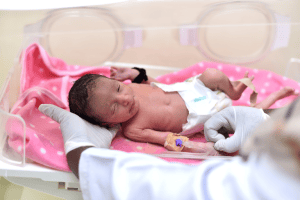
– An estimated 825,000 children under five are projected to suffer Severe Acute Malnutrition (SAM) in 2026, 7% higher than 2025, and 25% above pre-conflict (2021–2023) levels.
– Nearly 4.2 million cases of acute malnutrition are expected among under-fives and pregnant or breastfeeding women in 2026, up from 3.7 million in 2025.
– More than 800,000 of those cases are expected to be Severe Acute Malnutrition.
– Almost 100,000 children were admitted for SAM treatment between January and March 2026 alone.
– MSF screened over 9,500 children under five in Tawila in December 2024 and found 35.5% global acute malnutrition, 7% severely malnourished.
– Among children reaching Tawila right after El Fasher fell (Oct–Nov 2025), over 70% were acutely malnourished, 35% severely.
– MSF has supported treatment for more than 67,000 malnourished children over two years, including 15,000+ admitted to inpatient feeding programs in 2025 alone.
– One Save the Children-supported clinic treated 1,400+ children for SAM in a year; 38 died of hunger-related causes.
– Peer-reviewed research found Sudan’s case-fatality rate for severe acute malnutrition has roughly doubled since the conflict began.
– Female-headed households in Sudan are three times more likely to be food insecure than male-headed households.
Food Production & Market Collapse
– Sudan’s 2025/26 cereal harvest fell to 5.2 million tons, which is 22% below last year and 27% below pre-war (2022/23) levels.
– As of December 2025, sorghum and millet prices were more than four times pre-conflict (March 2023) levels.
– WFP’s Local Food Basket cost climbed 17.9% month-on-month in April 2026, driven by a 23.3% jump in sorghum prices.
– In besieged El Fasher, basic food prices were 460% above the national average in July 2025, and 40+ times higher by August.
– The Sudanese pound has depreciated more than 500% against pre-conflict levels, driving up imported food and fuel costs.
Displacement & Loss of Food Access
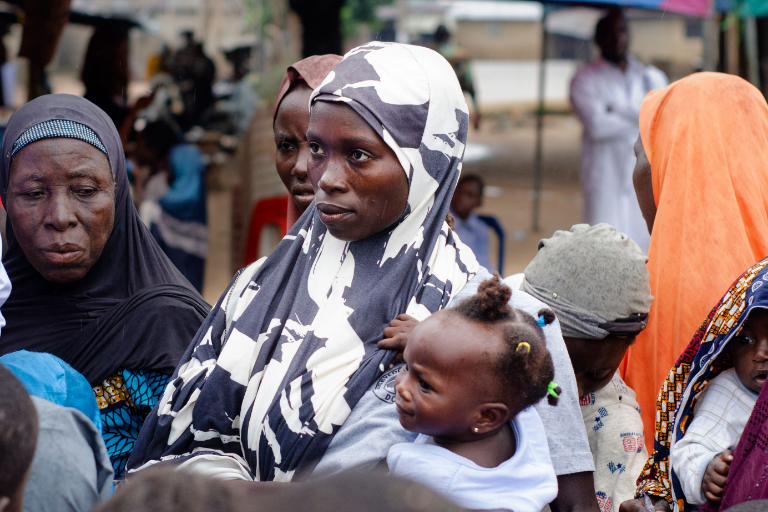
– Close to 9 million people are internally displaced within Sudan as of March 2026, many cut off from farmland, markets, and stored food.
– About 14 million people have fled since the war began: 9 million inside Sudan, 4.4 million across borders, straining food systems in host countries like Chad and South Sudan.
– About 8.9 million IDPs remained in Sudan as of April 2026; nearly 4 million have returned home, often to damaged farmland.
– More than 57% of displaced people experiencing hunger in Sudan aren’t receiving food aid, largely due to funding shortfalls.
Humanitarian Response & Economic Pressure on Food Access
– Sudan’s real GDP contracted 29.4% in 2023 and 14% in 2024, gutting household purchasing power for food.
– War has set Sudan’s economy back more than 30 years; extreme poverty could reach 60%, leaving more families unable to afford food.
– About 30 million people needed humanitarian food and nutrition aid in 2025 (33.7 million projected for 2026), prompting a $2.87 billion UN Sudan Response Plan in February 2026.
Global Hunger Index & Comparative Context
– Sudan lacks enough verifiable data to be individually scored in the 2025 Global Hunger Index. Neighboring South Sudan (a separate country) ranks 121st of 123 countries, scoring 37.5.
– Sudan and South Sudan post the highest child wasting rates of any countries measured in the 2025 GHI, amid 20 conflict-driven food crises worldwide affecting nearly 140 million people last year.
FAQs
1. How many people in Sudan are currently facing hunger?
Nearly 19.5 million people, about 41% of the population, face high acute food insecurity (IPC Phase 3+) through May 2026.
2. Has famine officially been declared in Sudan?
Yes. The IPC confirmed Famine (Phase 5) in El Fasher and Kadugli in October 2025, following an earlier famine declaration in Zamzam camp in August 2024.
3. How many children are affected by malnutrition in Sudan?
An estimated 825,000 children under five will suffer Severe Acute Malnutrition in 2026, and nearly 4.2 million malnutrition cases are expected overall among young children and mothers.
4. What’s causing Sudan’s hunger crisis?
The core driver is the civil war between the Sudanese Armed Forces and the Rapid Support Forces, which began in April 2023 and has devastated farmland, blocked trade routes, besieged cities, and displaced a quarter of the population.
5. How many people have been displaced by the conflict?
About 14 million people have fled since April 2023, roughly 9 million inside Sudan, 4.4 million into neighboring countries.
6. Is Sudan’s crisis the same as South Sudan’s?
No. They’re separate countries with distinct, related crises. South Sudan’s hunger emergency, driven by flooding and economic strain, ranks among the world’s most severe in the 2025 GHI.
7. How much of Sudan’s healthcare system is still functioning?
Roughly 37% of health facilities are non-functional, and WHO describes Sudan’s health services as “shattered.”
8. How many people need humanitarian aid?
About 30 million people needed aid in 2025; WFP projects 33.7 million will need it in 2026.
9. Why isn’t Sudan ranked in the Global Hunger Index?
Ongoing conflict has disrupted the data collection needed to calculate a 2025 GHI score. The missing ranking reflects a data gap, not an absence of hunger.
10. How can I help address hunger in Sudan?
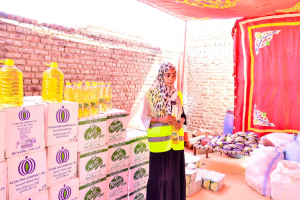
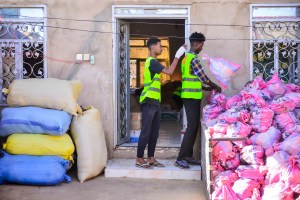
Support organizations delivering emergency food, therapeutic feeding, and health services to families in Sudan and neighboring host countries. Visit SAPA to see how your donation funds food distributions and malnutrition treatment.