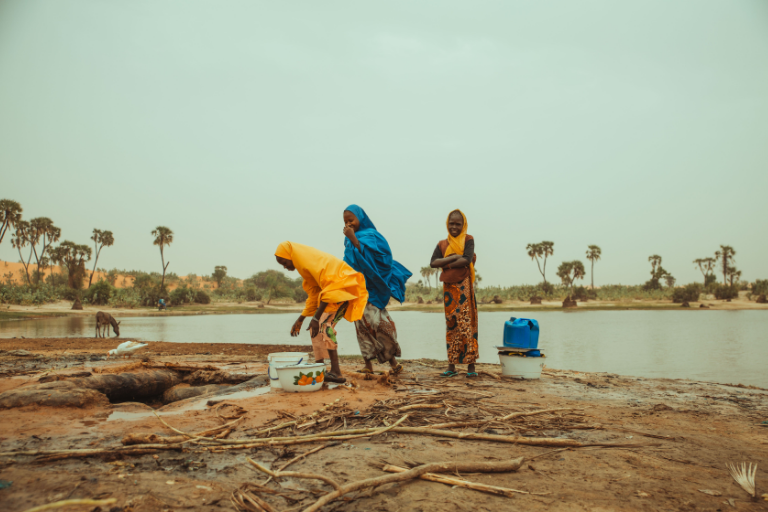
What Efforts are Being Made to Address the Water Crisis in Sudan?
 Mahnoor
Nonprofits like SAPA are rehabilitating solar-powered water systems, chlorinating supplies, and running cholera-response teams across Sudan’s hardest-hit states, but with only a fraction of 2026 funding secured, community-led wells and diaspora-driven relief remain the fastest way to keep water flowing to displaced families.
Sudan’s water crisis isn’t a slow-moving problem anymore. It’s an emergency unfolding in real time. Three years into the conflict, the country is grappling with what the World Health Organization now calls a resurging, near-continuous cholera epidemic, driven almost entirely by collapsed water and sanitation systems. A new outbreak declared on June 27, 2026 has already infected more than 1,330 people and killed at least 114, with a case-fatality rate the WHO’s Sudan representative called “extremely high” at 13.7% according to Reuters.
So what exactly is being done about it, and does it go far enough? This guide breaks down the current international response, the local organizations filling the gaps, and how ordinary people abroad are helping restore access to clean water in Sudan.
>> Related Post: How Can I Contribute to Humanitarian Efforts in Sudan?
The Scale of Sudan’s Water Crisis in 2026
Before diving into solutions, it helps to understand why this crisis is so hard to contain:
- Mass displacement. Since war broke out on April 15, 2023, at least 59,000 people have been killed, and roughly 13.4 million remain displaced (about 9 million inside Sudan and 4.6 million in neighboring countries), according to reporting from Geneva covered by GlobalSecurity.org.
- A collapsing health and water system. Sudan is now the world’s largest humanitarian crisis, with over 33 million people needing aid and 21 million requiring health services, per the same UN briefing.
- Cholera is spreading fastest where water infrastructure is destroyed. Outbreaks are concentrated in Darfur and Kordofan, where drone strikes and active fighting are disrupting humanitarian access, including a West Kordofan flare-up that had recorded 700 cases and 60 deaths as of mid-June 2026.
- Underfunded response. The 2026 Sudan Humanitarian Needs and Response Plan calls for roughly $2.9 billion, but as of mid-year only about 22% of that target had been raised.
- Worsening seasonal risk. WHO officials warn the rainy season, which floods latrines into water sources, is expected to accelerate transmission even further.
>> Related Post: Safe Water Saves Lives: Preventing Disease in Sudan’s Communities
International and Government-Led Efforts
1. UN and WHO Emergency Response
The World Health Organization has scaled up cholera treatment centers, oral cholera vaccine campaigns, and rapid-response teams in Kordofan and Darfur, while pressing donor governments to unlock funding and safe passage for aid convoys. UNICEF, meanwhile, continues its long-running WASH (water, sanitation and hygiene) program, which includes chlorinating water at treatment plants, trucking emergency water supplies into besieged towns, and repairing damaged pipelines and boreholes that serve displacement camps.
2. Local Water Utility Rehabilitation
Beyond emergency response, engineers are working to restore Sudan’s broader water infrastructure, much of which was damaged or destroyed in the fighting around Khartoum and other urban centers. Local partners like the Sudan Zero Waste Organization have solarized key water pumping stations in Khartoum State, reducing dependence on fuel (which is scarce and expensive) and keeping supply running through power outages. Solar-powered systems also cut long-term operating costs, meaning communities can sustain water access even after international funding eventually moves elsewhere.
3. Community-Managed Water Systems
One of the more encouraging models has come out of White Nile State, where communities took over full management of a treatment plant serving thousands of households, setting tariffs, training local water committees, and organizing their own maintenance and hygiene education. It’s a reminder that lasting solutions to Sudan’s water crisis usually combine outside funding with local ownership, not one or the other.
4. Long-Term Infrastructure and Climate Resilience
Even before the current conflict, a large share of the country’s water facilities were only partially functional, and a majority of households lacked access to basic sanitation and hygiene services. Flooding along the Nile has grown more frequent and severe over the past decade, repeatedly damaging pumping stations, latrines, and pipe networks right as communities are trying to rebuild them. That’s why longer-term recovery plans, developed with international partners, focus on flood-resilient infrastructure, groundwater management, and stronger institutional capacity within Sudan’s water ministries, not just emergency repairs. Without that structural investment, each rainy season risks undoing the previous year’s progress.
>> Related Post: SAPA’s Clean Water Mission: Transforming Lives in Sudan
How SAPA is Addressing the Water Crisis in Sudan
While large multilateral agencies work on national-level infrastructure, grassroots organizations founded by Sudanese communities themselves are often the ones reaching neighborhoods that bigger response plans can’t move fast enough to cover. SAPA runs an active WASH Program focused on exactly the gaps described above:
- Building and repairing wells in Gezira, White Nile, Khartoum, and Northern State, giving families a lasting source of safe drinking water instead of relying on unsafe rivers or canals.
- Water purification support, aimed at reducing waterborne illnesses like cholera, typhoid, and dysentery that disproportionately affect children and the elderly.
- Safe toilet facility construction, done in partnership with local communities to cut down on open defecation and improve safety, especially for women and girls.
- Hygiene education campaigns, teaching proper handwashing and sanitation practices in areas where health infrastructure has been damaged or destroyed.
- Menstrual health support, distributing sanitary supplies and education to protect women’s health and dignity during a crisis that has stripped away basic services.
Because SAPA is a 501(c)(3) nonprofit founded and largely staffed by Sudanese physicians and diaspora volunteers, its teams also bring on-the-ground medical context that helps target water and sanitation projects toward the areas facing the worst disease outbreaks. This matters because cholera, typhoid, and dysentery outbreaks tend to cluster around specific breakdowns e.g. a damaged pipeline or an overcrowded displacement camp there.
FAQs
1. What is causing Sudan’s current water crisis?
The war has destroyed pipelines, pumping stations, and treatment plants, while mass displacement has pushed millions into camps without adequate sanitation, creating the conditions for repeated cholera outbreaks.
2. How many people in Sudan currently lack access to safe water?
Sudan is currently the world’s largest humanitarian crisis, with 33 million people in need of assistance overall, and millions more specifically lacking reliable access to safe water and sanitation, per UN briefings reported in July 2026.
3. Is cholera still an active threat in Sudan in 2026?
Yes. A new outbreak declared on June 27, 2026 has already caused over 1,330 cases and 114 deaths, and the WHO has warned it could worsen as the rainy season begins.
4. Which regions of Sudan are hit hardest by the water crisis?
Darfur and Kordofan states, particularly West Kordofan and North Kordofan, are currently experiencing the most severe outbreaks, compounded by ongoing drone strikes disrupting aid access.
5. What is the WHO doing to address the crisis?
The WHO is running cholera treatment centers, coordinating vaccine campaigns, and publicly pressing for increased humanitarian access and funding, warning that current response capacity is being outpaced by the outbreak’s spread.
6. How is the 2026 Sudan humanitarian response funded?
The Sudan Humanitarian Needs and Response Plan requested about $2.9 billion for 2026, but only around 22% had been funded by mid-year, leaving a significant gap that NGOs and diaspora donors are working to close.
7. What role do solar-powered water systems play in Sudan’s recovery?
Solarizing pumping stations reduces dependence on scarce, expensive fuel and keeps water flowing during power outages, making water systems more resilient and affordable to maintain long after emergency funding ends.
8. How does SAPA’s WASH Program help address the water crisis in Sudan?
SAPA builds and repairs wells, supports water purification, constructs safe toilet facilities, and runs hygiene education across Gezira, White Nile, Khartoum, and Northern State — you can see the full scope on SAPA’s WASH Program page.
9. Why is displacement making the water crisis worse?
With roughly 13.4 million people displaced, overcrowded camps often lack adequate sanitation infrastructure, which accelerates the spread of waterborne diseases like cholera among people who already have limited access to healthcare.
10. How can I help provide clean water to families in Sudan?
Donating directly to organizations with active WASH programs inside Sudan is one of the fastest ways to fund wells, purification systems, and emergency water trucking.