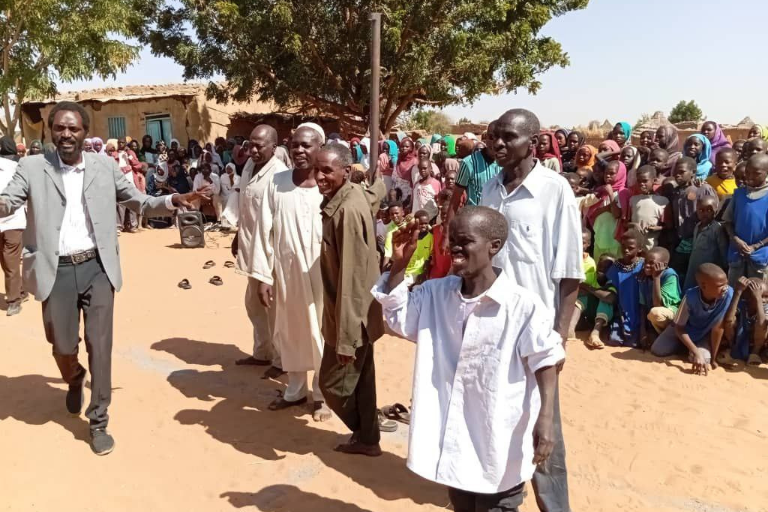
World Humanitarian Day 2026: Supporting Families in Sudan
 Mahnoor
Every August 19th, the world pauses to recognize the people who run toward crises instead of away from them. World Humanitarian Day 2026 arrives at a moment when that recognition feels more urgent than ever. Conflicts are multiplying, funding is shrinking, and one crisis in particular has quietly become the largest displacement emergency on the planet: Sudan.
At SAPA, we believe World Humanitarian Day isn’t just a date on the calendar. It’s a call to action. This year, we’re using this observance to shine a light on Sudan’s families: the mothers searching for clean water, the children who haven’t seen the inside of a classroom in three years, and the aid workers risking everything to reach them. In this article, we’ll walk through what World Humanitarian Day 2026 means, why Sudan’s crisis deserves your attention right now, and how you can help, starting today.
Why World Humanitarian Day Matters More Than Ever in 2026
World Humanitarian Day was established by the UN General Assembly to honor the 22 humanitarian workers killed in the 2003 bombing of the UN headquarters in Baghdad. Since then, it has grown into OCHA’s flagship global campaign, bringing together governments, aid agencies, and everyday people to advocate for the safety of humanitarian workers and the dignity of the people they serve.
This year’s UN campaign message is blunt: “The time for concern is over. The time for consequence is now.” That urgency is backed by sobering numbers. By the end of May 2026, more than 252 million people worldwide needed humanitarian assistance and protection, which is 13 million more than when the year began, according to the UN’s Global Humanitarian Overview. Humanitarian plans required $33.66 billion, yet had received only about a quarter of that amount.
Making matters worse, humanitarian workers themselves are increasingly under attack. More than 305 million people across 72 countries currently require humanitarian assistance, and 2024 alone saw over 380 aid workers killed, one of the deadliest years on record for the profession, according to Dianova’s coverage of this year’s observance. Nowhere is that combination of scale and danger more visible than in Sudan.
>> Related Post: What Organizations are Currently Providing Aid to Sudan?
Sudan’s Humanitarian Crisis: Understanding the Scale of Need
Sudan’s civil war, now in its fourth year, has created what aid agencies consistently call the world’s largest and fastest-growing displacement crisis. The numbers are almost too large to process:
- 33.7 million people need humanitarian aid this year.
- Over 14 million people have been forced from their homes since April 2023, making Sudan the largest displacement crisis in the world.
- Around 5 million people are facing emergency or catastrophic levels of hunger, a number worsened by fertilizer shipment disruptions tied to the wider regional conflict.
- 35 million people now require humanitarian assistance in Sudan alone, with over 9 million internally displaced and 4.5 million pushed across borders.
Behind every one of these statistics is a family. A mother deciding whether to walk another day toward the border. A father rationing the last bag of grain. A grandmother caring for children whose parents didn’t survive the journey.
The Toll on Children and Families
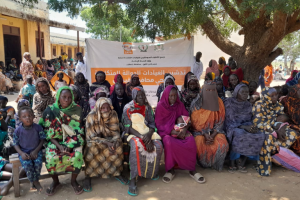
Women and children make up the overwhelming majority of those displaced by Sudan’s conflict. Displacement sites are overcrowded, sanitation is poor, and outbreaks of cholera, malaria, and measles have followed families from Khartoum to Darfur to refugee camps in neighboring countries. For many households, the war hasn’t just taken their homes, it’s taken their access to food, healthcare, clean water, and safety all at once.
The IFRC’s special envoy for Sudan summed it up plainly this year: Sudan is one of the world’s largest humanitarian crises, yet also one of its most overlooked. That’s precisely the gap SAPA is trying to close.
Part of what makes Sudan’s crisis so difficult to resolve is its shifting front lines. Some areas, including Khartoum and Al Jazirah, have seen fighting subside enough for families to begin returning home. But in the same period, hostilities have intensified dramatically across the Kordofan states, pushing new waves of displacement even as older ones start to stabilize. That means humanitarian organizations can’t simply plan for one static emergency. They have to respond to a crisis that keeps changing shape, region by region, month by month.
>> Related Post: How Can I Effectively Donate to Charities Supporting Sudan?
What You Can Do This World Humanitarian Day
You don’t need to be an aid worker to make a difference. Here’s how everyday supporters can act on World Humanitarian Day 2026:
- Donate directly to organizations with proven, on-the-ground programs in Sudan, like SAPA’s Save a Life in Sudan campaign.
- Raise awareness by sharing verified information about Sudan’s crisis with your network.
- Advocate for humanitarian access, urging elected officials to support unimpeded aid delivery and the protection of civilians and aid workers.
- Support local responders – the community-led emergency response rooms inside Sudan that have kept relief efforts alive even as international attention fades.
>> Related Post: Which Organizations are Providing Medical Aid/Healthcare in Sudan?
World Humanitarian Day 2026: How SAPA Is Supporting Sudan’s Families:
Effective humanitarian response in Sudan comes down to three interconnected needs. Miss any one of them, and families remain in crisis no matter how much progress is made on the others.
Emergency Healthcare
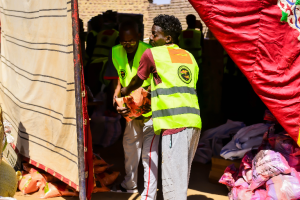
Sudan’s health system has been devastated by nearly three years of conflict, with hospitals damaged, medical staff displaced, and supply chains disrupted. SAPA’s healthcare emergency services work to get medicine, staff, and emergency care to communities that would otherwise have none, because a family fleeing conflict shouldn’t also have to flee without medical care.
Hunger Relief
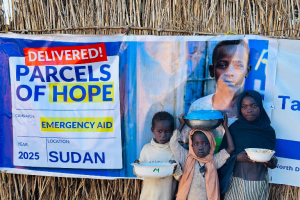
With millions facing acute food insecurity and famine risk spreading across multiple regions, hunger relief isn’t optional. It’s the difference between survival and starvation for entire communities. Our hunger relief program delivers food directly to displaced families and host communities straining to support them.
Water, Sanitation, and Hygiene (WASH)
Disease spreads fastest where clean water disappears. Overcrowded displacement camps without adequate sanitation have already fueled cholera and other outbreaks across Sudan. SAPA’s WASH initiatives provide clean water access and hygiene resources that prevent secondary health crises from compounding an already dire humanitarian emergency.
FAQs
1. What is World Humanitarian Day?
World Humanitarian Day is observed every August 19th to honor humanitarian workers and advocate for the safety, well-being, and dignity of people affected by crises worldwide. It was established by the UN General Assembly in memory of the 2003 Baghdad bombing that killed 22 aid workers.
2. Why is World Humanitarian Day observed on August 19?
The date marks the anniversary of the 2003 bomb attack on the Canal Hotel in Baghdad, which killed the UN’s Special Representative for Iraq, Sergio Vieira de Mello, along with 21 colleagues.
3. What is the theme of World Humanitarian Day 2026?
This year’s UN campaign message is “The time for concern is over. The time for consequence is now,” focusing on protecting humanitarian workers and demanding accountability for attacks against them, per the UN’s official 2026 observance page.
4. Why is Sudan considered the world’s largest humanitarian crisis?
Sudan’s civil war has displaced over 14 million people and left roughly 33.7 million people, two-thirds of the population in need of humanitarian aid, making it the largest and fastest-growing displacement crisis globally, according to the International Rescue Committee.
5. How many people in Sudan are currently facing hunger?
Around 5 million people in Sudan are facing emergency or catastrophic hunger levels, a crisis worsened by disruptions to global fertilizer and food supply chains, according to WFP reporting via Al Jazeera.
6. Who is the most affected by Sudan’s crisis?
Women and children make up the majority of those displaced, often facing overcrowded camps, limited sanitation, and disrupted access to healthcare and education.
7. How does SAPA help families in Sudan?
SAPA runs targeted programs covering emergency healthcare, hunger relief, and WASH services, delivering aid directly to displaced and vulnerable communities through local partners.
8. How can I help Sudan’s families this World Humanitarian Day?
You can donate through SAPA’s Save a Life in Sudan campaign, share verified information about the crisis, and advocate for humanitarian access and worker protection.
9. Why are humanitarian workers at risk in Sudan and elsewhere?
Humanitarian workers are increasingly targeted despite protections under international humanitarian law. Most affected are local, national staff serving their own communities, the same responders global campaigns like #ActForHumanity is urging the world to protect.
10. Is Sudan’s crisis getting better or worse in 2026?
While some regions like Khartoum have seen reduced fighting, hostilities have intensified in Darfur and Kordofan, and funding shortfalls mean humanitarian needs continue to outpace the aid being delivered, according to the Red Cross’s August 2026 appeal.