How SAPA Community Kitchens are Feeding Families Across Sudan
 Mahnoor
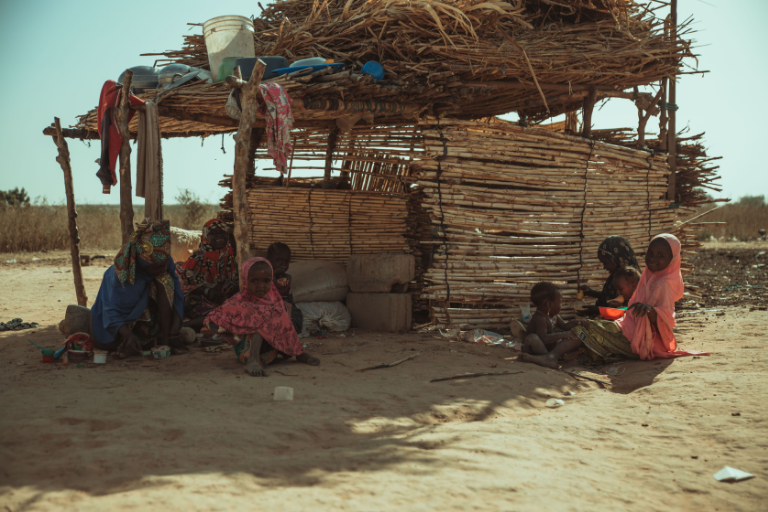
In a displacement camp on the edge of Darfur, a mother will be forced to decide which of her children eats tonight. Not because she loves one more than another, but because there isn’t enough food to go around. That’s the devastating reality for millions of families across Sudan right now. Sudan is facing one of the largest hunger emergencies in the world. Nearly 19.5 million people are living with crisis-level food insecurity or worse, and famine has been formally confirmed in parts of North Darfur and South Kordofan. Behind those numbers is a family like Amira’s displaced, cut off from markets, and forced to make impossible choices about food.
SAPA runs a network of community kitchens that serve hot meals to displaced families every day, distribute emergency food where markets have collapsed, and hand out family food packages to help parents get through the hardest weeks. Read along to understand how the crisis got this bad, how our kitchens work day to day, one family’s experience, and where your money actually goes.
>> Press Release: How SAPA and UNICEF Are Transforming Maternal and Child Healthcare in Sudan
The Scale of Sudan’s Hunger Crisis
Since fighting broke out in April 2023, nearly nine million people have been displaced from their homes, and local markets, farms, and trade routes have been devastated.
Some of the numbers:
- 19.5 million people are facing acute hunger (IPC Phase 3 or above)
- 5 million people are in Emergency-level hunger (IPC Phase 4)
- 135,000 people are in Catastrophic hunger (IPC Phase 5) across 14 hotspots in Darfur and South Kordofan
- 825,000 children under five are at risk of severe acute malnutrition this year, up seven percent from last year
Aid organizations tracking the crisis have repeatedly warned that famine risk in Sudan remains among the most severe in the world, alongside South Sudan, Gaza, and Somalia. Women-headed households are hit hardest, they’re roughly three times more likely to experience food insecurity than households led by men, and that shows in who comes through our kitchens each day.
Markets that once sold sorghum and millet now sit half empty. Where food is available, prices have climbed more than four times pre-conflict levels. In besieged areas like El Fasher, a single meal can cost nearly five times the national average.
>> Related Post: Best Hunger/Poverty Charities in Sudan in 2026
How Our Community Kitchens Work
The approach is straightforward: feed people where they already are, using local partners and infrastructure that doesn’t depend on convoys getting through contested roads. This is the foundation of our Hunger Relief Program.
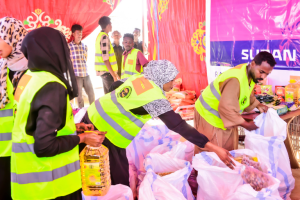
- Daily hot meals: our kitchens prepare and serve hot meals every day to displaced families and vulnerable households nearby. For many, this is the only guaranteed meal of the day.
- Emergency food relief: where roads are blocked or markets have collapsed, we distribute food directly to households that would otherwise have no way to access it.
- Family food packages: for households managing on their own, we provide packages meant to stretch through the hardest weeks between distributions.
We aren’t starting from scratch. Our physicians, humanitarians, and partners were already active in these communities before the war escalated, so kitchens and distribution networks were in place well before the crisis reached its peak. That means donations reach people quickly, with less overhead, in areas larger aid pipelines often struggle to access.
Community kitchens aren’t new in Sudan. Mutual aid kitchens known locally as takaaya have long been part of Sudanese tradition, and volunteer-run kitchens across cities like Khartoum have kept hundreds of thousands of people fed even as funding gaps force many to cut back to a single meal a day or less. Ours operate in that same tradition.
One Family’s Story: Amira
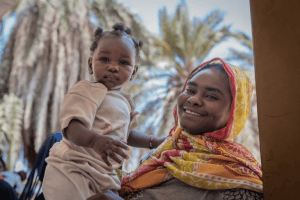
Amira fled her home in Darfur with her three children and little else. For weeks she relied on whatever the local market still had, often paying nearly five times what she used to. Some nights there was nothing left to buy at all.
Since a kitchen opened near her displacement site, her children eat a hot meal every day. It doesn’t wash away all her family has lost, but Amira no longer faces the impossible decision of which child must go to bed hungry.
We also run Clean Water initiatives alongside our food programs, because food alone doesn’t solve a health crisis without safe water to go with it, hunger and waterborne illness tend to travel together in crowded, under-resourced camps.
What Your Donation Actually Achieves
One of the most common questions donors ask is simple: does my donation really make a difference? With SAPA’s model, the answer is concrete, because the organization can show you almost exactly what each gift becomes:

FAQs
1. What exactly is a SAPA community kitchen?
It’s a local, on-the-ground kitchen operation that prepares and serves hot meals daily to displaced families and vulnerable households in Sudan, often running in areas where markets have collapsed or aid convoys can’t easily reach.
2. How is SAPA different from larger international aid organizations?
SAPA is run by Sudanese American physicians and humanitarians who were already active in these communities before the current war began. That existing network of partners and kitchens allows donations to move quickly, with less overhead, into some of the hardest-to-access areas.
3. Where in Sudan does SAPA operate community kitchens?
SAPA’s food programs reach displaced families, host communities, and vulnerable households across Sudan, including areas affected by famine and near-famine conditions in regions like Darfur and Kordofan.
4. How much of my donation goes directly toward food?
Because SAPA’s programs run through community kitchens and distribution networks already established on the ground, donations convert into meals quickly with minimal overhead.
5. Can a small donation really make a difference?
Yes. As little as $30 feeds three people with daily hot meals for a full month, and $50 covers five people for a month. Small, recurring gifts add up to sustained support for families who depend on that consistency.
6. Why are women-headed households specifically mentioned in SAPA’s response?
Women-headed families are roughly three times more likely to experience food insecurity, so SAPA’s programs are designed with particular attention to reaching these especially vulnerable households.
7. Is this a one-time emergency response or an ongoing program?
SAPA’s Food Security Program is built to be an evergreen, year-round effort, not something that spikes only during Ramadan or Qurbani because hunger in Sudan doesn’t pause between giving seasons.
8. How does a family food package differ from a daily hot meal?
A daily hot meal is served fresh at a community kitchen, while a family food package is a supply parents can take home to help stretch their household’s food through the hardest weeks, especially when a kitchen isn’t nearby.
9. What other programs does SAPA run alongside food relief?
Alongside the Hunger Relief Program, SAPA also runs Clean Water initiatives and broader emergency relief efforts, recognizing that hunger, unsafe water, and health crises are deeply connected for displaced families.
10. How can I get involved beyond donating?
Beyond one-time or recurring donations, you can help by sharing SAPA’s mission with your community, following updates on the Save a Life in Sudan campaign, and encouraging others to support families still waiting for their next meal.