
SAPA’s Ibrahim Malik Hospital Project Reaches 80%
 Mahnoor
If you’ve been following the rebuilding of Sudan’s healthcare system, here’s some good news: the Ibrahim Malik Hospital rehabilitation project in Khartoum has now crossed the 80% completion mark. For a facility gutted and ransacked by years of conflict, this number means so much more than just construction progress. It guarantees that for thousands of families in Khartoum State, emergency care, surgery, and safe deliveries will be delivered in a safe center.
Alongside partners like UNFPA, SAPA has worked to bring one of Khartoum’s most critical public hospitals back to life. Follow along to learn what’s been done, what’s still in the works, the immediate importance, and how you can help us get across the finish line.
A Milestone Two Years in the Making
Before the war, Ibrahim Malik served as a lifeline for lower-income families in Khartoum, offering free treatment at a time when private clinicswere raising prices out of reach for most people. When the conflict tore through the capital, the hospital was looted and left in ruins, another casualty in a healthcare system that has been pushed to the brink.
This hasn’t been a speedy or flashy rehabilitation effort.It has included clearing rubble, restocking supply chains, retraining staff, and rebuilding department by department. As of this update, the project sits at more than 80% complete, with the remaining work centered on finishing touches and final inspections.
That timeline lines up with a broader national trend. A July 2026 report from Xinhua noted that roughly 75% of Sudan’s hospitals and primary healthcare facilities have resumed at least partial operations, backed by nearly $293 million in newly secured international funding for the health sector’s recovery. Ibrahim Malik Hospital’s progress is very much part of that larger rebuilding wave; proof that sustained, targeted investment can bring shuttered facilities back to life even in one of the world’s toughest operating environments.
>> Related Post: How SAPA and UNICEF Are Transforming Maternal and Child Healthcare in Sudan
Inside the Completed Wards: Emergency Care, Surgery, and Safe Deliveries

The most significant progress so far has happened in the hospital’s Obstetrics & Gynecology Department, which has been rehabilitated with dedicated support from UNFPA (the UN Population Fund). Three core areas are now fully restored:
- The Emergency Department (ER) — restoring rapid response capacity for urgent and life-threatening cases
- The Operating Theatre — enabling surgical deliveries, emergency procedures, and other operations that simply weren’t possible while the hospital sat damaged
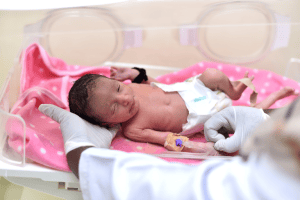
- Inpatient Wards — giving patients, including new mothers and their babies, a safe, monitored space to recover
Across Sudan, maternal and newborn care has been one of the hardest-hit areas of the health system, with damaged referral networks and a severe shortage of functioning delivery rooms. A World Health Organization–backed report from August 2026 described how humanitarian midwives are being rapidly trained and deployed across conflict-hit states just to keep basic maternity services running, underscoring how scarce reliable maternity infrastructure has become. A rebuilt Operating Theatre and Inpatient Ward at Ibrahim Malik Hospital directly addresses that gap for families in Khartoum State, giving them a functioning alternative to overcrowded or partially destroyed referral hospitals elsewhere in the country. This also connects closely to the broader push for reliable healthcare emergency services across Sudan, where every functioning ER can mean the difference between life and death.
>> Related Post: Ishraqa Daoud’s Story: SAPA Restores Hospitals & Futures
The Work That Remains: Finishing Touches With a Bigger Purpose

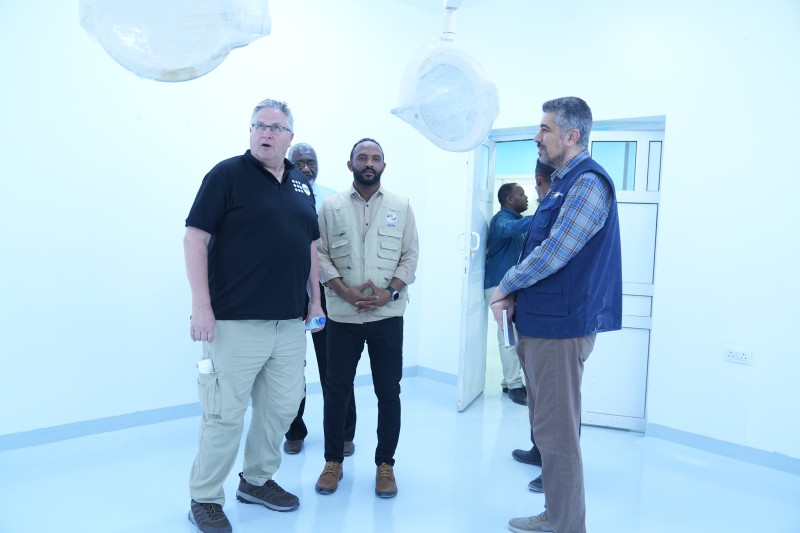
Progress is strong, but the job isn’t finished yet. Two areas are still being actively worked on:
- The Emergency Department (ER): Additional finishing work is ongoing even as parts of it already serve patients
- Internal Medicine: This department is being rebuilt to handle the everyday chronic and acute conditions that make up the bulk of any hospital’s caseload
It’s worth understanding how the funding is structured, because it explains why some departments moved faster than others. UNFPA’s support is specifically directed at the Obstetrics & Gynecology Department, which is why that section reached full restoration first. Every other department, including Internal Medicine and the general Emergency Department, is being funded directly by SAPA and its donors. In other words, the departments that aren’t UNFPA-funded exist and progress because of community support alone.
There’s also encouraging news on the horizon: discussions are already underway about rehabilitating additional departments beyond the current scope. If those plans move forward, Ibrahim Malik Hospital could end up offering a far wider range of services than originally planned, but that expansion depends entirely on continued funding.
Why This Hospital Matters for Sudan’s Bigger Health Crisis
It’s easy to look at a single hospital project and wonder how much difference it really makes against a crisis of this scale. But it truly is such a critical turning point, mostly because there are so few facilities like this currently available.
Sudan’s healthcare system remains under enormous strain. Even as some hospitals reopen, others are closing. An ABC News report from September 2026 found that global aid cuts are forcing dozens of additional health facilities to shut down this year, cutting off care for more than 400,000 people who depended on them. That’s the reality Ibrahim Malik Hospital is being rebuilt against, for every facility that reopens, others are at risk of going dark due to funding shortfalls.
The maternal health picture is especially stark. According to an August 2026 briefing from the UN in Geneva, hundreds of thousands of displaced people are now sheltering in camps like Tawila in North Darfur, where access to safe childbirth and basic maternal care is nearly impossible to guarantee. A functioning maternity ward in Khartoum won’t solve that crisis nationwide, but it does mean fewer women in that region of the country have to make that same desperate journey for care.
Healthcare doesn’t exist in a vacuum, either. Families who are hungry, without clean water, or displaced are far more vulnerable to the very conditions that fill up hospital wards in the first place. That’s why SAPA’s work extends well beyond this single building, supporting clean water access to prevent waterborne disease outbreaks, running a hunger relief program for families facing food insecurity, and maintaining emergency healthcare services elsewhere in Sudan, including in Save a Life in Sudan initiatives that respond directly to the country’s most urgent medical needs. A rebuilt hospital is one piece of a much larger effort to keep Sudanese families alive and healthy through an ongoing crisis.
>> Related Post: Safe Water Saves Lives: Preventing Disease in Sudan’s Communities
How You Can Help Finish the Job
The last stretch of any rebuilding project is often the hardest to fund. The finishing work isn’t as dramatic as laying a new foundation, but it’s exactly what determines whether a hospital can actually open its doors and treat patients safely. Ibrahim Malik Hospital is close. The Emergency Department and Internal Medicine ward need to cross the finish line, and there’s real potential to expand into more departments if funding allows.
If this update moved you even a little, consider turning that into action. You can donate to Save a Life in Sudan today and help SAPA finish what’s already 80% built, and start planning what comes next.
FAQs
1. What is the Ibrahim Malik Hospital rehabilitation project?
It’s a SAPA-coordinated effort to rebuild and reopen Ibrahim Malik Hospital in Khartoum, a public hospital that was heavily damaged and looted during Sudan’s ongoing conflict. The project restores critical departments, including emergency care, surgery, maternity services, and internal medicine, so the hospital can once again serve patients who can’t afford private care.
2. Why was Ibrahim Malik Hospital chosen for restoration?
Before the war, the hospital was known for providing free treatment to lower-income families in Khartoum at a time when medical costs elsewhere were rising sharply. Restoring it means bringing back one of the few sources of accessible, no-cost care in the city.
3. How much of the hospital rehabilitation is complete?
The project is currently more than 80% complete. The remaining work is mostly finishing touches, with completion targeted for the end of August.
4. Which departments have already reopened?
The Obstetrics & Gynecology Department is fully restored, including the Emergency Department, Operating Theatre, and Inpatient Wards within that section, thanks to support from UNFPA.
5. What role does UNFPA play in the project?
UNFPA specifically funds the Obstetrics & Gynecology Department, which is why maternal and newborn care areas were among the first to be fully rehabilitated. All other departments are funded directly by SAPA and its donors.
6. What work is still ongoing at the hospital?
Finishing work continues in the general Emergency Department and the Internal Medicine department, which handles the everyday medical conditions that make up most hospital visits.
7. When will the project be fully finished?
The remaining finishing work is expected to wrap up by the end of August, though exact timelines can shift depending on funding and on-the-ground conditions. Humanitarian budgets across the region are stretched thin right now, a joint WFP/UNHCR release from August 2026 pointed to a widening funding shortfall affecting food and aid programs tied to the Sudan crisis, which is a reminder of why donor support directly affects how quickly projects like this one can be completed.
8. Why does Sudan need more functioning hospitals like this right now?
Sudan’s health system remains under severe strain from ongoing conflict, displacement, and funding shortfalls. A July 2026 Amnesty International investigation documented the scale of violence and displacement still unfolding in Darfur, a reminder that safe, functioning hospitals are becoming harder to find in many parts of the country even as facilities like Ibrahim Malik Hospital come back online.
9. How does this project support maternal and newborn health specifically?
Restoring a fully functioning Operating Theatre and Inpatient Ward allows for safe surgical deliveries and post-birth recovery care. This matters enormously in a country where a July 2026 study on Sudanese public health facilities found that the quality and consistency of antenatal and maternal care services remain a major concern amid ongoing instability.
10. How can I support Ibrahim Malik Hospital or SAPA’s other programs?
You can donate directly through Save a Life in Sudan to help fund the final stages of the hospital project, or support related efforts like clean water access and the hunger relief program, both of which address the conditions that drive so many families into hospital care in the first place.